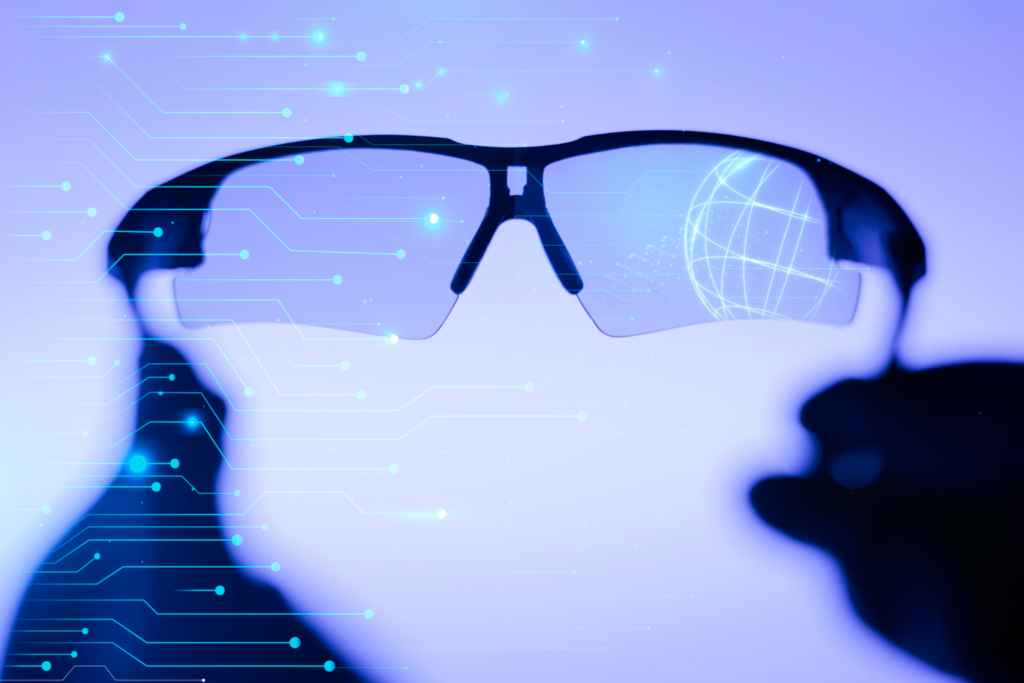
For most of the last decade, smart glasses occupied a particular cultural corner — interesting enough to generate headlines, impractical enough to gather dust. Google Glass defined the category’s image problem for years: conspicuous, expensive, and designed around a use case that made the people around the wearer more uncomfortable than the wearer themselves. The technology was real. The timing was wrong.
2026 looks different. A new generation of AI glasses has moved past the prototype phase and into genuine everyday adoption, driven by hardware improvements, better AI integration, and a shift in how people think about always-on connectivity. They are not replacing phones. But for a growing number of users, they are changing how people interact with information throughout the day.
From Display to Assistant
The early smart glasses concept centered on displaying information in the wearer’s visual field — overlaying navigation, notifications, or data onto the physical world. This was the AR ambition, and it remains technically difficult to execute at a consumer price point with acceptable battery life and weight. Most mainstream AI glasses in 2026 have taken a different path.
Rather than adding a screen, they add an ear. Open-ear audio, built-in microphones, and voice-activated AI assistants now form the core of the category. The glasses look like regular eyewear. They weigh close to what regular eyewear weighs. But they listen, respond, and route information through audio rather than through a display overlay.
This has turned out to be more useful than it sounds. A voice-activated AI assistant that can answer questions, set reminders, read messages, and handle basic tasks without requiring a screen interaction fits naturally into a wider range of daily situations than a heads-up display — commutes, outdoor exercise, physical work environments, and any setting where pulling out a phone is disruptive or impractical.
The Camera Dimension
The feature that has pushed the category forward most meaningfully in 2026 is the built-in camera. Camera glasses — versions equipped with a front-facing lens capable of recording photo and video — have added a capture layer to the AI assistant foundation that has practical applications well beyond what was initially marketed.
The most visible use cases are content creation and documentation. Hands-free, first-person footage from a wearable is genuinely different from phone video — steadier in active situations, less socially disruptive, and capable of capturing moments that a hand-held device cannot. For travelers, outdoor athletes, and content creators, the point-of-view format has become a native visual language on platforms built around authentic short-form video.
The less obvious use cases have turned out to be equally significant. Field technicians documenting site visits, parents capturing daily moments without breaking conversation, journalists covering events where a raised phone creates a barrier — the applications that have driven real adoption are often ones that were not part of the original pitch. These practical, non-content-creation use cases have expanded the audience well beyond the early adopter base.
The AI Assistant Layer
The AI integration in current-generation smart glasses has moved well past basic voice commands. The better implementations in 2026 connect to large language models capable of contextual reasoning, meaning the glasses can handle multi-step queries, maintain conversational context, and respond to follow-up questions without restarting the interaction from scratch.
AI glasses at the more developed end of the market can identify objects in the user’s field of view through the camera, translate text in real time, and provide contextual information about the physical environment. This real-world AI awareness is the feature that most clearly distinguishes the current generation from what came before it.
The audio quality has also improved substantially. Open-ear speaker technology has advanced to a point where the audio experience — while not isolated like in-ear headphones — is clear and directional enough for daily use. For calls, music, and AI assistant output, the performance is functional across most everyday environments.
Adoption Patterns in 2026
Research on consumer tech adoption consistently shows that technology transitions accelerate when a category solves a problem that existing devices handle poorly. AI glasses have found that problem in the attention management space. Coverage of connected device trends has documented how the average user now manages an expanding ecosystem of devices, each competing for attention — and AI glasses offer a layer that absorbs some of that demand without adding another screen to the mix.
The demographic picture has broadened noticeably. Early adoption was concentrated among tech enthusiasts and fitness-focused consumers. Current adoption spans professionals using the devices for hands-free communication during physical work, older adults attracted by the accessibility features of voice-driven AI assistance, and a growing creative community using the camera and AI capabilities for content production.
What the Category Is Still Working Out
Battery life remains the most cited limitation. Most current models deliver between four and six hours of active use — enough for a defined portion of the day but not for full-day replacement of a phone. This constrains the use case for users who want continuous connectivity from a single wearable.
The social dimension is also still being navigated. Camera-equipped models raise questions about recording consent that vary across environments and cultures. Responsible manufacturers have addressed this with physical indicator lights and privacy-first design choices, but norms around when and where camera glasses are appropriate in public are still being established.
Voice interaction in noisy environments remains imperfect. Microphone technology has improved considerably, but background noise in busy public spaces still produces error rates that push some interactions back to a screen. The broader AI reliability challenges in variable real-world conditions remain an active area of development across the industry.
Where the Category Is Heading
The trajectory of AI glasses in 2026 points toward gradual integration rather than dramatic replacement. They will not displace smartphones in the near term, and limitations around battery life and display capability mean that many tasks will continue to require a traditional screen. What they are doing is carving out a specific layer of daily interaction — the reactive, ambient, hands-free layer — and handling it in a way that existing devices do not.
The convergence of better AI, lighter hardware, and longer battery life is moving at a pace that makes a meaningfully different product generation likely within the next cycle. The question is no longer whether AI glasses will become a mainstream consumer category, but how quickly the remaining technical constraints will yield to development.
For consumers exploring the current generation, the most useful frame is not whether AI glasses replace everything else, but whether they handle one or two daily tasks better than the alternatives. For a growing number of people in 2026, the answer to that narrower question is yes.