Expanding artificial intelligence across a company raises a question vendor demos rarely show: what if compliance needs outpace your ability to switch providers? Teams that commit early to a single closed ecosystem, believing it will serve them indefinitely, often discover only months later, once dependencies have quietly accumulated, that migrating away from that provider carries steep technical burdens and equally daunting legal costs. The challenge is finding portable API models for growing rules. This means examining how different model types are packaged, how data flows through them, and whether the standards behind them travel across vendors. Making these choices well early decides if compliance stays manageable or becomes a permanent limit.
What Vendor Lock-In Actually Means for Your Compliance Roadmap
Vendor lock-in involves far more than just the question of pricing and the costs you pay. It describes the accumulated dependencies that make leaving a provider expensive, slow, or legally risky. One vendor’s proprietary format makes every compliance rule harder to satisfy elsewhere. You cannot renegotiate terms from a strong position if switching forces you to rebuild your whole integration layer.
The Hidden Costs Beyond Contracts
Lock-in tends to hide inside prompt formats, embedding structures, and authentication schemes that only work with one provider. Even fine-tuned model weights and cached outputs can trap teams. When usage climbs, these dependencies multiply, and the financial pressure of external inference grows too. Our earlier analysis of what to do when external AI APIs become too expensive at scale shows how quickly cost and dependency reinforce each other.
Compliance Dependencies That Follow the Data
Regulations like GDPR and industry rules focus on where data lives and who processes it. When your provider stores prompts in a jurisdiction beyond your control, meeting residency rules turns into a negotiation instead of a configuration. A portable approach keeps these controls firmly in your hands, ensuring that compliance decisions move alongside your data wherever it goes, rather than being dictated by the terms of a single restrictive contract.
Comparing API Model Types: Proprietary, Open-Weight, and Portable Standards
When you take the time to understand the different categories of API models, which vary considerably in their design and purpose, you become far better equipped to carefully weigh the question of portability against the raw capability that each option can offer you. Every type comes with its own trade-off, balancing convenience against the freedom you keep over the long term.
It helps to compare the three main categories before choosing any single approach.
- Proprietary closed models: Vendor API-only access, top performance, but tight format and billing lock-in.
- Open-weight models: Licensed to run anywhere, giving you control over hosting, data, and residency.
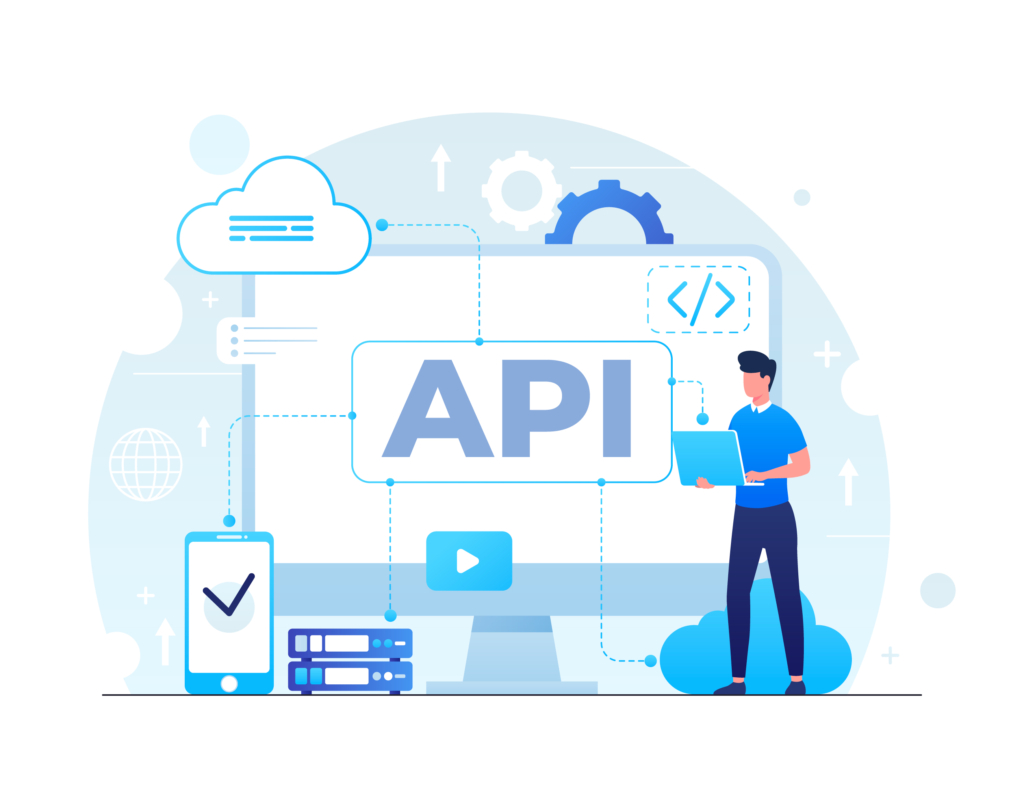
- Portable standard interfaces: Common API conventions let you swap providers with minimal code changes.
The third category matters most for reducing dependency. When an interface follows a common convention, your application code stays stable even as the model behind it changes. This is where hosting choices become decisive, because the way a model is served often determines how portable it really is. A managed service that offers llm hosting through open interfaces lets you access strong models while retaining the freedom to move workloads elsewhere if requirements shift.
How Open API Standards Let Compliance Scale Across Providers Without Lock-In
Open standards serve as the practical mechanism that keeps compliance flexible as your organization grows, allowing you to adapt your systems without being locked into rigid, provider-specific requirements over time. When multiple providers speak the same API dialect, you can distribute workloads across systems, meet regional data rules through regional deployments, and pass audits without having to redesign your stack each time.
Consistency in governance is what allows this to scale. Documented, repeatable controls travel far better than provider-specific workarounds, and mature API governance practices for 2025 emphasise exactly this kind of standardisation across teams and endpoints. When every model call passes through the same policy layer, adding a new provider or region becomes a configuration task rather than a compliance project.
Security controls follow the same logic. Uniform authentication, encryption, and logging across providers reduce the attack surface and simplify evidence gathering for regulators. Applying consistent cloud API security methods across every endpoint means your protections do not weaken each time you onboard a new model source. Compliance scales because the rules stay the same regardless of which provider handles the request.
Choosing a Managed Model Hub That Keeps Your Options Open
A managed model hub can offer the convenience of a hosted service without the trap of permanent dependency, provided you evaluate it against the right criteria. The goal is a platform that hides operational complexity while keeping your exit routes fully intact.
Key Criteria for an Open Managed Service
Seek services with standard interfaces, clear data-processing terms, and a choice of deployment regions. Transparent logging and exportable audit trails are essential for demonstrating compliance to third parties. For regulated workloads, providers like IONOS CLOUD are worth reviewing for EU-aligned model access. Judge each candidate by how easily you could move away, not merely by how quickly you can begin.
Balancing Managed Convenience With Portability
The best managed hubs, which take responsibility for scaling, patching, and uptime, still allow you to retain full control over your prompts, embeddings, and fine-tuning artefacts throughout the process. Find out if you can export your customisations and whether the API contract matches a common standard. When both answers are yes, you get operational relief while keeping the flexibility that makes compliance affordable and adaptable over time.
An Action Plan for Building Lock-In-Free Compliance Into Your AI Stack
Turning these principles into practice requires a deliberate sequence rather than reactive fixes. Begin by carefully mapping every single point at which your application connects to a model provider, and then standardise all of those touchpoints behind an interface that you fully control. This abstraction layer, which sits between your application and any provider, becomes the single place where policies, logging, and residency rules are consistently applied, regardless of which provider ultimately serves the request.
Next, document your governance controls as reusable patterns, so adding a provider needs no rewrites. Keep your fine-tuning data, prompt templates, and evaluation sets stored independently of any vendor, which ensures that they remain portable assets you can carry freely wherever you decide to go. Test a migration scenario deliberately, even if you currently have no plans to switch providers, because a rehearsed exit will reveal hidden dependencies before they can quietly become emergencies.
Finally, check your provider agreements against changing regulations regularly, treating compliance as an ongoing process, not a single checkbox. Organisations that bring together open standards, disciplined governance, and portable data assets tend to discover that compliance grows alongside them over time, rather than holding them back or slowing their progress. Choosing the right model for each need, without penalty, makes scaling safe long-term.
Frequently Asked Questions
What questions should I ask a provider to check if they support real compliance flexibility?
Ask directly whether you can export logs, embeddings, and configurations in open formats without a support ticket or contract renegotiation. It also helps to request a sample audit report to see how much visibility they actually give you into data handling. Providers who hesitate on these two points usually have more lock-in baked into their terms than their marketing suggests.
Where can I run open-weight models without ending up locked into a new provider?
Once you control the model weights, the hosting layer is the next place lock-in can creep back in through proprietary APIs or non-portable deployment formats. Evaluating independent llm hosting options that support standard formats keeps your compliance strategy intact. IONOS CLOUD offers this kind of infrastructure, letting you retain audit control and data residency without recreating a dependency you already worked to escape.
How long does it typically take to migrate away from a closed AI vendor?
Migration timelines vary widely depending on how deeply prompt formats and integrations are woven into your codebase, but most mid-sized teams report three to six months for a full transition. Companies that plan an exit strategy from day one, rather than reacting under pressure, cut this timeline significantly. Running a parallel pilot with the new provider before fully switching also reduces operational risk.
What mistakes do companies make when building a compliance-first AI architecture?
A common error is treating compliance as a legal afterthought instead of an engineering requirement baked into the architecture from the start. Teams also underestimate how much internal documentation and process change is needed once auditors start asking for evidence, not just policies. Skipping a data flow map before choosing a provider is another frequent mistake that surfaces only during the first real audit.
Does using multiple AI providers actually reduce compliance risk or add complexity?
A multi-provider setup can reduce risk if it is designed with a shared abstraction layer, but done carelessly it multiplies the number of contracts and audit trails you need to manage. The key is standardising internal tooling so switching or adding a provider does not mean rebuilding compliance checks from scratch. Teams that succeed here usually invest early in a vendor-agnostic monitoring layer rather than bolting one on later.