Technology exhibitors often arrive at a trade show with products that are difficult to explain in a short conversation. A security platform may combine sensors, software, analytics, and response workflows. A robotics company may need to show both the machine and the decision-making process behind it. A clean energy product may require context before visitors understand where it fits. In these situations, the booth cannot be treated as a simple display space. It has to help people understand the product step by step.
The first job of the booth is to make the main idea visible from the aisle. Visitors are usually moving quickly, and many of them are comparing several companies in the same hall. If the headline is too technical or the graphics are overloaded, they may pass by before the team can start a conversation. A stronger approach is to lead with a clear outcome: what the product helps improve, reduce, monitor, automate, or protect. The deeper technical explanation can come after the visitor has a reason to stop.
Good technology booth design often works in layers. The first layer is the simple message people can read in a few seconds. The second layer is the product category, use case, or workflow. The third layer is the technical detail that staff can explain through a demo, screen, sample, or one-on-one conversation. This layered structure matters because not every visitor has the same background. A technical buyer may want specifications. An executive may want business value. A distributor may want to understand how the product fits into a real customer environment.
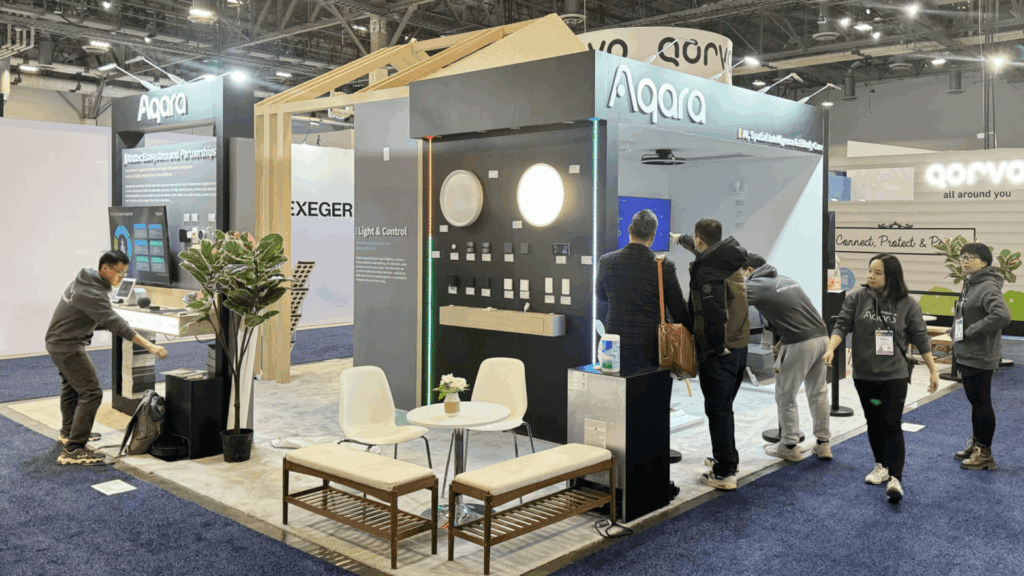
The demo area is usually the center of the booth. For technology exhibitors, a demo should not be hidden behind a counter or placed where only one person can see it. If the product demonstration is the reason people should stop, it needs a clear sightline from the aisle. The counter height, screen angle, lighting, and walking space all affect whether the demo feels open or crowded. Even a strong product can look confusing if visitors cannot see what is happening.
A useful demo also needs a simple sequence. Many exhibitors try to show every function at once, especially when the product has taken years to develop. On the show floor, that can be too much. A better demo often follows a short path: problem, product action, visible result, and next question. This gives staff a repeatable rhythm and gives visitors a story they can remember after they leave the booth.
Graphics should support the same structure. Dense technical copy rarely works well on a busy trade show wall. Most visitors will not stop to read long paragraphs. Instead, booth graphics should make the product easier to enter. A headline can state the problem or result. A simple diagram can show how the system works. Short labels can help visitors connect the physical product, screen content, and staff explanation. More detailed material can be handled through brochures, QR codes, or follow-up conversations.
Screens are helpful when they show something specific. A large monitor playing a broad brand video may attract attention, but it may not explain much. Technology exhibitors often get more value from screens that show live software, a dashboard, a product workflow, a before-and-after comparison, or a short loop of the product in use. The screen should answer a practical question: what does this technology do when it is working in a real setting?
The layout also affects the quality of conversations. A booth should make it clear where quick introductions happen, where demos happen, and where deeper discussions can continue. If staff members stand in front of the display, they may block the product. If there is no small meeting area, serious buyers may leave before the conversation becomes useful. Even in a small inline booth, the team can plan one greeting point, one demo point, and one place for follow-up questions.
Technology booths also need practical planning behind the scenes. Products may require power, internet, mounts, charging, cables, spare parts, samples, tools, or testing time before the show opens. If those needs are not considered early, the booth may look clean in a rendering but become difficult to install on site. This is one reason exhibitors often review trade show booth design and engineering planning before finalizing the structure, graphics, demo areas, and utility needs.
The best technology booths do not try to make a complex product look simple in a shallow way. They make the path to understanding easier. They give visitors a clear first message, a visible demonstration, enough space to ask questions, and a reason to continue the conversation. When design supports the product story, the booth becomes more than a branded space. It becomes a working communication tool for the team.