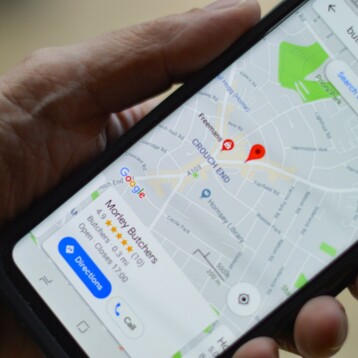
The United States is one of the most linguistically diverse countries in the world, and the need for professional translation services is just as complex, whether it’s a family needing to fill out immigration forms in a small town in rural Georgia or a company handling multilingual contracts in Chicago. Knowing the location and geographic organisation of these services and what they can really provide has become a practical requirement for thousands of people and organisations. Over the last few years, the notion of physical proximity and access to services has been slowly reimagined and what has replaced it is not to be taken lightly.
From Brick-and-Mortar to Borderless: How the Industry Shifted
For decades, the translation industry operated like most professional service sectors – through physical offices concentrated in major cities. New York, Los Angeles, Houston, and Washington, D.C. functioned as natural hubs, driven by immigration activity, federal agencies, and international commerce. If you lived in a smaller city or a rural area, your choices were narrow: a local freelancer with inconsistent credentials, a notary with modest language ability, or a long-distance arrangement with an agency that charged a premium for the geographic inconvenience.
The Shift From Physical Offices to Digital Platforms
That model started unraveling as document delivery moved online. Clients grew comfortable uploading sensitive materials through secure portals, and the case for maintaining a physical storefront became harder to defend. The transition wasn’t sudden, but by the mid-2020s, centralized digital platforms had largely displaced the office-based model for certified translation work across the country.
What emerged is a fundamentally different geographic picture. Providers built around national digital infrastructure, including Rapid Translate’s locations that stretch across all 50 states, from Hawaii to Maine, show just how thoroughly the old proximity argument has lost its footing. A person submitting immigration documents in rural Montana now draws from the same service pool as someone filing in downtown Los Angeles, and the certified output, complete with a signed Certificate of Accuracy, is accepted by the same federal institutions regardless of where the client happens to be located.
Where Certified Translation Demand Is Heaviest
Demand is not the same across the country. Some states see a higher percentage of certified translation requests, based on the number of residents in the state, immigration, and economic activity. The top five states for volume are always California, Texas, Florida, New York and Illinois. Spanish is the most requested language pair in the 5 states, but Arabic, Mandarin Chinese, Vietnamese, Korean, and Haitian Creole have significant shares in certain metropolitan areas and communities. This geographic concentration isn’t accidental. It reflects precisely the areas of immigration courts, naturalization processing offices, and international business corridors where they are most active.
Immigration and Legal Filing Pressure
There is more demand for certified translations in the United States than in any other sector except immigration. All birth certificates, marriage certificates, academic diplomas, divorce decrees, and police clearances must be translated into English before being presented to U.S. Citizenship and Immigration Services. USCIS will need a signed Certificate of Accuracy from a competent translator for each translation, and it’s not just a formality. Those applications that don’t comply are turned down immediately, and the already lengthy case processing is extended by months, with real personal and professional consequences for the applicant and family.
Courts and law firms develop an alternate demand level. Certified translations are essential for legal proceedings related to immigration cases, personal injury claims with clients who do not speak English, and corporate teams who are involved in cross-border contracts, among other scenarios that require them to meet high professional standards. Universities also go through a rush at admissions time, especially when handling international transcripts for undergraduates and graduates. In all of these scenarios, correctness is truly a given. An admissions office or court-approved translation of a document must be completely independent. If a date is misread or a credential is incorrectly rendered, or a clause is omitted, then there are serious downstream consequences that do not have an easy remedy.
Language Coverage as Its Own Kind of Geography
One factor that gets consistently underweighted in discussions about translation access is language depth. A provider might advertise national availability while only reliably supporting a small cluster of commonly spoken languages. For any client whose needs fall outside the Spanish-English pair, this gap can make a nominally “nationwide” provider practically useless in real terms.
Platforms that support 60 or more languages, including Ukrainian, Amharic, Tagalog, Punjabi, Dari, and other less commonly requested languages, are far better positioned to serve the actual linguistic composition of the American population. Migration trends evolve continuously, and geopolitical events can generate substantial new demand for specific language pairs almost overnight. A provider’s language roster is, in a practical sense, its secondary geographic footprint, and it deserves as much scrutiny as a map of service locations.
Delivery Speed as a Measure of Real Accessibility
Geographic reach matters considerably less if turnaround times are unworkable. A provider claiming national coverage but returning a standard three-page document in two weeks isn’t genuinely accessible to someone facing an immigration deadline or a court filing window. Delivery speed, in practice, is one of the most telling indicators of how useful a translation provider actually is for time-sensitive situations.
The typical timelines have been dramatically shortened with digital-first platforms. The major providers complete standard certified documents within 24 hours and can do so even sooner when there is a need to do so. In the past, it was impossible in terms of structure to have such a responsive approach with the traditional agency model, in which the handoffs were done face-to-face, staff were available in the office, and hours of operation were set and did not allow for emergency requests.