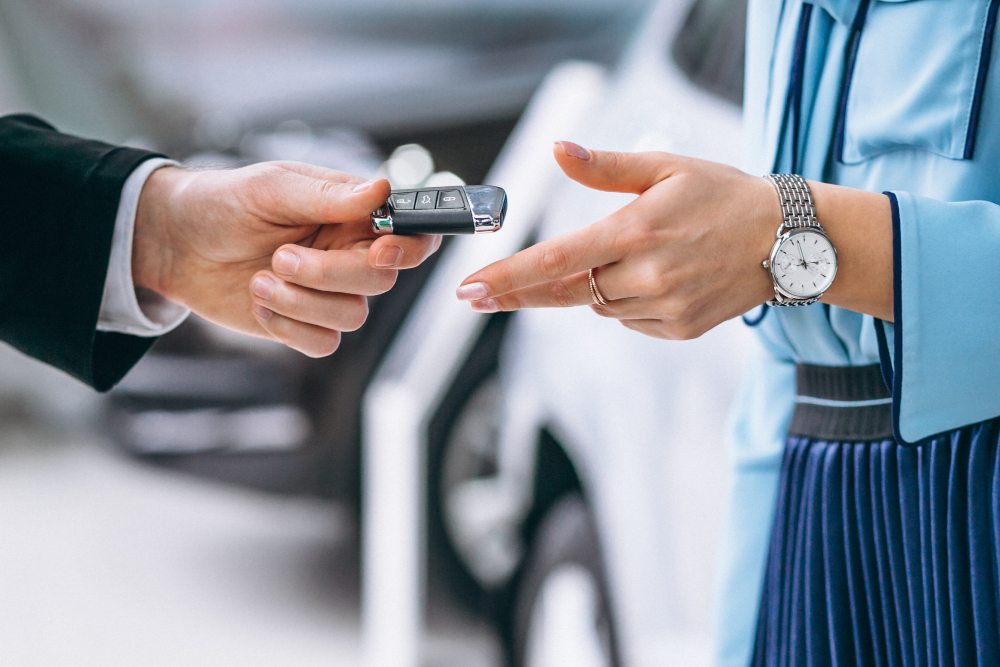
The relationship between humans and their cars is undergoing a fundamental shift. For decades, that relationship was defined by mechanical hardware. It was about the roar of the engine, the feel of the steering rack, and the physical components that made a machine move.
But things are different now.
Today, we’re entering an era in which the vehicle is less a machine and more a mobile computing platform. Honestly, I guess it feels a little strange to think of a car as a giant smartphone with wheels, but that is where we are. This transition to software-defined vehicles isn’t just changing how we drive. Automotive AI is changing how we value, maintain, and protect our mobility.
Have you ever stopped to think about how much code is actually running while you sit at a red light?
When we think about the future of transportation, we often jump straight to autonomous driving.
While self-driving technology is a massive part of the puzzle, the immediate revolution is happening in the background through connectivity and data. Modern vehicles are now equipped with hundreds of sensors that monitor everything from tire pressure to the driver’s cognitive load. This data doesn’t just stay in the car. It flows to the cloud, enabling a level of personalization and safety previously impossible.
One of the most significant impacts of this connectivity is found in the realm of financial protection and risk management. In the past, assessing risk was a game of averages and demographics. Today, data generated by connected cars enables a much more nuanced approach. I remember when getting a quote meant just ticking boxes about your age and your job, which always felt a bit disconnected from how I actually drove.
For example, when looking for car insurance, drivers are increasingly finding that their actual driving habits matter more than their zip code. If the car knows you’re a cautious driver who avoids hard braking and stays off the road during late-night hours, that information can be used to provide more accurate and fair coverage. You know, it just makes sense for the technology to reflect the person.
It turns a static financial product into a dynamic reflection of your lifestyle. But is the world ready for that level of transparency? Maybe.
This shift toward data-driven insights is also revolutionizing vehicle maintenance. We’re moving away from the era of “check engine” lights that only turn on when something has already failed.
With predictive analytics, the software in your vehicle can identify patterns that suggest a component is about to wear out. You might receive a notification on your phone suggesting a service appointment before you even notice a change in performance.
And that’s the point. It changes everything.
This proactive approach extends the vehicle’s lifespan and reduces the long-term cost of ownership. It makes the entire experience of owning a car feel less like a series of unexpected chores and more like a managed service. There is a certain peace of mind that comes with that.
No more staring at a mysterious light on the dashboard in the middle of a rainstorm.
The car’s interior is also being reimagined as a third living space. As vehicles become better at handling the mundane aspects of driving, the focus shifts to the passenger experience. We see high-definition screens, immersive audio systems, and biological sensors that can adjust cabin temperature and lighting based on your stress levels. This is the “future of things” in its most literal sense.
The car is no longer just a means of getting from point A to point B. It’s an extension of our digital lives, synced with our calendars, our homes, and our work. So, where does the driver end and the software begin?
However, this level of connectivity brings up important questions about privacy and security.
When a car is essentially a rolling data center, protecting that data becomes a top priority.
Manufacturers and software developers are now tasked with ensuring that the same systems that keep us safe on the road are also keeping our personal information secure. It is a heavy responsibility. The industry is moving toward a model where cybersecurity is as fundamental to vehicle safety as seatbelts and airbags.
Looking ahead, the software-defined road will likely lead us toward a world where ownership itself looks different. Subscription models for vehicle features are already becoming common.
You might choose to “unlock” extra horsepower for a weekend road trip or pay for an advanced navigation package only during the months you travel most.
This modularity allows the vehicle to evolve with the owner. Instead of buying a car that starts becoming obsolete the moment you drive it off the lot, you’re investing in a platform that gets better over time through over-the-air updates. It is like the car finally has a personality that grows with you.
The convergence of AI, 5G connectivity, and electric powertrains is creating a perfect storm of innovation. It’s an exciting time to be an observer of this space. We’re witnessing the birth of a new kind of mobility that is safer, more efficient, and more deeply integrated into the fabric of our daily lives. The road ahead isn’t just paved with asphalt. It’s built on code, and the possibilities are endless.