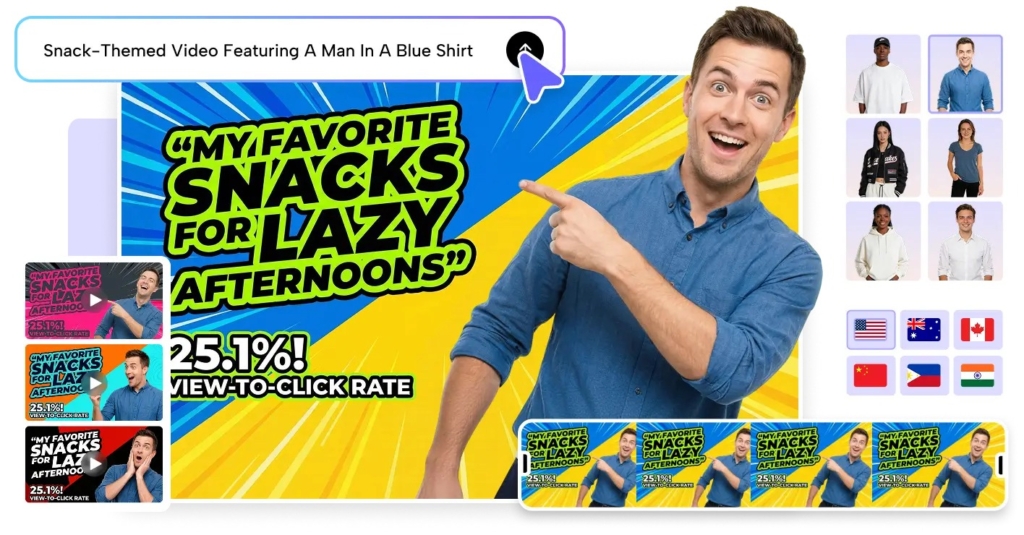
Given the pace of the internet era and the sheer amount of visual content consumed daily, still images just won’t cut it. The competition is fierce, and if brands want their products noticed, they need to invest in engaging content that makes people stop scrolling. And that’s why video content is taking the advertising world by storm.
However, not everyone has the time, money, or expertise to produce engaging videos in-house. What if you could take your existing photos and turn them into a successful video ad campaign without hassle? The photo to video AI is here to help you do exactly that.
Why product photos are not enough
Of course, having quality photos of your product is a must-have, yet the problem with them lies in the lack of engagement. A photo can provide all sorts of information about a product: how it looks, its specifications, etc., but the problem with a photo is that it can never tell the whole story.
Video is a perfect tool for showcasing everything about your brand in an interesting and compelling way.
By converting the still product images into video sequences, the story telling takes a whole new dimension without having to go for another shoot.
Creating ads with stories using still product images
What makes some ads perform better than others? One word—story. With simple product images, you can develop engaging stories that will make people buy your products.
For instance, the story might consist of presenting a problem, introducing the product as a solution, and concluding with a resolution. Such a technique is applicable to virtually all categories, whether skincare, electronic devices, clothing items, or household goods.
Motion and transition effects will enable you to tell the full story without overwhelming the viewer with too much information at once.
Producing enough ad variations without extra effort
Creating enough social ads is crucial for any marketer to succeed on social media platforms. The challenge arises from the necessity of making many posts, which requires a lot of efforts. Automation can assist marketers by developing multiple video ads at once.
No more hours spent tweaking and polishing—multiple versions of an ad can be created in minutes. Moreover, this approach allows marketers to test different creative options, figuring out which one is going to perform best.
Less work and more content—that’s the win here.
Personalizing product ads with lip sync AI
Today’s audiences prefer human and relatable ads. With video, you get a powerful tool that allows you to give your products more personality.
For instance, try creating scenarios where products help users solve problems. Or try to show how the product can fit into people’s lives.
Thanks to lip sync AI, speaking avatars will allow you to make your ads more engaging and memorable.
It’s a great trick that helps brands stand out from other companies’ posts.
Highlighting product benefits in videos
Every effective ad does more than simply attract viewers. A good commercial should clearly communicate value to its audience.
Video ads are much better in this regard, allowing marketers to effectively communicate key benefits through motion and other effects.
Try making product demonstrations clear through visuals. Highlight important features with animations. Demonstrate real-life use cases through pacing.
From catalog to campaign: how to unlock your assets’ potential
Chances are, your brand has a collection of product images. The problem lies in using those images effectively.
Stop thinking of images as mere elements. Instead, think of them as pieces of video stories, each representing a unique scene, detail, or moment. Using your images alongside a video agent helps you create various video versions for different purposes, campaigns, and target groups.
It is a great way of maximizing your content assets while minimizing production costs.
Image-to-video conversion: how Pippit does it
The time has come for you to implement the idea of creating videos from images into practice. With Pippit, doing so is surprisingly easy. Just follow these simple steps:
Step 1: Upload your images
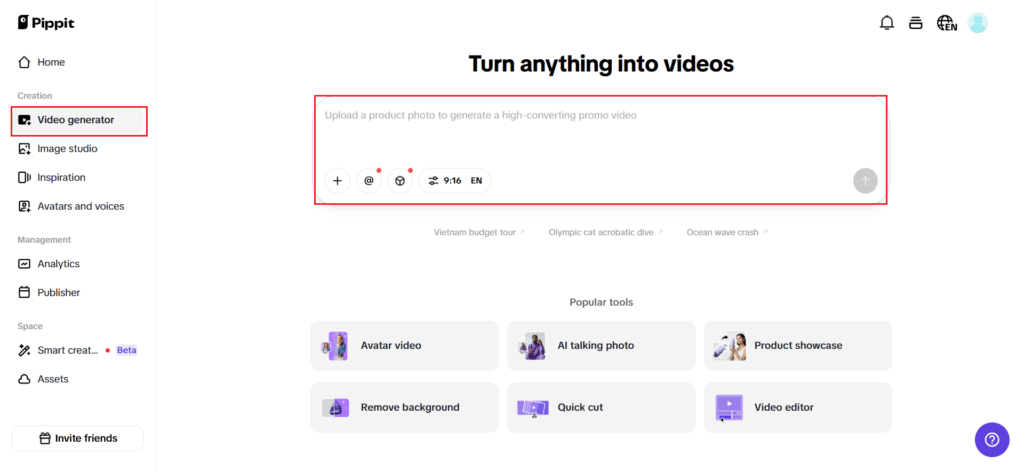
Go to the Pippit website and click on “Start for free” to get to the dashboard. You can find the “AI video generator” on the left panel or choose the video generation option on the main page.
In the “Turn anything into video” section, type your advertising campaign idea or concept. Now upload your images by clicking the “+” icon from your device, cloud storage, or any link. This forms the basis of your video advertisement.
Step 2: Convert image to video using AI
After uploading the images, click on “Choose a Model” and select models including Pippit Standard, Pippit Lite, Sora 2, or Veo 3.1. To customize further, add your own avatar or upload a reference video as per your requirement. Now set up your video settings by selecting aspect ratio, length, and language preferences. Once done, hit “Generate”. Pippit will automatically generate your video with added transitions and motion.
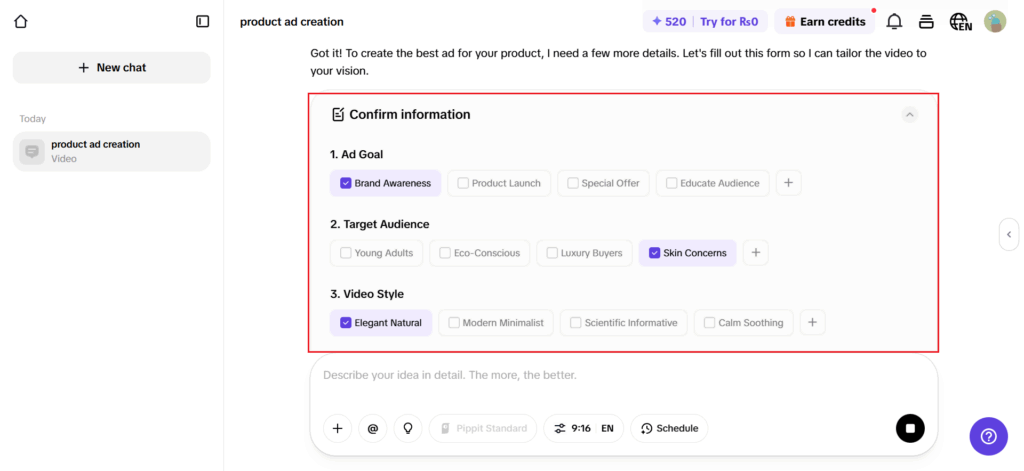
Step 3: Edit and export the video
Review your generated video to check if it matches your advertising requirements. In case of changes, click on “Edit More” to get additional editing options, including trim, crop, or visual enhancement.
When you’re happy with the video, click download or publish directly to your social media accounts. The images of your product now appear as an impressive video advertisement.
Creating videos that pause the scrolling and lead to conversion
While filming an ad might be simple, the actual task is getting the video to convert into leads and sales. In other words, you have to make your ad engaging and guide people toward a specific action.
First, make sure that the ad starts with a powerful hook within the first few seconds. Motion, vivid graphics, or intriguing text can all help to attract viewers.
Next, make the message clear and the product benefits apparent to the viewer. Finally, conclude the ad with an action call to guide your audience further.
AI-based video creation will be the future of marketing
With increasing competition in the market, brands are required to find fast and efficient ways to produce compelling content. The solution is simple—using artificial intelligence to generate videos.
In addition to saving time and money, this approach allows one to try new things out, which was previously considered impossible.
Moreover, it makes it possible to stay up to date with the growing demand for videos.
Turn your product photos into compelling marketing campaigns using Pippit
Your product photos already have worth, but what about tapping into their full potential? With the right approach, they could be used to create highly engaging video advertisements that will help boost your business performance.
This is where the power of Pippit comes into play, as it makes it easy for you to turn your product photos into videos with just a few clicks.
The time is now, so don’t miss out on a great opportunity to advance your marketing campaigns using Pippit!