A car crash used to come down to two drivers and their conflicting stories. Whoever was more credible, or more lawyered up, tended to win.
According to researchers studying modern vehicle data systems, that era is ending. Every vehicle manufactured since 2014 contains an Electronic Data Recorder that captures critical information during the 30 seconds before impact, including vehicle speed, throttle position, brake application, steering input, seatbelt usage, and airbag deployment timing.
That data does not forget. It does not get nervous under cross-examination. It does not change its story a week after the crash.
From AI dashcams to telematics platforms to smartphone sensors, the modern vehicle has become a rolling evidence machine.
Understanding what that technology captures, how it gets used legally, and what it means for anyone navigating the aftermath of a serious accident is now essential knowledge for drivers and legal practitioners alike.
How Digital Evidence Changes the Car Accident Claim Process
According to personal injury practitioners who handle serious crash cases, the shift from witness-dependent to data-dependent evidence collection has changed the strategic calculus of accident claims in ways that most drivers have not caught up with yet.
Sutliff & Stout reports that digital evidence has fundamentally changed how injury cases are built and contested. Cases that previously hinged on competing eyewitness accounts now resolve around EDR readouts, synchronized dashcam footage, and telematics logs that establish an objective sequence of events neither party can credibly contradict. For victims of serious crashes, that shift is significant: strong digital evidence compresses the period of disputed liability and often accelerates the path to fair compensation.
Understanding the Car Accident Claim Process and knowing which data exists, where it lives, and how quickly it must be preserved is now as important as documenting physical injuries in the immediate aftermath of a crash.
According to vehicle evidence specialists, successful utilization of telematics evidence requires immediate action to preserve data before it is automatically deleted or overwritten. Many EDR systems retain data for only limited periods, while smartphone apps and cloud storage services may purge data according to automated schedules. Spoliation of evidence claims have become increasingly important in cases where parties fail to preserve digital evidence properly.
The window for preserving critical digital evidence is measured in days, not weeks. Acting quickly is not just a legal formality. It is the difference between a case built on objective data and one rebuilt from fading memories.
What Does a Black Box Actually Record in a Car Accident?
According to the National Highway Traffic Safety Administration, the formal name for what most people call a black box is an Event Data Recorder, or EDR. Since 2014, EDRs have been federally mandated in all new passenger vehicles sold in the United States.
According to vehicle evidence specialists, the modern automobile has evolved into a sophisticated data collection platform. This is with electronic data recorders, smartphone telematics, and connected vehicle systems generating unprecedented amounts of accident evidence. This technological revolution is fundamentally transforming how car accident attorneys build cases, with digital evidence often providing more reliable and detailed information than traditional witness testimony or physical evidence analysis.
Specifically, an EDR records vehicle speed in the seconds before impact, whether the brakes were applied and how hard, throttle position, steering wheel angle, seatbelt status for each occupant, and the precise moment airbags deployed. In disputes over who was speeding, who braked first, or whether a seatbelt was worn, the EDR provides answers that no party can plausibly contradict.
According to legal technology analysts tracking admissibility trends, EDR data is now accepted as evidence in courts across the United States, though extraction requires specialized equipment and certified professionals to ensure chain of custody standards are met.
Can Dashcam Footage Be Used as Evidence in Court?
According to legal admissibility research across multiple jurisdictions, dashcam footage is well-established as admissible evidence in most U.S. courts, provided it meets authentication and chain of custody requirements.
According to attorneys specializing in vehicle telematics evidence, the legal admissibility of dashcam footage has been well-established in most jurisdictions, but proper authentication procedures and chain of custody requirements must be met to ensure this evidence remains viable throughout litigation.
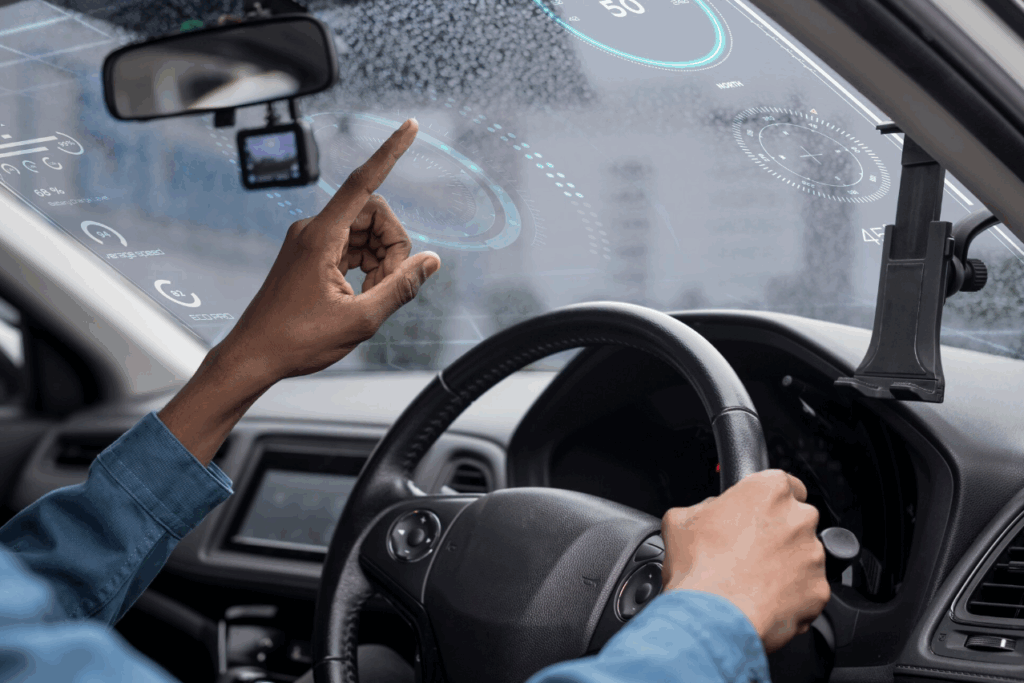
According to Geotab’s fleet safety research, AI dashcams detect and document each event by pairing synchronized video with telematics data, including speed, GPS coordinates, and G-force readings. That combination provides indisputable context when investigating collisions or defending claims.
The evidentiary value of dashcam footage depends significantly on its quality. Standard dashcams record video from a single forward-facing angle. Advanced AI-integrated systems now capture dual-facing footage, recording both road conditions and driver behavior simultaneously, with timestamps, GPS coordinates, and impact force data embedded directly into the file metadata.
According to fleet safety data from the same Geotab report, predictive AI-enabled fleet cameras prevented an estimated 3,500 collisions in 2024 alone. The same technology that prevents crashes is creating the evidentiary infrastructure that resolves disputes when prevention fails.
How Does Telematics Evidence Work in a Car Accident Claim?
According to transportation technology researchers, telematics refers to the real-time transmission of vehicle data through integrated GPS, onboard sensors, and cellular connectivity. Unlike an EDR, which stores data locally on the vehicle, telematics systems send data continuously to cloud-based platforms where it can be accessed, analyzed, and preserved.
According to legal analysts reviewing telematics in accident litigation, GPS and telematics systems provide detailed information about a vehicle’s location, speed, and route. GPS data can confirm whether a vehicle was speeding, stopped at an intersection, or veered off course. In hit-and-run cases, GPS can verify whether the accused vehicle was in the area at the time of the incident. For commercial vehicles, telematics can reveal whether drivers complied with regulations, such as mandatory rest periods.
According to the global fleet management market analysis from The Business Research Company, the fleet management camera market reached $2 billion in 2024 and is projected to grow to $3.18 billion by 2029, driven by the accelerating shift toward embedded AI and real-time telematics. That growth curve reflects how rapidly this technology is moving from commercial fleets like 3PL Logistics Company into standard passenger vehicles.
For personal injury claims, telematics data answers questions that previously required expert reconstruction: Was the driver accelerating or decelerating before impact? How long before the crash did braking begin? Was the vehicle in its lane? These are no longer matters of interpretation. They are matters of record.
How Is AI Being Used in Car Accident Reconstruction?
According to researchers at the IEEE Transactions on Intelligent Transportation Systems, AI-driven accident severity prediction using vehicle black box data has become an active area of applied machine learning, with published models capable of reconstructing crash dynamics from raw EDR outputs with high accuracy.
According to legal technology analysts tracking 2026 vehicle data trends, insurance adjusters now use AI-driven tools to analyze dashcam and telematics data frame-by-frame to find even the slightest reason to assign a percentage of fault.
That development cuts both ways. The same AI tools that insurers use to minimize claims are available to attorneys building cases for injured parties. Accident reconstruction experts now routinely deploy machine learning models to analyze synchronized data streams from multiple vehicle sensors, producing frame-level reconstructions of crash sequences that can be presented visually to juries.
According to IEEE research cited in the vehicle black box literature, AI integration with EDR systems is also being applied predictively: analyzing historical crash data to identify the behavioral signatures that precede serious accidents. This research is informing the next generation of Advanced Driver Assistance Systems, or ADAS, which can intervene before impact rather than simply recording what happened during it.
Smartphones as Evidence Collectors: What Most Drivers Don’t Know
According to telematics researchers tracking mobile sensor capabilities, modern smartphones contain accelerometers, gyroscopes, GPS chips, and barometers that collectively generate a detailed record of movement, impact, and location. Many drivers do not realize that their phone may have recorded the crash in far more detail than their memory did.
According to vehicle evidence specialists, smartphone applications now collect comprehensive telematics data that reveals driver behavior patterns, distraction events, and collision details with remarkable precision. These apps monitor acceleration, braking, cornering, phone usage, and GPS location to create detailed profiles of driving behavior that can support or contradict liability claims. Many smartphones automatically detect severe impact events and can provide precise accident timing, location coordinates, and impact severity measurements.
Insurance companies have been quick to recognize this. According to industry analysts, usage-based insurance programs that rely on smartphone telematics to calculate premiums now represent a growing segment of the personal auto insurance market. The behavioral data collected to set those premiums is the same data that can surface in litigation when a claim is disputed.
The implication is significant: a driver’s phone may simultaneously record evidence that supports their claim and transmit that data to the insurer who will evaluate it.
Common Questions About Technology and Car Accident Evidence
What technology is used to gather evidence in a car accident?
According to current legal technology research, the primary sources are Electronic Data Recorders built into the vehicle, dashcam footage, GPS and telematics systems, smartphone sensor data, traffic surveillance cameras, and, in some cases, satellite imagery. Commercial vehicles also carry driver-facing monitoring systems that record fatigue and distraction events.
What does a black box record in a car accident?
According to NHTSA standards governing EDR data requirements, a vehicle black box records vehicle speed, brake application force and timing, throttle position, steering wheel angle, seatbelt status for each seat, and airbag deployment sequence during the seconds surrounding an impact event.
Can dashcam footage be used as evidence in court?
According to established legal precedent across most U.S. jurisdictions, yes. Dashcam footage is admissible when properly authenticated and when chain of custody is documented. Courts have accepted dashcam evidence in both civil injury cases and criminal traffic proceedings, though admissibility standards vary by state.
How is AI used in car accident investigations?
According to transportation technology researchers, AI is applied to accident investigations in three primary ways: frame-by-frame analysis of dashcam footage to establish timing and fault; machine learning models applied to EDR data to reconstruct crash dynamics; and predictive systems that identify the behavioral patterns preceding serious crashes for safety research purposes.
What is telematics evidence in a car accident?
According to fleet and insurance technology analysts, telematics evidence refers to the digital data generated by a vehicle’s connected systems, including real-time location, speed history, braking patterns, acceleration profiles, and driver behavior logs. This data is transmitted continuously to cloud platforms and can be retrieved to reconstruct a vehicle’s behavior before, during, and immediately after a crash.