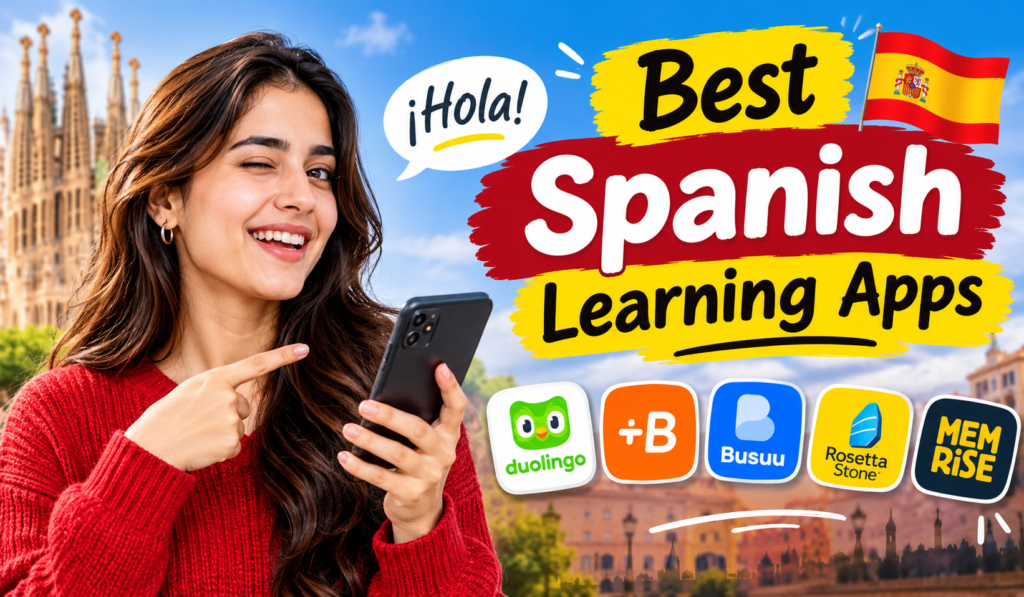
Learning Spanish phrases is as easy as “hola”, but to understand the language deeply, one needs to go beyond the basics. Fortunately, there is no need to waste hundreds of boring hours learning the language by staring at a dull textbook and doing countless boring exercises. The best Spanish learning apps can turn your smartphone into a personal trainer and help you master a foreign language in a matter of days. But which language learning apps are best for learning Spanish? Luckily, we did all the hard work for you!
The best apps for learning the Spanish language may vary depending on different criteria such as features and budget.
What Makes a Good Spanish Learning App?
First and foremost, it is necessary to decide what exactly one wants from these language learning tools. In particular, Spanish learning apps for beginners will be different from those designed for advanced students and future travelers. Second, any Spanish learning app should ideally be multifunctional, offering a combination of tools to study the language.
It is essential to find out if the app includes a Spanish dictionary, reading and listening exercises, and the opportunity to put the acquired knowledge to actual use. In addition, it is worth paying attention to which variety of Spanish the app is designed to teach – there are at least two major regional variants. Finally, some apps offer a more personalized experience, while others are designed to guide the user through the language learning process step by step, so it helps to think about what kind of environment one prefers.
Top 10 Spanish Learning Apps
1. Duolingo – best for developing a habit

If someone has spent any time searching on the Internet for language learning applications, they are bound to have come across Duolingo. This particular Spanish-learning app has seen an explosion in popularity due to making the process of learning Spanish fun. You can track your progress, earn rewards, and level up when mastering new skills. It is perfect for those who are just starting their journey or only want to learn Spanish in small doses to develop a habit. While Duolingo excels at teaching vocabulary and grammar, it is better at fueling enthusiasm than actually teaching Spanish, so more experienced students should complement their studies with other resources.
Best for: beginners and casual students
2. Babbel – best for structured learning
Compared to other language learning apps, Babbel offers a more traditional, established approach to learning Spanish, similar to how it is typically taught. The difference, however, is a focus on day-to-day conversations, pronunciation and grammar, rather than teaching people to earn points and compete with each other. In fact, several courses are specifically designed to learn Spanish for a particular purpose, such as food, telling people about yourself or communicating at a restaurant. Therefore, it is possible to learn the language in detail and get to know what to expect from the program. Thus, this product is suitable for more serious and conservative learners who prefer the conventional way of studying Spanish.
Best for: Spanish language students who want to learn Spanish course by course
Learning a new language can open doors to new hobbies and travel experiences, just as exploring the Best Fishing Apps in 2026: 10 Apps Every Angler Should Know can make outdoor adventures more enjoyable.
3. Busuu – best for feedback

Designed to teach Spanish at all levels, Busuu offers a unique opportunity to get the help of native speakers when practicing. Whereas learning with Busuu often follows the standard pattern of multiple-choice tests and fill-in-the-blanks, some tools are developed by professional linguists. Moreover, the premium version of the app allows users to engage in real-time conversations with native Spanish speakers and practice their skills. This makes it easy to request help for particular exercises, review common mistakes, and even receive feedback from native speakers.
Best for: students who want to gain structured knowledge and receive feedback
4. Pimsleur – best for listening and speaking

Some Spanish learning apps are better at teaching beginners, whereas others are designed for more advanced users. Pimsleur is one of the apps originally aimed at teaching military personnel and business executives language basics through short, digestible lessons. The main feature of Pimsleur is that most exercises are based on listening and speaking, so there is no need to try to memorize complicated rules. A typical session only lasts about thirty minutes and can be completed anywhere and at any time, so one is likely to get more out of these Spanish learning apps. Pimsleur Spanish is also great for learning the differences between regional accents, mastering conversational patterns, and improving listening skills.
Best for: those who want to improve listening and speaking skills
5. Rosetta Stone – best for immersion
Rosetta stone is one of the oldest and most innovative Spanish learning apps. Unlike many other Spanish apps, Rosetta stone offers a unique method of learning the language. This particular software focuses mainly on visual and contextual hints. It also emphasizes language learning through repetition as well. The Rosetta Stone is ideal for those who wish to achieve complete comprehension and assimilation of the foreign language. In other words, it is suitable for those who want to get to know Spanish inside out. Using the visual and audio clues, one can learn to reproduce the Spanish phrases word for word without having to analyze how the Spanish language differs from the English one. Another benefit of using Rosetta Stone is the availability of the speech recognition technology which helps the learner master the correct pronunciation. Using this technology, you will no longer have to sound like a foreigner when speaking Spanish.
Best for: visual learners who want to learn Spanish through association
6. LingQ – best for Spanish content
Some Spanish learning apps are aimed to be complete courses for language learners, while others are designed to complement other methods and tools. LingQ focuses on teaching Spanish in a more traditional way compared to some of its competitors. One of the main advantages of LingQ is that it introduces users to real Spanish content, rather than simply following a standard language learning path. According to recent independent research, this app is best at expanding one’s Spanish vocabulary and grammar knowledge. Additionally, using LingQ often provides a more personalized experience as it adapts to the needs and goals of the user.
Best for: intermediate students who want to learn the language the traditional way
While exploring language-learning resources and browsing helpful websites, knowing How to View History on Safari: iPhone, iPad & Mac can make it easier to revisit useful lessons and learning materials.
7. Anki – best for memorizing vocabulary
Anki is not really meant to be a traditional Spanish learning app as it concentrates mostly on memorizing flashcards. The primary advantage of Anki is that it uses spaced repetition, which is much more effective when one needs to learn new words, phrases, or other elements of the language. In particular, one can create a set of Spanish flashcards or use any of the existing ones and train on a regular basis. Anki’s primary purpose is to help memorize the Spanish language, so it is best used in combination with other Spanish learning apps. Though it may seem less engaging than other tools mentioned in this article, Anki is essential if one wants to build and expand one’s Spanish vocabulary.
Best for: learners who want to build and expand their Spanish vocabulary
8. HelloTalk – best for social practice
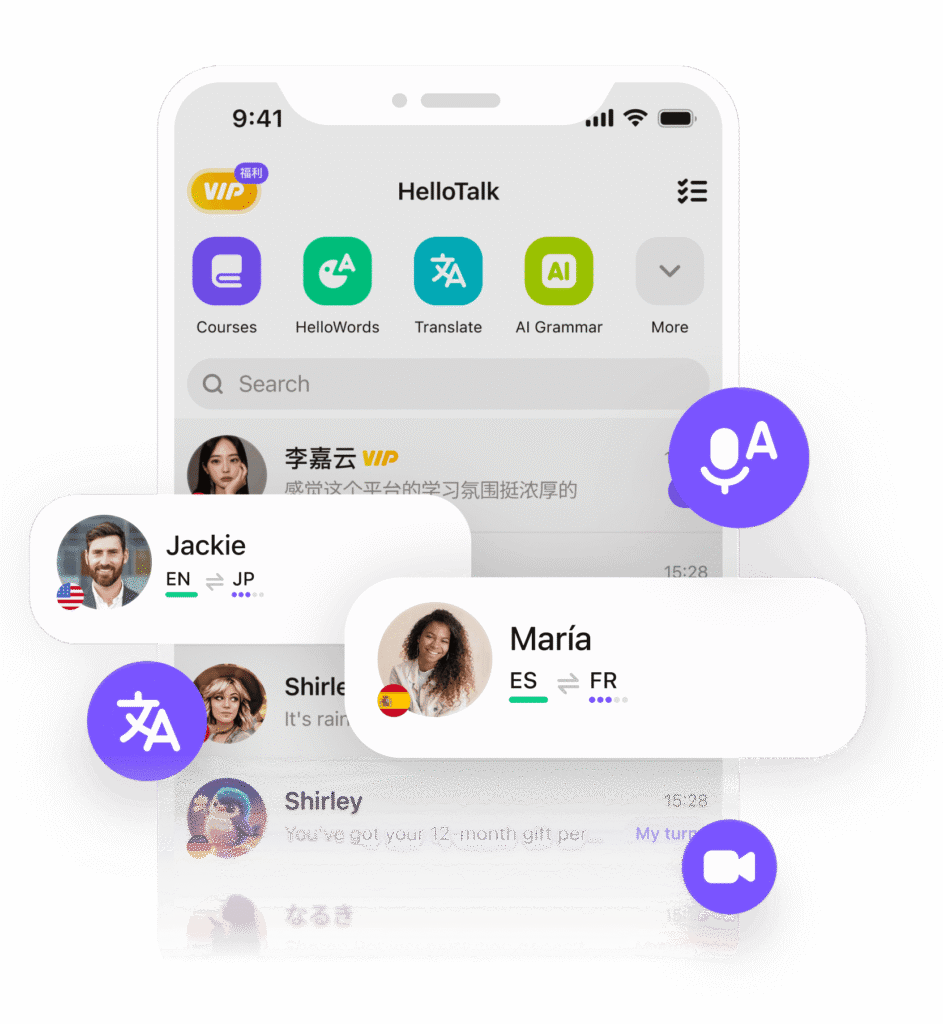
When one reaches some level of fluency in the language, it may help to practice with the natives. HelloTalk offers this opportunity as the app enables its users to connect with native Spanish speakers who are open to texting or voice chats. HelloTalk allows the learner to get acquainted with peculiarities of the language that cannot be found in books, such as colloquialisms or pronunciation peculiarities. One must remember that learning Spanish through social media maybe unpredictable, as it is rather an experiment with a potential of real-life implications. In particular, one could possibly find oneself being confused by native Spanish speakers.
Best for: learners who want to connect with native Spanish speakers
9. FluentU – best for learning Spanish with videos
FluentU is a cutting-edge Spanish learning app that takes the language learning experience to a whole new level. Designed as an alternative to traditional Spanish learning, FluentU allows users to study Spanish with videos in a more engaging and entertaining way. These are the same videos as one would expect to see on YouTube, but with additional tools and vocabulary notes. The primary advantage of learning Spanish through FluentU is the improvement of listening comprehension skills and getting used to various accents and speech patterns. The significant downside of learning Spanish through books and mobile applications is that they do not provide an authentic experience of what one may encounter in real life. FluentU eliminates this disadvantage by making the learning of Spanish a highly entertaining experience closest to reality.
Best for: students wishing to become accustomed to accents and speech patterns
10. Language Transfer – best grammar resource (free)
While many Spanish learning apps are excellent at teaching vocabulary and conversation, they are often not so good at grammar. Language Transfer aims to change that by teaching the basics of the Spanish language in an accessible way. Language Transfer uses an audio learning method, so it is probably best to listen to these Spanish grammar lessons while doing other activities. Language Transfer is a great way to learn the fundamentals of the Spanish language because it focuses on helping the student come to grips with grammatical concepts. By supplementing one’s Spanish learning with this unique program, it becomes much easier to see what makes the Spanish language tick.
Best for: anyone who wants to learn Spanish grammar basics (it is free)
Alongside language-learning apps, Best Productivity Chrome Extensions can help organize study sessions, manage daily tasks, and make learning more efficient.
Final thoughts
The best Spanish learning apps are those that one enjoys using, so it is essential to find one’s preferred type of learning and stick to it. It is always helpful to set aside some time for Spanish learning, no matter how limited this time is. Then, the next step is to supplement Spanish learning with more engaging and diverse tools. Eventually, one would become fluent in Spanish at their own pace and be able to have regular conversations without having to translate their thoughts constantly.