With manufacturing and warehousing experiencing an Industry 4.0 driven by data, so too has entertainment. Kickstarted by Netflix’s House of Cards production, which was the first ever show dictated by user data, in 2026, the majority of our media consumption is now fully curated on bespoke algorithms.
With many of these companies being overseas, not just US but Chinese firms, the European Commission continues to balance regulation with innovation.
The digital consumption patterns in Europe
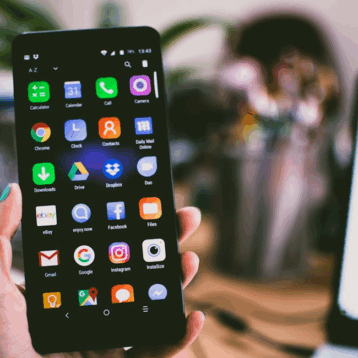
Entertainment becoming digital-first has come at the cost of theatres and live shows struggling. It has mostly come from smartphones being powerful and ubiquitous, and because they’re always by our side, it’s the main way that platforms want to engage with us, turning traditional firms into tech firms.
In Europe, there are many cultures and languages. While English works for many, it’s still not enough, and so tailoring content for local preferences has becomekey.
Using data for personalized experiences
It’s not just the algorithm which lines up the next item that’s personal, but the user interface itself. The Instagram app frequently has different UIs between friendship groups, and they are likely absorbing your usage data to understand which is best for you. This also goes for the timing of notifications and what features are available. Of course, it ventures into being invasively powerful at capturing our attention, and it’s why regulators are increasingly keen to question it. But, many of these algorithms are black box, meaning even the platform themselves don’t fully know what patterns it’s finding.
So, a lot of the regulation then comes down to what data is collected and how it’s stored rather than what they do with it. GDPR is a global leader in this space.
The dominance of mobile-first design
The user experience (UX) has become the main differentiator in a crowded digital marketplace, as well as the general network effect of needing many users for the platform to be useful (what good is a great messaging app if your friends aren’t on it?)
High-quality UX in the entertainment sector is now all about low latency and intuitive navigation. As 5G technology rolls out across Europe, download speeds are rarely the pain point, but instead, it’s latency they’re solving for.
Platforms are investing heavily in front-end development to make sure transitions are fluid. Clever background processes, like pre-loading the next video, are important tricks to get ahead and reduce friction. The rollout of 5G should be seen as less about raw download speed and more about the decentralization of compute power – it means edge-native experiences where the physical distance from a server no longer dictates the complexity of the interaction.
European regulation
While many claim there’s still more to do, the European digital market is one of the most strictly regulated in the world. The Digital Services Act (DSA) is the foundation to specific national frameworks which are laid on top, meaning platforms have a lot to contend for compliance. In many cases, like Imagr in the UK, they just concede rather than try, meaning they blanket-ban access from users from that country.
Ideally, companies work towards automated systems that help meet local standards for content moderation, age verification, consumer protection, and so on. Platforms like Olybet operate in many European jurisdictions, and they do this by using proprietary tech to stay compliant with various regional regulations, all while minimizing friction for users (sign-up abandonment is often driven by KYC).
So putting regulatory logic into the core platform architecture helps turn compliance into a software advantage – a platform may stand out for its onboarding and allows rapid deployment in new markets.
Where we are headed
What we do know is that large tech firms want to monopolize our time and lure us into an ecosystem. Sometimes it’s obvious and a selling point in and of itself, like Apple, and sometimes it’s more sneaky, like Meta’s Facebook, Instagram, Oculus Rift and WhatsApp ownership.
We can expect to see more unified ecosystems, but not necessarily between companies. TikTok baking in an eCommerce marketplace on their native content platform was a good example of this potential – and it’s much easier to do than the other way around (would anyone start using an Amazon social feed?)
AI is the current gold rush, and while it has long been used on the backend, we are beginning to see it on the front-end. Users can interact with AI helpers on entertainment platforms to find content, for example, or summarize content. In gaming, AI is increasingly used for NPC characters to create unique dialogue, but may soon be used to create unique game mechanics. Perhaps even user-driven game design or mods.
This is where we look to European regulation, not as a protector, but as an innovator. If Europe can push for more interoperability between platforms, a move away from proprietary, closed ecosystems may be the necessary push we need to create genuine broad convergence.