|

Surprisingly, the concept of an electric car was first proposed as early as the 1830’s by Scottish businessman Robert Davidson, who invented the first crude electric carriage powered by non-rechargeable batteries. At about the same time, Professor Sibrandus Stratingh from Groningen, Holland, designed a small-scale electric car. Stratingh’s car was built in 1835 by his assistant, Christopher Becker. Already in 1895, an electric car won the very first auto race in America, and according to the “U.S. Electric Auto Association“, an electric car was also the very first vehicle to earn a speeding ticket back in 1903.
In recent years, the topic of electric vehicles is being widely discussed in the automotive industry circles and not only because of the trendy “green revolution”. Unlike fuel-powered cars, battery-equipped vehicles utilize chemical energy stored in rechargeable battery packs, reducing green house emissions. However, the benefits of electric cars go far beyond environmental. Perhaps the most important advantage is the electric car’s “oil-independence” which, according to “Renault-Nissan”, will enable the company to bring prices to a record low and gradually “wipe out” benzene-powered vehicles. According to Agassi, the payment structure itself will be different from what we’re familiar with today. As opposed to purchasing the entire car, we’ll only pay an initial price for the car’s “skeleton” with some built-in accessories. The electric motor will be purchased separately and payments will be monthly – “by-the-mile”.
According to the agreement, “Renault-Nissan” should bring electric cars to the Israeli market by the end of 2010, by which time Agassi’s startup company, named “Project Better Place“, should complete building a network of 500,000 “charging points” that will be scattered across the country. The electric car’s lithium-ion battery pack (with an operational range of 200 km), may take up to several hours to fully recharge. Therefore, “Better Place” is also planning to establish a chain of service stations where drivers will be able to purchase fully charged batteries, which could turn out to be a necessity in longer journeys.
Agassi’s organization has set aside $100 million for the project, and according to the company’s predictions, 100,000 electric cars will appear on Israeli roads by the end of 2010. Israel will be the first country where electric cars will be put to a practical test, mainly due to the relatively small distances between the country’s major cities, its successful history of entrepreneurship in a variety of industries, and its unique geopolitical state.
|

According to Agassi, Israel will be the first country among many to welcome and adapt to electric cars in the near future. “We believe that it is past time to begin making it possible for consumers to choose an electric vehicle that is much less expensive to operate, does not emit pollution or greenhouse gases and provides a better driving experience from their current automobiles” – says “Better Place’s” vision statement.
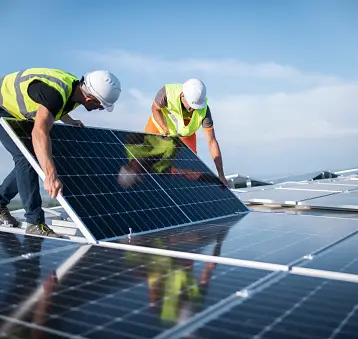
Some experts have raised their doubts about the project’s success because of the short range of the vehicles, the long charging times, Agassi’s business model, and his belief in the very quick mass adoption of an untested technology. Others raised questions regarding the source of the electrical power which is supposed to power the new fleet of 100,000 electric vehicles. According to Agassi, renewable energy sources such as solar and wind power generators will be used for that purpose. However, although several advanced solar energy companies are based in Israel, the government has yet to build even a small scale commercial solar power plant. It is therefore hard to imagine how Israel will be able to create renewable power infrastructure within the required three year’s time frame.
TFOT has previously written about some remarkable electric vehicles, such as the “Vectrix” electric scooter and the “EV-X7” Electric Motorbike. You can also read articles about a bio-fuel powered sports car – the CCXR and Ford’s hydrogen car.
You can find more information about this project on the “Better Place” official website.