Why Household Dust Deserves Attention
It’s easy to dismiss household dust as nothing more than a cosmetic annoyance, but it’s actually a complex mixture of materials that can shape both comfort and indoor air quality. Settled dust often contains dust-mite debris, pet dander, pollen, mold particles, and other pollutants that either drift in from outside or build up gradually indoors. Regular cleaning can cut down on this accumulation significantly, though it won’t ever eliminate dust completely—fresh particles arrive daily, courtesy of the people, pets, and outdoor air moving through your home. The tools you use matter less than how consistently you use them: a broom, a damp cloth, or a cordless vacuum can each do the job on floors, upholstery, stairs, and other commonly neglected spots, as long as they’re part of an ongoing routine rather than a one-off effort. That’s really the focus of this article—building a routine, since controlling dust effectively means combining cleaning, ventilation, moisture management, and source prevention rather than leaning on any single product or trick.
Key takeaway: Dust reduction works best when cleaning, ventilation, moisture control, and source prevention are addressed together, not treated as separate or optional steps.
What Household Dust Contains
At its core, household dust is a blend of organic and inorganic particles that settle onto surfaces over time. Common ingredients include skin flakes, fabric fibers, soil tracked in from outside, pollen, pet dander, dust-mite waste, and mold spores. The exact mix varies quite a bit depending on whether a home has pets, what kind of flooring is installed, how well the space is ventilated, the local climate, and how many people live there. It helps to draw a distinction between visible settled dust—the kind that collects on furniture and floors—and the much smaller particles that become airborne when disturbed by walking, cleaning, or vacuuming. According to guidance from organizations such as the U.S. Environmental Protection Agency and the American Lung Association, sensitivity to these particles varies significantly from person to person, so the same amount of dust might trigger noticeable symptoms in one household member and go completely unnoticed by another.
Identify the Main Sources of Dust in Your Home
High-traffic entry points rank among the biggest contributors to indoor dust. Shoes, clothing, pets, and open doors all carry soil and outdoor particles inside with them. Placing doormats at exterior entrances, removing shoes when practical, cleaning those mats on a regular basis, and wiping down pets’ paws after outdoor time can all stop this source of dust right at the door instead of letting it spread throughout the house.
Fabrics and soft furnishings—think carpets, rugs, curtains, bedding, upholstered furniture, and pet bedding—tend to hold onto dust and allergens far longer than smooth, washable surfaces, simply because their fibers trap particles so effectively. Laundering washable textiles according to their care instructions goes a long way toward keeping this buildup in check.
Neglected surfaces like baseboards, blinds, vents, ceiling fans, shelves, molding, and the space under furniture are often skipped entirely during routine cleaning. A household that vacuums floors diligently but keeps noticing dust reappear in the bedrooms may eventually realize that bedding, blinds, and air-return grilles were never actually part of the cleaning rotation—a good reminder that a full inspection of the home matters more than focusing solely on visible floor space.
Build an Effective Dust-Reduction Cleaning Routine
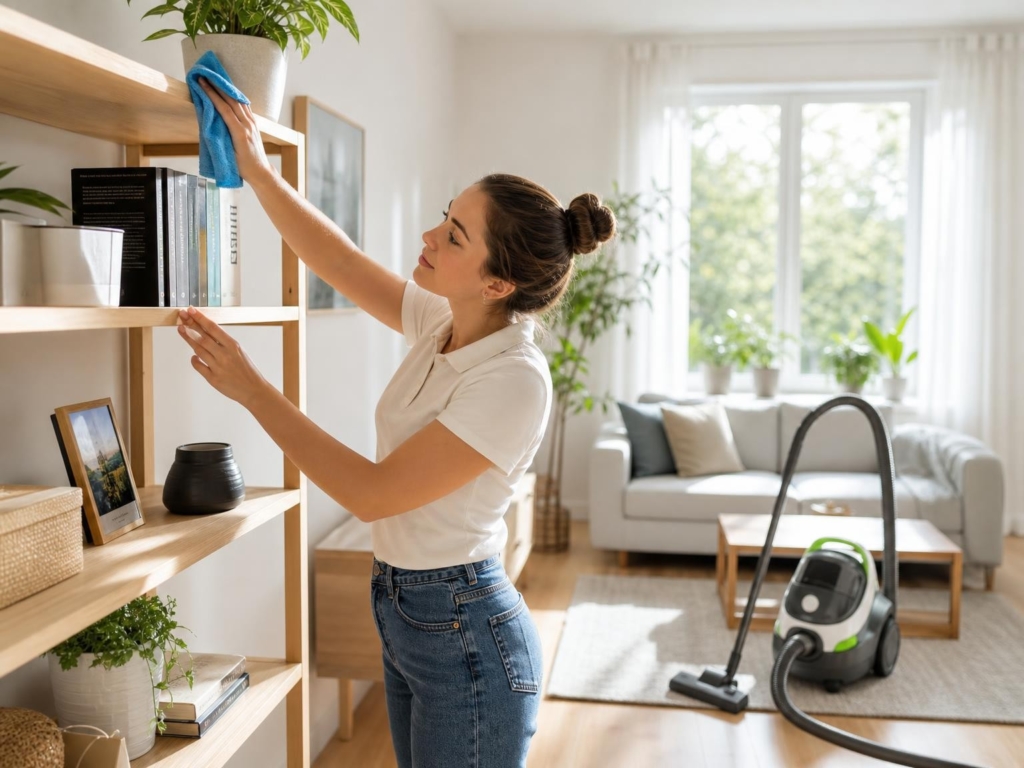
Working from high to low—starting with ceiling fans and shelves before moving down to floors—keeps loosened dust from resettling on surfaces you’ve already cleaned. Damp microfiber cloths tend to trap dust far more effectively than dry dusting, which often just stirs particles into the air instead of removing them.
Different surfaces call for different approaches: hard floors should be swept, damp-mopped, or vacuumed according to the flooring manufacturer’s guidance; carpets benefit from regular vacuuming, with extra attention paid near entrances; upholstery should follow its care label; bedding needs a thorough wash and dry; and electronics should be cleaned per manufacturer instructions, steering clear of moisture that could cause damage.
A sustainable schedule might look something like this:
- Frequent light cleaning of high-touch surfaces
- Weekly attention to floors and textiles
- Occasional deep cleaning of overlooked areas like vents and blinds
Consistency matters more than perfection here, and how often you clean should reflect your household’s particular circumstances—pets, kids, allergies, or ongoing renovation work can all shift the ideal frequency.
Vacuuming Without Simply Redistributing Dust
Vacuuming does remove settled particles, but it can also temporarily kick up airborne allergens in the process. It’s worth checking a vacuum’s filter type, how often the filter needs cleaning, and its overall sealing and dust-containment design against what the manufacturer recommends. Treat a “HEPA” label with a bit of healthy skepticism—look into what the claim is actually referring to, since even a well-rated filter can’t make up for poor sealing or neglected filter maintenance. Emptying or cleaning the dust container as directed, rather than letting it overflow, cuts down on unnecessary exposure to the debris collected inside. For anyone dealing with significant asthma or allergy sensitivity, it may help to leave the room during cleaning and give disturbed particles time to settle afterward. No vacuum, no matter how well designed, can capture every allergen or stand in for broader indoor-air-quality efforts.
Improve Indoor Air Quality Beyond Dusting
Moisture control sits at the center of good indoor air quality, since persistent dampness creates the conditions mold needs to grow. Repairing leaks promptly, drying out wet materials, running bathroom ventilation, and following humidifier-cleaning instructions all help, as does keeping indoor humidity within the commonly cited range of roughly 30–50%. Ventilation matters too: kitchen and bathroom exhaust fans vented outdoors help clear pollutants from the air, though opening windows isn’t always the right call during high outdoor pollution, wildfire smoke, or peak pollen season—local air-quality guidance should always take priority. Cutting back on indoor smoke and unnecessary fragranced products, along with choosing cleaning products thoughtfully, supports source control as well. Air cleaners can be a helpful addition, but they’re no substitute for these fundamentals.
Special Considerations for Allergy- and Asthma-Sensitive Households
Since cleaning can temporarily raise the level of airborne particles, sensitive individuals may be better off staying out of the room while vacuuming and dusting are underway. Washing bedding regularly, considering allergen-resistant mattress and pillow covers, and keeping pet areas tidy are all practical habits worth adopting—though they’re best viewed as supportive measures rather than a substitute for medical care. Persistent respiratory symptoms are worth discussing with a healthcare professional.
When to seek professional help: persistent moisture, extensive mold, severe odors, or symptoms that linger despite a consistent cleaning routine may call for a professional assessment.
Common Dust-Control Mistakes to Avoid
- Dry-dusting in ways that scatter particles into the air
- Cleaning only visible floors while ignoring fabrics and elevated surfaces
- Vacuuming with a clogged or neglected filter
- Treating air fresheners as a fix for poor air quality
- Using excessive moisture on materials that can be damaged
- Cleaning mold without addressing the underlying moisture source
A Practical Room-by-Room Dust Checklist
- Entryway: mats, footwear, pet paws, high-traffic flooring
- Bedroom: bedding, mattresses, under-bed areas, curtains, upholstered furniture
- Living room: rugs, sofas, shelves, electronics, ceiling fans
- Kitchen and bathroom: ventilation, moisture, floor edges, cabinets, exhaust areas
- Utility and storage spaces: HVAC filters, clutter, dampness, rarely moved items
Make Dust Control a Sustainable Habit
When you boil it down, reducing household dust comes down to a handful of consistent principles: stop particles at the entry point, clean from high surfaces downward, favor damp methods where they’re suitable, keep vacuum filters in good shape, and address moisture and ventilation alongside regular cleaning. The most effective routine isn’t necessarily the most ambitious one—it’s the one that’s realistic for your household to actually keep up with. As a starting point, pick one overlooked area this week, whether that’s ceiling fans, blinds, or an air vent, and work it into your regular cleaning schedule.