Whether you’re a student getting ready for final exams or a professional picking up a new skill, where you study makes a huge difference in how well you can concentrate. It’s tough to focus when your space is messy, uncomfortable, or full of distractions.
The good news is you don’t need to completely redecorate to make things better. Just a few smart changes can turn your study spot into a productive haven and really help you learn.
Designing a Distraction-Free Zone
To start making your study space better, get rid of anything that pulls your attention away from your work. Your brain can only focus so much, and every time a notification, a noisy housemate, or visual clutter interrupts you, you use up some of that precious focus. The goal here is to set up a space where focusing just happens naturally.
First, pick a specific spot just for studying. This helps your brain connect that physical place with deep work. If you don’t have a whole extra room, even a small corner of your bedroom or living room can work, as long as it’s clearly marked off.
You could use a rug, a bookshelf, or even a simple screen to create a mental boundary. Once you have your zone, it’s time to deal with distractions. This means:
- Digital stuff: Use website blockers or apps that limit your phone use during study time. Put your phone on silent and stick it in another room or a drawer, out of sight. Just not seeing it can really cut down on the urge to check notifications.
- Physical mess: A messy desk can lead to a messy mind. Before you start studying, take five minutes to clear off anything that isn’t related to what you’re doing. This simple habit brings a sense of order and calm.
- Noise: If your home is noisy, noise-canceling headphones can be a lifesaver. Or, you can play ambient sounds or white noise through an app or website to help block out sudden, distracting noises.
Finally, talk to anyone you live with. Let them know your study hours and ask them to respect your need for quiet. A simple sign on the door can work wonders.
Ergonomics for Long Study Sessions
Studying for hours can really take a toll on your body. A sore back, stiff neck, or strained wrists aren’t just uncomfortable; they’re also big distractions that drain your mental energy. This is where ergonomics comes in. It’s all about designing your environment to fit you. An ergonomic setup makes sure you can study longer without feeling physically bad.
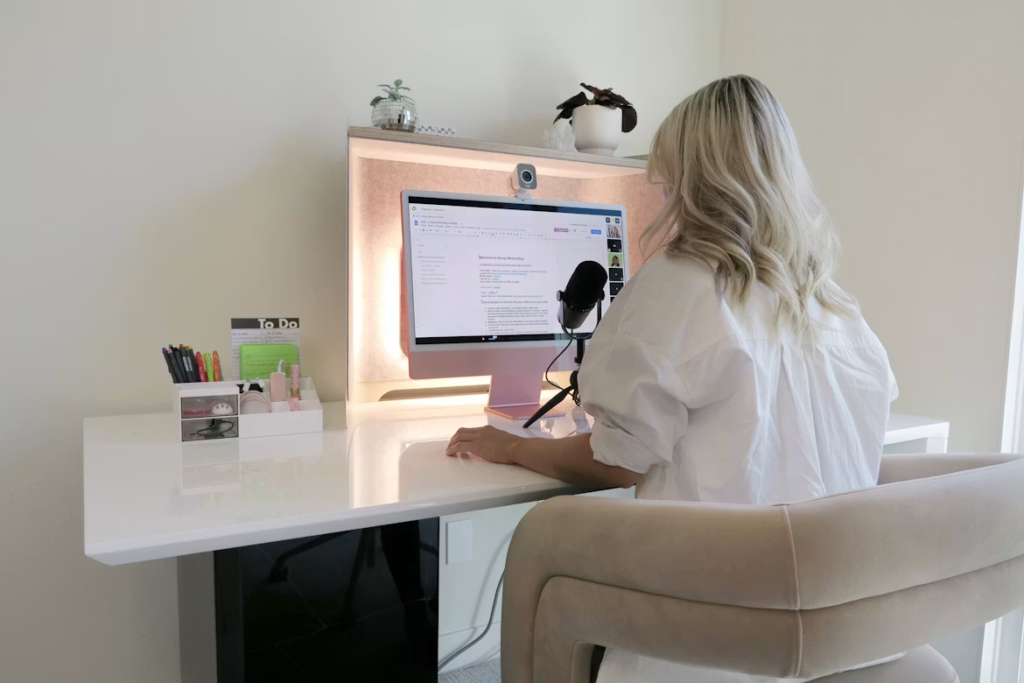
The three main things for a good ergonomic setup are your chair, your desk, and how your monitor is placed. Your chair should support the natural curve of your spine, and you should be able to sit with your feet flat on the floor and your knees bent at a 90-degree angle. Your desk should be at a height where your elbows are bent at a 90-degree angle when you’re typing.
But often, people forget about monitor height. Hunching over a laptop or craning your neck to look down at a screen is a main reason for “tech neck” and upper back pain. The top of your screen should be at or just below eye level, so you can look straight ahead. Stacking books under your monitor is a common fix, but it’s wobbly and makes your desk messy.
A much better and more flexible solution is using monitor mounting arms. These let you put your screen at the perfect height and distance, and they also clear up valuable desk space underneath. Being able to adjust things is super important for keeping a focus-friendly space that changes with your needs throughout the day.
The Power of Proper Lighting
Lighting really affects how much energy we have, our mood, and how well we can focus. Studying in a dim room can strain your eyes, give you headaches, and even make you feel sleepy. On the flip side, harsh, direct light can feel sterile and cause annoying glare on your screen. The trick is to use layers of adjustable lighting to create the perfect vibe for concentrating.
Natural light is best because it’s known to boost your mood and make you more alert. If you can, put your desk near a window. Just be careful about glare; you don’t want direct sunlight hitting your screen. Sheer curtains can help soften bright light while still letting you enjoy the benefits.
Besides natural light, you’ll need good task lighting. This is a focused light source pointed right at your work area, like an adjustable desk lamp. It helps reduce eye strain when you’re reading textbooks or writing notes.
Organizing Your Study Essentials
When you know exactly where everything is, you don’t waste precious time and mental energy hunting for a pen, a specific notebook, or that important handout. Setting up a system for your materials removes friction and helps you get into a flow state faster.
Start by decluttering your supplies. Go through your pens, notebooks, and papers, and get rid of anything you don’t need anymore. Once you’re left with just the essentials, give everything its own spot. Some simple organizing tools can make a big difference:
- Vertical Storage: Use shelves on the wall or a small bookshelf to get books and binders off your desk. This frees up your main workspace for what you’re actually doing.
- Desk Organizers: A simple pen holder and a small set of drawers for things like paper clips, sticky notes, and chargers can stop your desk from turning into a junk drawer.
- Cable Management: Tangled cords look messy. Use cable ties, clips, or a cable management box to bundle and hide wires from your computer, monitor, and other devices.
- Paper Management: Decide how you’ll handle papers. This could be a simple file folder system for current projects and a binder for old notes. Even better, scan important documents and go digital to cut down on paper clutter entirely.
These simple best study space tips help create a sense of order that directly leads to a clearer, more focused mind.
Making your study space better is an investment in yourself and your goals. You don’t have to do everything at once. Start with the change that seems most helpful for you, whether that’s organizing your desk or adjusting your monitor, and go from there.