Dubai’s residential market has moved past a fascination with sheer scale and opulence toward something more practical: artificial intelligence. For buyers and investors, automation is not a nice extra anymore, it’s a real driver of liquidity and returns. As the city works toward the Dubai 2040 Urban Master Plan, homes are turning into responsive, connected nodes within a wider smart city, and that shift has made technology a baseline expectation for high value property rather than a bonus feature.
Market Overview and Economic Integration
Dubai has positioned itself as a global reference point for smart residential living, backed by 5G infrastructure and an aggressive municipal push toward digital policy. The market is growing fast, and with a large volume of new supply due to enter over the next few years, technology has become a kind of shield against price pressure. Automated properties tend to resist downward corrections and sell faster than comparable units without that differentiation, and investors are leaning into “future proofed” assets that align with the Net Zero 2050 mandate and the Al Sa’fat Green Building System.
- The UAE smart home market is expanding at about 15% annually
- Connected apartments in Dubai are projected to reach 52,000 units by 2028
- Automated properties resist price corrections better than standard units
Analyzing the Impact of Automation on Asset Valuation
The financial case for smart homes shows up clearly in both sales and rental figures. Automated apartments in prime districts typically carry a valuation premium over comparable traditional units, and that premium climbs further when paired with a recognised green building certification.
Landlords benefit too, with smart units outperforming conventional apartments on both yield and rent. Much of this comes down to demand from high-income expats and tech native millennials. Remote management features, such as smart locks and predictive leak detection, also let overseas owners manage a property without needing someone on the ground.
- Automation adds a 5% to 15% valuation premium, rising to 20% with green certification
- Smart apartments earn 5% to 8% yields, well above the 3% to 5% for standard units
- Over 52% of inquiries now come from tech native millennials and high income expats
Property Market Data and Installation Tiers
Smart home costs in Dubai scale with the size of the property and how deep the automation goes. Entry level kits cover basic lighting and climate control in compact apartments, mid range systems suit townhouses and larger apartments with motorized shades, CCTV, and zoned HVAC, and full automation packages for luxury villas include wired backbones, integrated solar storage, and custom audiovisual setups.
Installing these systems during construction is far cheaper than retrofitting later, and the upfront spend tends to pay for itself through lower running costs, especially given how much of Dubai’s electricity bill goes toward cooling.
- Entry level kits start at AED 2,500, full villa automation can exceed AED 250,000
- Installing during construction saves about 45% versus retrofitting later
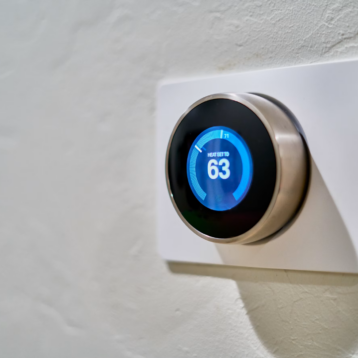
- Smart thermostats can cut cooling costs, Dubai’s biggest utility expense, by up to 30%
Lifestyle and Community Insights
Leading smart communities have moved beyond simple residential clusters into something closer to intelligent ecosystems. In Sustainable City, smart energy tracking and solar arrays cut total utility bills significantly, and wellness features like air quality sensors and circadian lighting are becoming standard in premium developments.
Developers are building these features directly into master plans, with some communities now offering app based drone delivery for groceries and pharmacy orders, while districts like Dubai Hills Estate and Downtown Dubai use centralized apps to combine property management, energy monitoring, and biometric security in one platform.
- Sustainable City residents can cut utility bills by up to 50% through solar and smart tracking
- Air quality sensors and circadian lighting are becoming standard in premium builds
- Dubai Hills Estate and Downtown Dubai link security, energy, and management into one app
Accessibility and Future connectivity
Smart home value is closely tied to Dubai’s wider digital infrastructure. High speed fiber is now treated as a basic utility, supporting the rise in remote and hybrid work, while automated EV charging and smart parking sensors have become important amenities that ease congestion and support cleaner transport. Business Bay, Dubai Silicon Oasis, and Dubai Marina lead on this front, and their rental demand reflects it.
- Fiber internet is now considered a basic utility rather than a premium add-on
- EV charging and smart parking sensors are becoming standard expectations
- Business Bay, Silicon Oasis, and Dubai Marina see stronger demand from this infrastructure
Investment Potential and Regulatory Drivers
The DLD Smart Rental Index has reshaped how much a property can earn in rent. This AI-driven system rates buildings from 1 to 5 stars based on technical finish and maintenance quality, and buildings that score well can raise rents beyond usual caps, while poorly maintained buildings face rent freezes, linking a building’s technology directly to its yield potential.
- The Smart Rental Index rates buildings from 1 to 5 stars on tech and maintenance
- 5 star buildings can raise rents by up to 20% below the index average
- Poorly maintained buildings risk rent freezes under the same system
Pros and Cons of Smart Home Investment
Advantages
- Energy bills reduced by 30% to 40% through automation
- Stronger security via biometric access and remote monitoring
- Faster resale and higher capital appreciation in competitive markets
- Rental yield protection through high Smart Rental Index ratings
Challenges
- Higher upfront cost for full scale automation
- Risk of obsolescence without open standards like Matter
- Ongoing maintenance and software updates needed to keep systems stable
Expert Recommendations
For investors, off plan developments with pre integrated wired automation are worth prioritising, since they hold up better during market corrections than retrofitted properties. For end users, it’s worth choosing systems built on open protocols like KNX or Zigbee rather than proprietary hardware, and confirming that licenses and control hubs transfer legally at the point of sale.
- Investors: choose off plan homes with pre wired automation to save on retrofit costs
- End users: favour open protocols like KNX or Zigbee over closed systems
- Always confirm hardware licenses transfer with the sale
Closing In!
Dubai real estate is heading toward full autonomy, where homes manage their own energy trading and predictive maintenance. As smart technology shifts from luxury feature to baseline expectation, the value gap between connected and traditional properties will only widen. For owners, keeping pace with this shift is about protecting long term capital in one of the world’s most advanced property markets.