A goal goes in. The camera catches it, then the picture starts a long walk through an encoder, a packager, a content delivery network and finally a player buffer sitting on someone’s phone. By the time it arrives, the market has already repriced. Sportsbooks with large live catalogues, bookmaker 1xBet among the operators running thousands of concurrent events, meet the same arithmetic every broadcaster meets, except with settled money on the other end of it. The difference this year is that a protocol built for that specific gap stopped being a lab exercise.
Why Segments Became The Bottleneck
HTTP streaming won the last decade on economics rather than speed. Chop video into segments, let ordinary caches serve them, and you can put a match in front of millions without inventing new infrastructure. The cost shows up in the buffer. Every viewer requests the same segments independently, and the player holds several of them before it dares start playback.
| Delivery method | Typical glass to glass delay |
| Standard HLS or DASH | 15 to 30 seconds |
| Reduced latency HLS | 5 to 10 seconds |
| LL-HLS or LL-DASH | 2 to 5 seconds |
| RTMP | 3 to 5 seconds |
| SRT | 1 to 2 seconds |
| WebRTC | 200 to 500 milliseconds |
Shrinking segments buys you time and costs some compression efficiency, though encoder vendors say lookahead algorithms claw most of that back. WebRTC solves the delay outright and hands you a different bill. Selective forwarding units, TURN relay planning, codec negotiation, load balancing. That trade holds up for one live casino table. Across a Saturday card of forty football matches at once, the overhead climbs faster than the audience does.
A Publish And Subscribe Model Instead
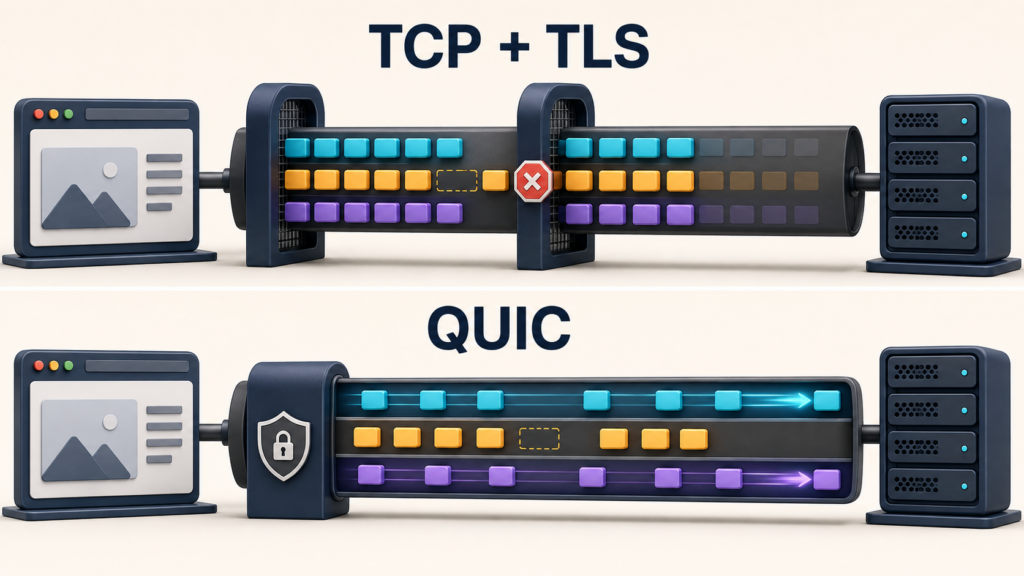
Media over QUIC takes the argument somewhere else. Instead of pulling segments or negotiating peer connections, a producer publishes media as a hierarchy of tracks, groups, subgroups and objects, and relays subscribe once and fan out to many. The design collapses the structural difference between a WebRTC forwarding unit and a cache network into a single shape, which happens to match what a sportsbook streaming dozens of events at once needs.
Cloudflare made every server in its datacenters a MoQ relay back in August 2025, across more than 330 cities, the first such network in the field. At the end of July it added a provisioning API for isolated relays, with separate credentials for publishers and subscribers and no charge during the beta.
Eleven vendors showed their first MoQ implementations at NAB Show 2026 in April, Bitmovin, Oracle, Red5 and AWS among them. Several were stitched into shared multi-vendor pipelines instead of sitting isolated on their own booths. Norsk ran live media from its production workflow engine over the Cloudflare relay network at sub-second latency, and the Cloudflare and Bitmovin demo was reported at around 400 milliseconds.
The Browser Plumbing Finally Landed
None of it reaches a phone without WebTransport, the browser API that exposes QUIC to JavaScript. Chrome and Edge shipped it back in 2022, and Firefox followed in 2023 on a QUIC stack of its own, so the hole was Safari-shaped, which in practice meant every iPhone. In March, Safari 26.4 shipped WebTransport with no flags and no workarounds, which pushed the API to Baseline status across every current major browser. A live odds panel inside the 1xbet app or any browser client now sits on the same transport foundation regardless of which handset it runs on, which wasn’t true five months ago.
WebTransport rides UDP on port 443, and some corporate and carrier networks filter exactly that, so its reachability ceiling sits below the old WebSocket floor. So you keep a fallback path if you build on it.
Everyone Sees A Different Now
Two people watching the same match in the same room don’t share a clock, and a broadcaster can live with that in a way a live market can’t.
One vendor’s WebRTC glass to glass measurements spread out like this.
- Wired, 200 to 300 milliseconds
- Modern Wi-Fi, 250 to 400
- 5G, 250 to 400
- 4G, 400 to 600
Add the protocol delay on top and the spread across the audience you’re serving runs to seconds. That spread is the reason bet delay mechanisms exist at all. Acceptance windows get engineered around it, and pricing engines take their timing from the data feed rather than from the picture on screen. Live wagering is now the leading bet type by revenue according to market research firms tracking the sector, so the plumbing question stopped being an engineering footnote some time ago.
What Still Stands In The Way
The specification isn’t finished. Revision nineteen of the core transport document appeared on 6 July and expires in early January, and the working group’s milestone targets a publication request in December, which makes a finished standard a 2027 conversation at best.
Version skew is the practical cost. Each draft carries its own protocol identifier during the handshake, so an implementation built against one revision doesn’t negotiate with a peer built against another, it fails to connect. The largest relay network in the field currently speaks revisions fourteen and sixteen, several behind the published draft. That’s ordinary standards-process mess rather than a defect, though it does mean you’re testing integrations instead of plugging things in.
The harder question is the one the trade press keeps circling. MoQ needs a job nothing else already does adequately. Sub-second video at cache-network scale and cost, delivered to markets that move several times a minute, is a reasonable candidate. The next round of interoperability testing will say more than any draft can.