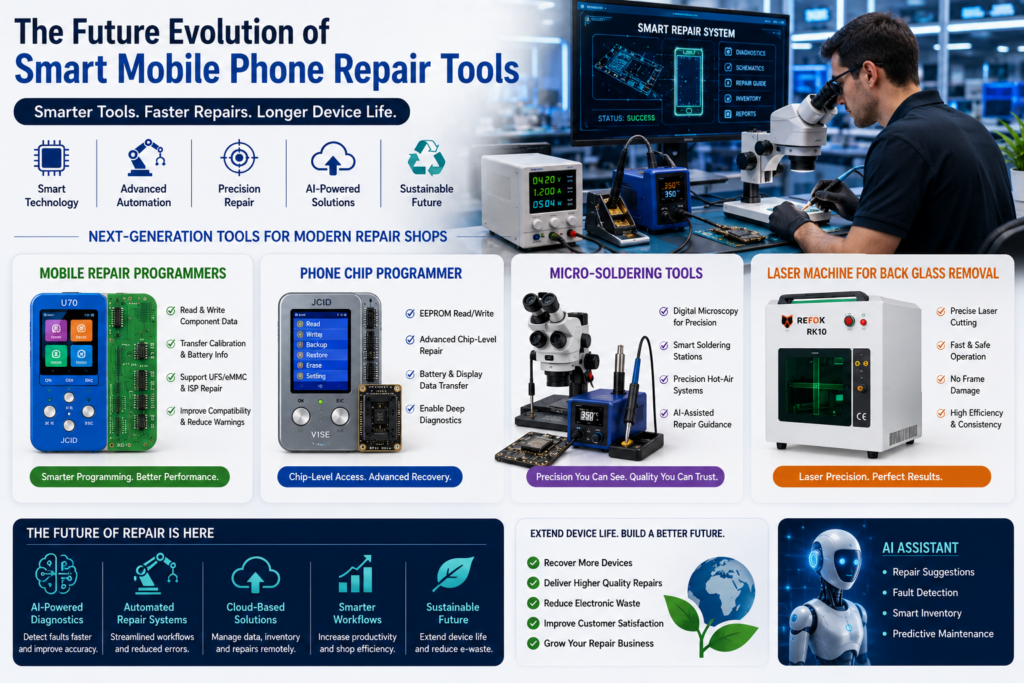
The mobile repair industry is undergoing a technological transformation unlike anything seen before. As smartphones, tablets, smartwatches, and wearable devices become more powerful and integrated, traditional repair methods are struggling to keep pace with modern hardware complexity. Components are becoming smaller, devices are becoming more compact, and manufacturers are introducing increasingly sophisticated technologies that require new approaches to diagnostics and repair.
In response, the next generation of repair equipment is emerging. Advanced automation, intelligent diagnostics, precision laser systems, and AI-assisted repair solutions are reshaping how technicians service electronic devices. Tasks that once required years of experience and extensive manual work can now be completed with greater speed, accuracy, and consistency.
From smart power supplies and advanced Mobile Repair Programmers to automated laser systems and intelligent micro-soldering platforms, the future of device repair is becoming smarter, more efficient, and more accessible than ever before.
Why Traditional Repair Tools Are Reaching Their Limits
For many years, mobile repair shops relied on basic screwdrivers, manual soldering stations, multimeters, and simple testing equipment. While these tools remain useful, modern devices have introduced challenges that traditional equipment was never designed to handle.
Today’s smartphones feature:
- Multi-layer logic boards
- High-density integrated circuits
- Foldable display technology
- Serialized hardware components
- Advanced battery management systems
- AI-powered chipsets
- Biometric security modules
Repairing these devices requires greater precision than ever before. A minor mistake during a board-level repair can damage sensitive components and significantly increase repair costs.
As a result, repair professionals are increasingly investing in intelligent tools that simplify complex procedures and improve repair success rates.
The Rise of Smart Repair Workstations
The future repair shop will look very different from traditional workshops.
Modern repair stations are beginning to integrate multiple technologies into a single ecosystem, including:
Intelligent Power Management
Digitally adjustable power supplies now provide real-time monitoring of voltage, current, and power consumption. These systems help technicians identify short circuits and diagnose motherboard issues more efficiently.
Automated Diagnostics
Advanced diagnostic platforms can quickly detect hardware faults and suggest probable repair solutions, reducing troubleshooting time.
Connected Repair Systems
Cloud-based repair software allows technicians to track repairs, manage inventory, and access repair documentation from a centralized platform.
Together, these innovations are helping businesses increase productivity while reducing repair errors.
How Mobile Repair Programmers Are Changing Device Servicing
One of the most significant advancements in modern repair technology is the development of sophisticated Mobile Repair Programmers.
Modern smartphones store important data within batteries, displays, charging circuits, and various onboard chips. When these components are replaced, the original data often needs to be transferred or restored to maintain full functionality.
Professional programmers allow technicians to:
- Read component information
- Transfer calibration data
- Restore battery health information
- Support advanced diagnostics
- Improve component compatibility
- Reduce post-repair warning messages
As manufacturers continue expanding component serialization and security mechanisms, programmers have become indispensable tools in professional repair environments.
Why Phone Chip Programmers Are Becoming Essential
The growing complexity of smartphone motherboards has increased demand for advanced chip-level repair solutions.
A professional Phone chip Programmer enables technicians to communicate directly with memory chips, EEPROM modules, and integrated circuits found within modern devices.
These tools support a variety of advanced repair operations, including:
EEPROM Data Management
Reading and writing critical component information.
Logic Board Diagnostics
Identifying communication failures and hardware faults.
Battery and Display Data Transfer
Preserving original functionality after component replacements.
Advanced Device Recovery
Supporting repairs that would otherwise require expensive motherboard replacements.
As smartphone architectures continue evolving, chip-level programming is becoming a core skill for modern repair technicians.
The Evolution of Micro-Soldering Technology
Micro-soldering has traditionally been one of the most difficult disciplines within electronics repair.
Technicians often spend years developing the skills necessary to work on microscopic circuits and densely packed logic boards.
However, next-generation micro-soldering Tools are making these repairs significantly easier.
Recent innovations include:
Digital Microscopy Systems
High-definition imaging provides technicians with exceptional visibility when working on tiny components.
Smart Soldering Stations
Advanced stations automatically regulate temperature and power output to reduce the risk of damage.
Precision Hot-Air Systems
Improved airflow control allows safer component removal and installation.
AI-Assisted Repair Guidance
Emerging systems may soon help technicians identify solder points and suggest repair procedures automatically.
These advancements are lowering the barrier to entry for board-level repairs while improving repair quality across the industry.
How Laser Technology Is Revolutionizing Smartphone Repairs
One of the most exciting developments in modern repair technology is the widespread adoption of laser-based repair systems.
A professional Laser Machine for Back Glass Removal can remove damaged smartphone back glass with extraordinary precision.
Traditionally, technicians relied on heat guns, blades, and manual separation techniques that often carried a higher risk of damaging surrounding components.
Laser systems provide several advantages:
- Increased precision
- Faster repair times
- Reduced frame damage
- Greater consistency
- Improved technician safety
As repair volumes continue to increase, laser technology is becoming an important investment for professional repair centers.
The Future Role of Artificial Intelligence in Repair Shops
Artificial intelligence is expected to play a major role in the future of smartphone repair.
Emerging applications include:
Automated Fault Detection
AI systems may analyze device behavior and identify hardware failures automatically.
Repair Procedure Recommendations
Software platforms could guide technicians through complex repair workflows.
Predictive Maintenance
Advanced systems may detect component failures before they occur.
Smart Inventory Management
AI-powered platforms can optimize replacement part inventories and improve operational efficiency.
These innovations have the potential to transform repair shops into highly automated service environments.
Extending Device Lifespans Through Advanced Repair Technology
One of the greatest benefits of next-generation repair tools is their ability to extend the lifespan of electronic devices.
Advanced repair equipment enables technicians to:
- Recover more devices
- Perform higher-quality repairs
- Reduce electronic waste
- Improve device reliability
- Support sustainability initiatives
As consumers become increasingly conscious of environmental impact, extending device lifecycles will continue to grow in importance.
The combination of intelligent diagnostics, precision repair systems, and advanced programming technologies will help support a more sustainable electronics industry.
Conclusion
The future of mobile phone repair is being shaped by automation, artificial intelligence, precision engineering, and advanced hardware technologies. As smartphones and wearable devices become increasingly integrated, traditional repair methods are gradually giving way to smarter and more efficient solutions.
Innovations such as Mobile Repair Programmers, advanced Phone chip Programmer systems, next-generation micro-soldering Tools, and automated Laser Machine for Back Glass Removal technologies are redefining what repair professionals can achieve.
These cutting-edge tools are not only simplifying complex repairs but also helping technicians extend device lifespans, improve repair quality, and support the growing global demand for sustainable electronics repair.
Businesses that embrace these technologies today will be better positioned to lead the next generation of mobile device repair and refurbishment.
FAQs
1. What are Mobile Repair Programmers used for?
Mobile Repair Programmers help technicians read, write, and transfer component data during smartphone repairs, improving compatibility and repair success rates.
2. Why are Phone chip Programmers important in modern smartphone repair?
They provide direct access to memory chips and integrated circuits, allowing technicians to perform advanced diagnostics and chip-level repairs.
3. How do modern micro-soldering Tools improve repair accuracy?
Modern micro-soldering tools offer better temperature control, enhanced visibility, and greater precision, making board-level repairs safer and more efficient.
4. What is a Laser Machine for Back Glass Removal?
It is a specialized repair device that uses laser technology to remove damaged smartphone back glass quickly and accurately without affecting surrounding components.
5. How will AI influence the future of mobile phone repair?
AI is expected to improve diagnostics, automate troubleshooting, optimize inventory management, and assist technicians with increasingly complex repair procedures.