The evolution of sports forecasting and the introduction of AI and predictive analytics to replace “Gut feelings” with quantitative, evidence-based models have had a significant impact on how millions of data points are processed to identify patterns and calculate probabilities.
This evolution is transforming how sports teams manage their rosters and how websites like Nostrabet UK make sports predictions. This article explores the technology behind the predictions and the balance between human and machine.
The Technology Behind the Predictions
The technology behind AI-based predictions is sufficient enough that many people struggle to understand its impact on sports forecasting. That technology combines the analytical qualities of machine learning, predictive modeling, multivariate time-series analysis and real-time telemetry numerical data streams to process thousands of match outcomes per second.
That information is then used to analyse and digest to run millions of calculations before sending it through automated data pipelines. Below is an explanation of how AI models ingest and process that data:
Transformation Streaming Inputs and Data Ingestion:
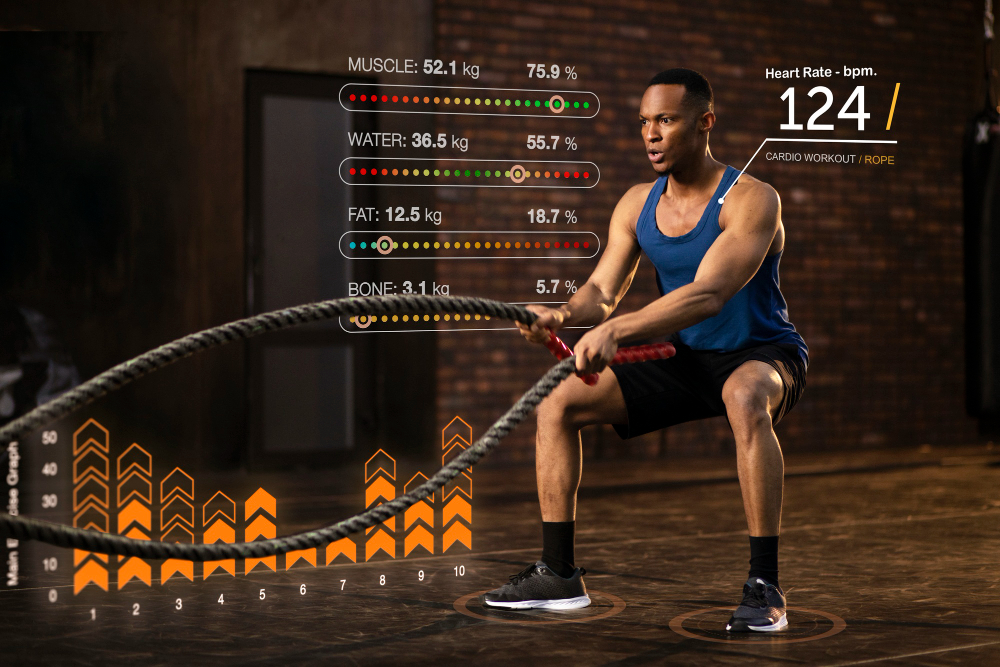
The use of AI predictive analytical models to ingest and receive thousands of data points per second relies on a number of inputs. The most notable are stadium sensors, computer vision tracking cameras, and wearable biometric devices. Those data points, and data annotation, such as tackles, ball trajectory, and player positioning and then converted into structured metadata.
Additional biometric variables, such as a player’s heart rate and the distance they traveled, are included in “fatigue scores. Environmental factors, such as temperature and wind speed, are also ingested by analytical models, as are other head-to-head metrics.
Algorithmic Processing
Machine learning models learn non-linear relationships between the contextual, psychological, and physical data it consumes. That data is then translated into high-dimensional vectors that represent player form, team dynamics, and state of the game any given millisecond.
Simulation & Speed
Instead of minute-by-minute analysis, AI models run random mathematical iterations thousands of times per second. The simulation and speed allow AI models to calculate the probability of various events, such as player fatigue, occurring under simulated play conditions. That rapid simulation capability is achieved via graphical processing units and cloud computing to compute thousands of scenarios simultaneously.
Real-World Applications
Real-world applications, such as live in-game adjustments, broadcasting and fan adjustment, scouting and drafting, are also technologically important in the predictive analytical process. Live in-game adjustments are used by coaches to substitute players to prevent injury, alter tactics, or adjust formations.
AI platforms use broadcast and fan-engagement simulations to generate micro-betting markets and real-time live win-probability updates, while years of historical performance data are used to forecast a player’s future trajectory and market value.
The Human vs. Machine Balance
AI models are powerful analytical tools that establish a statistically rigorous baseline that typically produces a 65–85% prediction accuracy rate. However, they are inherently flawed as they struggle to predict real-time, non-quantifiable disruptions.
The problem with AI predictive analytics is that they fail to measure human factors, such as a team’s mid-season fatigue, sudden chemistry boosts, or off-court turmoil. Instead, they rely on historical metrics, such as matchups, player efficiency ratings, and previous score splits.
That said, AI models can recalculate win probabilities when a player is replaced and use statistical averages for the replacement. The problem with that is that an expert analyst understands the why and whether a backup player’s skill can create an exploitable tactical mismatch against the opposing team.
This is where the role of expert judgment comes into play. An analyst is able to take the AI’s objective statistical foundation and examine it subjectively. By applying real-time observations, such as a player’s body language, injury reports, or press conference tension, an analyst can adjust the AI models’ probabilities to reflect current reality.
This dynamic transforms an AI model’s predictive analytics capabilities into an advanced decision-support tool. It removes the burden of data-heavy statistical crunching and lets human experts focus their energy on contextual and qualitative nuances.
Conclusion
The future of sports analytics is rapidly moving to real-time AI predictive modeling systems. Sports bettors no longer are required to be data scientists to analyse statistical data, or use Open AI to generate strategies or process data they have compiled.
The reality is that AI predictive modeling systems ensure that advanced statistics and player-tracking data are accessible through interactive digital platforms, consumer apps, and smart broadcasts,
As a result, sports fans are able to automate their own sports databases through a variety of general-purpose programming tools that allow them to create customized software that automates tasks and analyzes data through the power of artificial intelligence.