The world of medicine is changing. We’re moving away from generic chemical pills and toward highly targeted biological treatments. These advanced therapies, like mRNA vaccines and personalized cancer treatments, hold incredible promise for human health. But their complexity makes manufacturing them a real challenge. The old ways of making conventional drugs just don’t work for these delicate, highly specific molecules. Because of this, breakthroughs in manufacturing processes are now just as important as the scientific discoveries happening in the lab.
The New Era of Biologics
Unlike traditional drugs, which are made from chemical compounds, biologics are complex molecules that come from living organisms. This group includes vaccines, monoclonal antibodies, cell therapies, and gene therapies. Their large, intricate structures mean they’re very sensitive to their surroundings, needing precise and gentle handling throughout production. Even a tiny change in temperature, pH, or physical stress can ruin an entire batch.
This new medical era is built on a deep understanding of how cells and genes work. Therapies for conditions that were once untreatable are developing quickly, often thanks to intense biopharmaceutical collaboration between research institutions, startups, and established companies. This spirit of collaboration also extends to manufacturing, where new technologies are vital for turning scientific discoveries into real products.
Streamlining Production Workflows
For decades, pharmaceutical manufacturing relied on large, fixed stainless-steel bioreactors and tanks. While these worked well for mass-producing simple drugs, they’re too inflexible and inefficient for biologics. Every production run requires extensive cleaning and sterilization to prevent cross-contamination, which means a lot of downtime and high operating costs.
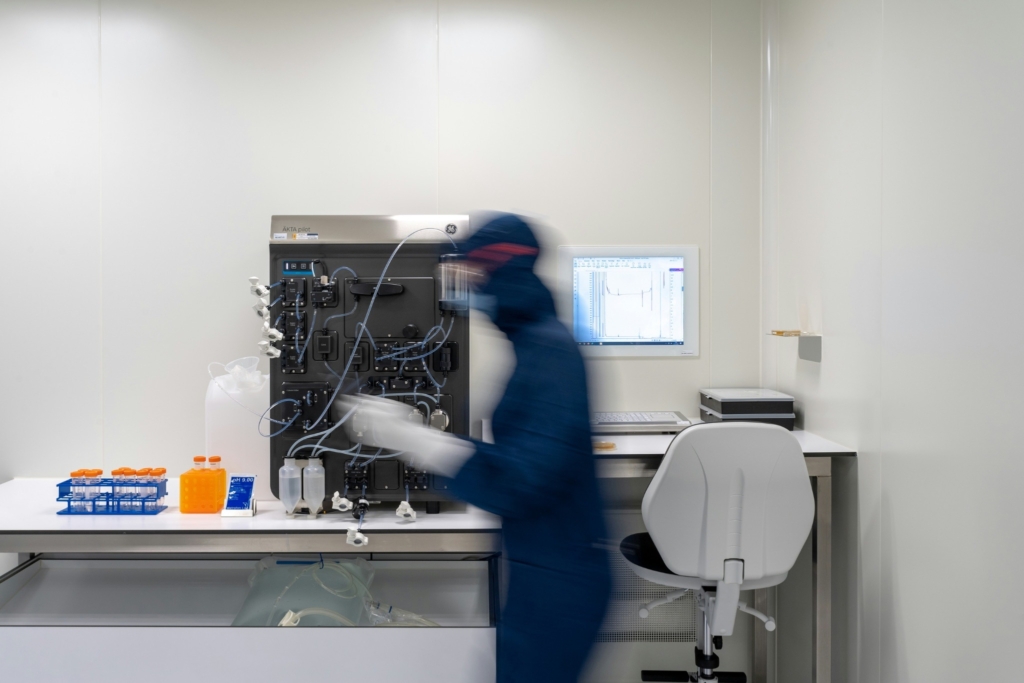
To get around these problems, modern facilities are increasingly using single-use technologies. Disposable plastic bags, tubing, and connectors are replacing permanent steel equipment. This approach means there’s no need for complex cleaning-in-place (CIP) and steam-in-place (SIP) systems. As a result, facilities can switch between different products faster, use less water and energy, and reduce the risk of contamination. These innovations are key to transforming pharmaceutical production and meeting today’s fast-changing demands.
Boosting Efficiency in Small Batches
With personalized medicine and treatments for rare diseases on the rise, many of the most advanced drugs are only needed in small amounts. Making a batch for a few hundred patients, or even just one patient for some cell therapies, isn’t cost-effective with traditional large-scale equipment. This mismatch leads to waste and higher costs.
To fix this, the industry has developed equipment specifically for small-volume production. These systems are designed to handle quantities from a few liters down to just a few milliliters with precision and efficiency. For example, a single-use solution like the Mixed4Sure mixing platform is made specifically for these small-volume applications, ensuring sensitive materials are handled gently while minimizing waste and setup time. By using technology tailored to the job, companies can produce materials for clinical trials or commercial personalized therapies more effectively.
Reducing Capital Expenditure
Building a traditional biopharmaceutical manufacturing facility is a huge undertaking, often costing hundreds of millions or even billions of dollars. The investment in fixed stainless-steel infrastructure creates a high barrier to entry and locks companies into a specific production capacity and technology for decades.
Single-use systems significantly reduce this financial burden. A facility built around disposable technologies can be constructed faster and for a fraction of the cost of a traditional plant. This flexibility allows companies to increase or decrease production based on market demand. It also helps smaller biotech firms and research organizations develop and manufacture their own drug candidates without needing massive upfront capital, which creates a more dynamic and competitive innovation ecosystem.
Future of Drug Formulation
Innovation in drug manufacturing is far from over. The industry is moving toward “Pharma 4.0,” a model that brings digital technology and automation into every part of production. Continuous manufacturing, where raw materials are constantly fed into the process and finished products are constantly removed, is starting to replace traditional batch-based methods. This approach promises more consistency, higher quality, and faster production times.
What’s more, artificial intelligence and machine learning are being used to optimize and monitor production processes in real time, predicting potential problems before they happen. Looking ahead, we might see decentralized, modular manufacturing pods that can be quickly deployed to different regions to respond to public health needs. This would make advanced medical treatments more accessible to people everywhere. These advancements aren’t just about making production cheaper or faster; they’re crucial for delivering the next generation of life-saving therapies to the patients who need them.