Peptide research is becoming more complex. Instead of studying only one compound at a time, researchers are also interested in formulations that combine several peptides into a single material.
A multi-peptide formulation involves much more than simply placing different peptides in the same vial. Each peptide has its own structure, chemical properties, stability, and research background. Scientists also need to know whether each component remains identifiable and stable once it is incorporated into a blend.
A formulation containing several research peptides is therefore an interesting example of how chemistry, analytical testing, and biotechnology come together.
Why Researchers Study Multi-Peptide Formulations
A single peptide usually provides researchers with a more focused way to study a specific signaling pathway or biological process.
A blend creates a different research model. It allows scientists to examine several compounds within the same experimental system and explore how their properties may overlap or differ.
For example, a GHK-Cu, BPC-157, TB-500, and KPV blend brings together four compounds that come from different areas of peptide research.
Each Peptide Brings Different Chemistry
One challenge in creating a peptide blend is that the ingredients are not chemically identical.
GHK-Cu is a copper complex of GHK, a naturally occurring tripeptide made from glycine, histidine, and lysine. GHK has a strong ability to bind copper ions, forming the GHK-Cu complex. Researchers have investigated this peptide in areas such as tissue remodeling and cellular signaling in laboratory and preclinical models.
BPC-157 belongs to a different research area. Published evidence remains predominantly preclinical, with experimental studies examining musculoskeletal tissues and related biological processes in laboratory models.
TB-500 is connected with thymosin beta-4 research. Scientific analysis of TB-500 material has identified a short peptide fragment related to the actin-binding region of thymosin beta-4. Thymosin beta-4 itself is known for its interaction with actin, a protein involved in cell structure and movement.
KPV is much smaller. It is a tripeptide made from lysine, proline, and valine and represents the C-terminal sequence of alpha-melanocyte-stimulating hormone. KPV has mainly been studied in cellular and animal models involving inflammatory signaling.
These show us why formulation science matters. Four peptides in one research material do not become one new peptide. They remain separate chemical components that need to be identified and studied both individually and together.
Formulation Is More Than Mixing Ingredients
When several peptides are combined in a single formulation, researchers need to consider compatibility.
Peptides can respond differently to environmental conditions. Factors such as temperature, moisture, light, oxidation, and the chemical environment around the molecules may influence stability.
The presence of a metal-binding compound such as GHK-Cu adds another consideration. Its copper complex has distinct chemical characteristics from those of a simple peptide that is composed solely of amino acids.
Because of these differences, a good research formulation needs to answer basic questions, such as: Are all the expected compounds present? Do they remain chemically identifiable? Has one component changed during production or storage? Is the final material consistent from one batch to another?
These questions are part of normal analytical science. They matter even before researchers begin studying biological pathways.
Why Analytical Testing Matters More in a Blend
Testing a single peptide is important in itself. Testing a multi-compound blend can be more complicated because several molecules must be confirmed in the same sample.
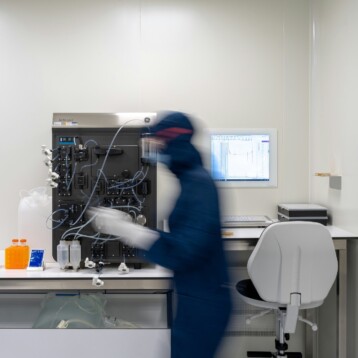
Analytical methods such as high-performance liquid chromatography and mass spectrometry are commonly used in peptide science to separate, identify, or characterize peptide materials. The study that identified a thymosin beta-4-related fragment in TB-500, for example, used high-performance liquid chromatography and mass spectrometry for chemical characterization.
For a blend, researchers may need to confirm more than overall purity. They also need confidence that the material actually contains the compounds listed for the formulation.
This makes documentation particularly important. Batch information, identity testing, analytical results, and certificates of analysis help researchers understand what material they are working with.
A result is difficult to interpret if the starting material itself is uncertain.
Combining Peptides Does Not Mean Their Effects Simply Add Together
One of the easiest mistakes to make with multi-compound research is to assume that four ingredients produce the combined effect of four separate studies.
That is not how biological research works.
A finding reported for GHK-Cu in one experimental model cannot automatically be transferred to a formulation that also contains BPC-157, TB-500, and KPV. The same applies to findings from BPC-157 or KPV studies.
Compounds may act through different pathways. Their behavior can also depend on the model being studied, concentrations used in an experiment, exposure conditions, and many other variables.
This means the blend itself becomes a separate research question.
Why Multi-Compound Peptides Fit a Wider Biotechnology Trend
The interest in peptide blends also reflects a broader direction in biotechnology.
Modern biological research increasingly looks at networks rather than isolated processes. Cell signaling, inflammation, tissue remodeling, metabolism, and other systems involve many molecules interacting at the same time.
Multi-compound formulations can give researchers another tool for exploring that complexity.
At the same time, better analytical technology makes it easier to characterize complicated materials. Modern chromatography and mass spectrometry techniques can provide much more information about peptide identity and composition than researchers had access to in the past.
This combination of formulation science and analytical technology is what makes multi-peptide research particularly interesting from an innovation perspective.
The important part is not simply putting more peptides into one product. The real scientific value comes from being able to create a defined material, verify what is in it, and design experiments that can separate real observations from assumptions.
A More Careful Way to Think About Peptide Blends
Multi-peptide formulations show how quickly research materials can become more complex.
A blend containing GHK-Cu, BPC-157, TB-500, and KPV brings together compounds with different structures and different research histories. That creates opportunities for new experimental questions, but it also creates additional requirements for identity testing, stability, documentation, and careful study design.
The presence of several compounds should therefore make researchers more careful, not less.
The future of peptide formulation is likely to depend as much on analytical quality and reproducibility as on the number of compounds included. For researchers, knowing exactly what is being studied remains the starting point for any meaningful result.
For research and laboratory use only. Not for human or animal consumption.