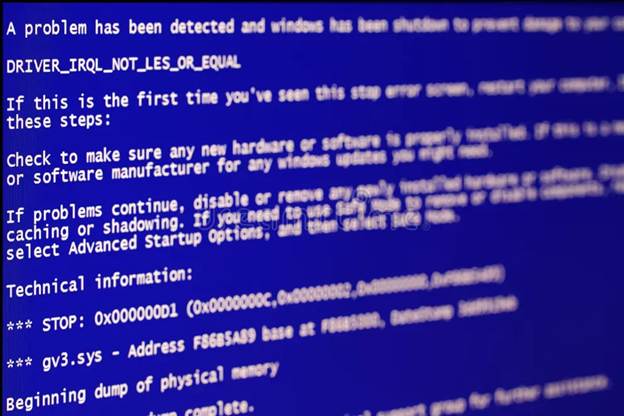
Every Windows user is familiar with BSODs – the presentation that kicked off with a frown emoji instead of a sales chart, the gaming session that ended in a kernel panic. But you normally see those errors on desktop or laptop PCs, witnessed only by you and your quiet frustration.
Far more hilarious, and honestly, a little humbling are the BSODs that go fully public. The ones that bring public places to a brief, slightly awkward halt while the rest of us reach for our phones to snap a photo. Windows runs everything from the flashy billboard above a highway to the quiet terminal scanning your boarding pass, and wherever Windows runs, the BSOD is never more than a bad driver update away.
Here are 12 places the Blue Screen of Death has shown up completely uninvited, and thoroughly overstayed its welcome.
Airport Departure Boards: Where Stress Needs No Extra Help
Nothing makes a crowded departure terminal collectively hold its breath quite like the big overhead boards going royal blue. Thousands of passengers mid-sprint toward Gate C47 suddenly freeze, looking up at that unmistakable frown face. The July 2024 CrowdStrike outage turned airport departure screens around the globe into a mosaic of BSODs, briefly making some of the world’s busiest travel hubs look like a very expensive Windows 10 desktop.
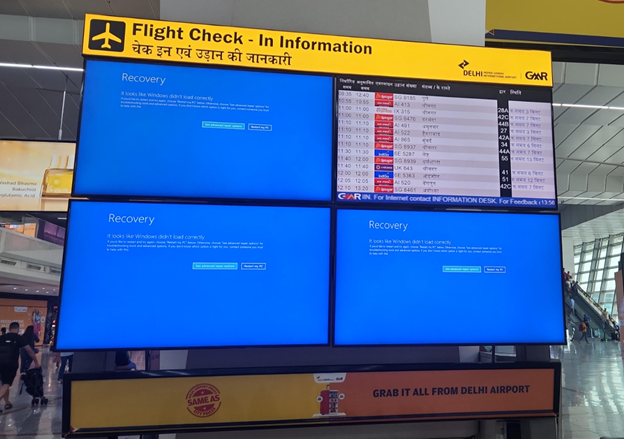
Flight information systems at major international airports – Chicago O’Hare, Heathrow, Delhi IGI, all fell victim. Passengers who had been anxiously checking boards for gate changes instead found themselves staring at a stop code.
Hospital Waiting Room Screens: A New Kind of Critical Condition
You are sitting in an emergency waiting room, already not having the best day of your life, when the information screen on the wall throws up a BSOD. The machine that was quietly cycling through estimated waiting times and health tips has decided it, too, has had enough.
Hospitals rely heavily on Windows-based kiosks and digital signage to keep patients and families informed. When a BSOD locks one of those screens, staff have to field questions the old-fashioned way – which, in a busy ER hallway, is about as efficient as you would imagine. The irony of a crashed screen in a place full of people hoping not to crash is not lost on anyone.
Stock Exchange Trading Floor: A Different Kind of Market Crash
Financial markets are no strangers to seeing big numbers suddenly go the wrong way, but there’s a special kind of panic when the screens showing those numbers go blue. Trading floors at major exchanges use enormous Windows-powered display walls to broadcast live market data to traders. A BSOD on one of those walls during a volatile session is the kind of thing that makes experienced traders instinctively lunge for a phone.
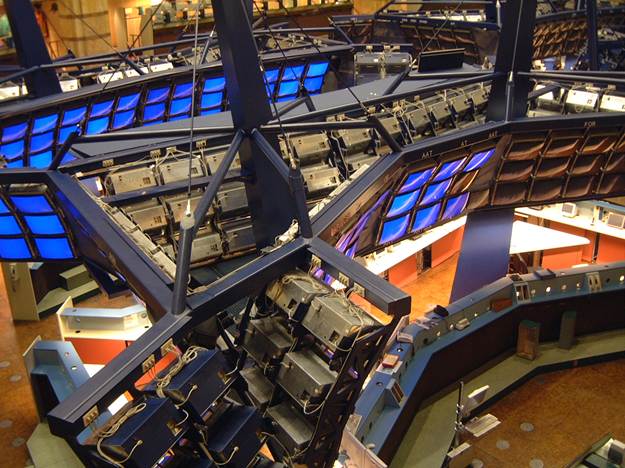
The 2024 CrowdStrike incident caused disruption across financial services infrastructure worldwide, with Windows terminals running critical trading and customer management software suddenly grinding to a halt. When a system that processes millions of dollars a second trips over a faulty kernel extension, the stop code hits differently.
Digital Signage: The Roadside Warning Nobody Expected
Variable message signs on motorways are meant to deliver sober, helpful guidance: FOG AHEAD – SLOW DOWN, LANE CLOSED 1 MILE, or the perennial STAY ALERT. What they’re not supposed to display is a Windows error screen, and yet here we are. Multiple instances of Windows-powered roadside signs have gone BSOD, swapping traffic advisories for kernel stop codes.
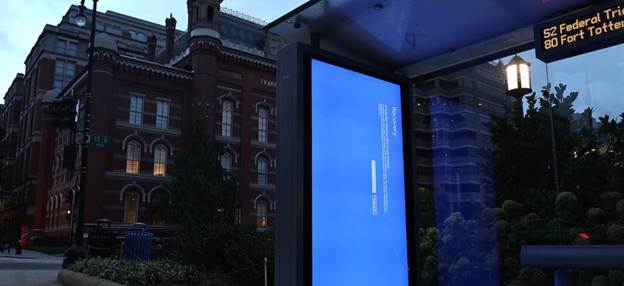
A Washington D.C. bus shelter was photographed in the aftermath of the 2024 CrowdStrike incident, its digital panel showing a full BSOD to passing commuters. A bus shelter’s one job – outside of sheltering people from buses – is to show ads or a map. A stop code is not on the brief, but Windows did not get that memo.
ATM Machines: Your Money Is (Temporarily) Unavailable
ATMs have long run on versions of Windows – often older ones that were never supposed to face the public internet, running financial software bolted atop Windows XP Embedded or Windows 7. They are, in every sense, Windows machines wearing a metal suit. And they crash publicly in queues, in front of people who just need a few notes to get a taxi home.
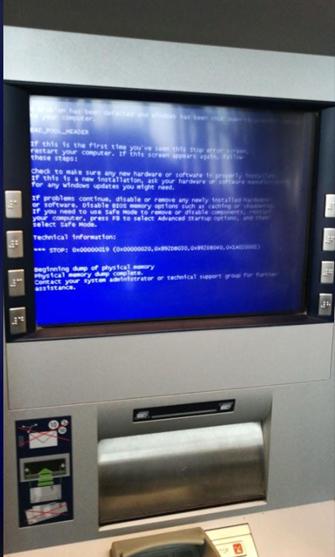
You’ve queued. You’ve inserted your card. Then the screen turns blue and your card gets swallowed while the machine reboots. The bank will tell you to call customer service. Customer service will be on hold for 20 minutes.
Retail Checkout Kiosks: Clean Up in Aisle Blue
Self-service checkout machines are almost universally running Windows underneath their cheerful ‘Please scan your item’ interfaces. Which means when the kernel has a bad day, the whole checkout lane shuts down mid-transaction, usually while someone is halfway through scanning a trolley full of groceries.
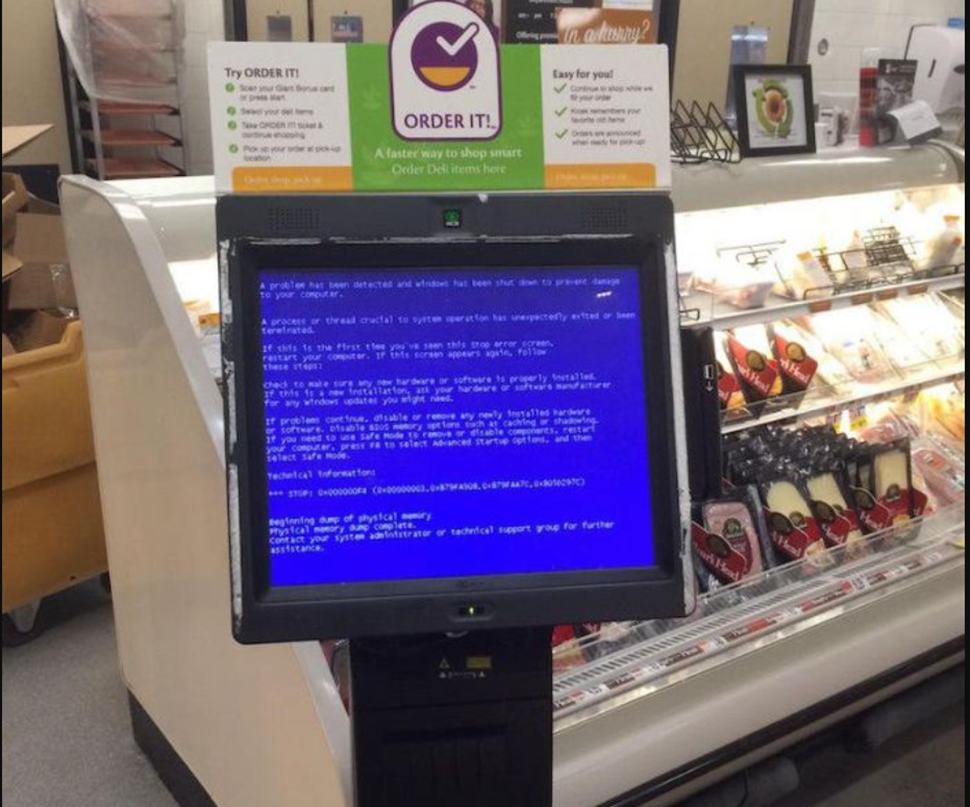
Major supermarkets and fast-casual chains have all reported instances of kiosk BSODs. The machine, minutes ago confidently suggesting you ‘try Clubcard Prices,’ is now confessing it ran into a problem and needs to restart.
Stadium Scoreboards: Halftime Shows Nobody Rehearsed
Sports arenas have invested heavily in giant LED scoreboards powered by Windows-based media servers. Under normal circumstances, these screens loop replays, display sponsor messages, and animate crowd-pumping graphics between plays. Under less-normal circumstances, they display a BSOD to a stadium of 60,000 people, many of whom immediately pull out phones.
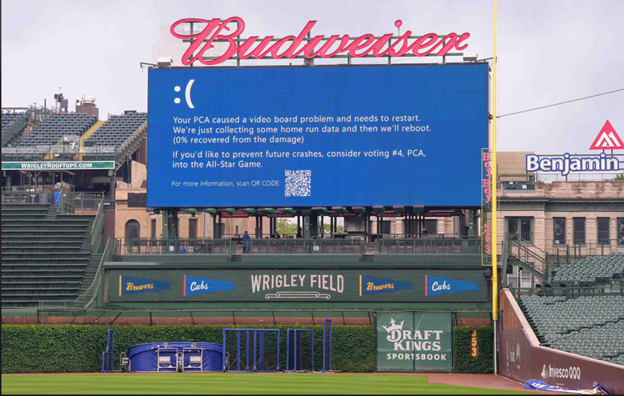
CEOs in corporate boxes and fans in the nosebleeds all see the exact same screen. Windows does not care about your season ticket price.
Hotel Room Entertainment Systems: Checked In, Crashed Out
Hotel room TVs and in-room entertainment systems are increasingly running on full Windows setups behind a custom-branded interface. You boot up the screen expecting a menu offering room service, local TV, and a streaming login – and instead, occasionally, you get a BSOD. Welcome to the hotel. We hope you enjoy your stay. Your room’s PC has run into a problem.
These systems are typically connected to a hotel’s internal network and managed centrally, which means a single bad update can simultaneously crash every TV in every room in the building. Late-night travelers scrolling for something to watch have found themselves staring at Windows kernel diagnostics. The minibar remains operational, at least.
Arcade Game Cabinets: Insert Coin to Continue
Modern arcade cabinets are running Windows under the hood, with a custom front-end bolted on top. Pull the service panel off a contemporary racing game or a light-gun shooter and you’ll find a perfectly ordinary Windows PC blinking back at you, right down to the desktop wallpaper.

Which means that mid-game – right as you’re lining up the perfect lap or unloading into a horde of zombies – the cabinet can simply decide it’s had enough and present a BSOD in full glorious widescreen. Attendants, in the absence of any useful guidance, usually resort to switching it off and back on again, which is, of course, exactly what Windows was going to do anyway.
The BSOD is Everywhere: And It’s Going Nowhere
In June 2025, Microsoft officially retired the Blue Screen of Death after more than three decades, replacing it with a black screen on Windows 11 version 24H2. The frown emoji has been redesigned, the background is darker, and the messaging is supposedly cleaner. But a crash by any other color is still a crash – and the underlying reality hasn’t changed.
Windows is the operating system of critical infrastructure worldwide. Every public-facing kiosk, signage terminal, broadcasting suite, and airport gate reader is a potential candidate. Microsoft has even introduced a Digital Signage Mode in Windows 11 that makes error screens disappear from public displays after 15 seconds – an acknowledgment, if ever there was one, that the BSOD’s public performances are a recurring feature, not a bug.
And while a BSOD on a billboard or an airport screen is mostly a moment of collective inconvenience (and mild entertainment), the same kind of crash on a personal system can be far less amusing. When a sudden system failure interrupts a file transfer, corrupts a drive, or leaves your PC stuck in a boot loop, the real concern isn’t the error code – it’s the data that may have gone down with it.
This is where tools like Stellar Data Recovery Professional quietly become relevant. In the aftermath of a crash, when files seem to have vanished or a drive refuses to cooperate, having a reliable way to retrieve lost data can make the difference between a temporary setback and a permanent loss.
The lesson? Next time you spot a blue – or now black – screen somewhere it absolutely shouldn’t be, take a photo. You’re witnessing a tradition. An accidental art installation. Windows, reminding the world that no matter how seamlessly technology is woven into daily life, it is still, at its core, a PC that ran into a problem.