The USB 3.0 Promoter Group released the USB 3.0 specifications at the first SuperSpeed USB Developers Conference in San Jose, California, held on on Monday, November 17th. The completion of the specification, the technical map for USB 3.0 – also known as SuperSpeed USB, will enable manufacturers to produce new USB 3.0 based devices for the market in about a year.
 |
SuperSpeed USB Mini-B
connected to
Mini-B receptacle |
|
The new USB specification states lower power consumption and enhanced performance, while providing backward compatibility with billions of USB 2.0 enabled computers and peripheral devices currently in use. The specifications also state that data transfer rates have increased to up to ten times faster than Hi-Speed USB 2.0 standards. The SuperSpeed USB works at 5 Gigabits per second compared to the fastest speed of 480 Megabits per second offered by USB 2.0.
To make the SuperSpeed USB more stable, many error minimisation properties have been added to the design. The
physical layer bit error is expected to be less than one 1012 bits. To protect against the occasional bit error,
packet framing and link commands possess adequate redundancy to tolerate single bit errors. Every packet contains
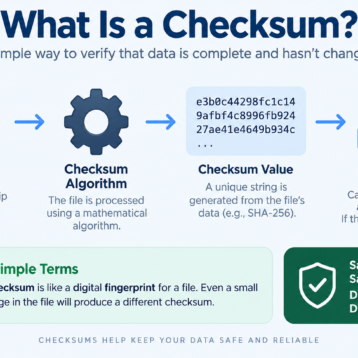
Cyclic Redundancy Check (CRC) to offer error detection for
multiple bit errors. When data integrity is expected, an error recovery procedure may be raised in hardware or software.
The protocol comprises of individual CRCs for
headers and
data packet payloads. Furthermore, the link control word (within each packet header) has its own CRC. A failed CRC in the header or link control word is deemed a serious error which will result in a link level retry to recover from the error. An unsuccessful CRC in a data packet payload might denote corrupted data and can be dealt with by the protocol layer with a request to resend the data packet.
SuperSpeed offers power management at selected areas in the
bus architecture, link, device and function. These parts are not tightly coupled but do have dependencies which mainly deal with permissible power state transitions. For example, when packets are routed, links which are not utilised in data communications transition to and remain in a low power state.
 |
| USB 3.0 – first products in 2010 |
|
The USB 3.0 has analogous architecture to former versions of USB in that it is a cable bus sustaining data transfer between a host computer and a broad array of simultaneously accessible peripherals. The connected peripherals allocate bandwidth through a host-scheduled protocol. USB 3.0 employs dual-bus architecture to facilitate backward compatibility with USB 2.0. The USB 3.0 cables include eight primary conductors: three twisted signal pairs for USB data paths and a power pair. In addition to that are the twisted signal pair for USB 2.0 data path, two twisted signal pairs act as the SuperSpeed data path, one for the transmit path and one for the receiving path.
It is expected that the first SuperSpeed USB discrete controllers will materialize in the second half of 2009 and consumer devices will arrive in 2010 with implementation throughout 2010. The initial version will incorporate data storage devices such as
flash drives, external hard drives, digital music players and digital cameras.
The expected annual growth rate for USB 3.0 from 2009 to 2019 is greater than 100%, with the hopes of achieving over 500 million devices by the year 2012. “It is a strong endorsement for SuperSpeed USB and the other contributors’ group involvement to see such early SuperSpeed USB development taking place” said Jeff Ravencraft,
USB-IF President and Chairman.
TFOT recently covered the pre-launch of the USB 3.0 with 25GB in 70 seconds with USB 3.0 and has previously looked at USB 3.0 in September 2007, predicting
USB 3.0 to arrive as soon as 2008. We have also written about the
MultiSwitch, the first USB sharing hub, which is a new extension to USB that will enable sharing of various USB peripherals between computers and allows the sharing of information and content from devices such as DVD players, cameras, printers, and scanners between laptops and desktops using a simple USB cable.
Additional information on all the specifications can be obtained at the USB 3.0
website.