Feedback Form
   
Add to Google
Organic Farming to Feed the World Organic Farming to Feed the World
Wednesday, November 14, 2007 - Roni Barr
Home >> News >> Green Technology
  Peralink
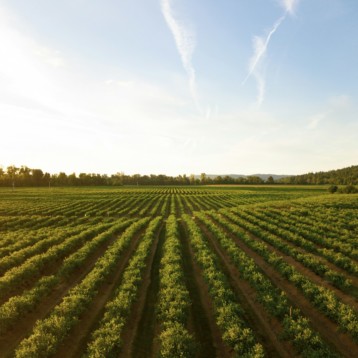
Researchers from the University of Michigan have found that organic farming in developed countries could yield up to three times as much food on individual farms as low-intensive methods on the same land. Yields of organic and conventional farming methods are almost equal in developed countries. However, in developing countries, using organic techniques may double or triple crops, according to Professor Ivette Perfecto of the University of Michigan’s School of Natural Resources and Environment. Prof. Perfecto led the team of scientists who worked on this groundbreaking study.

 Large scale organic farming
Large scale organic farming
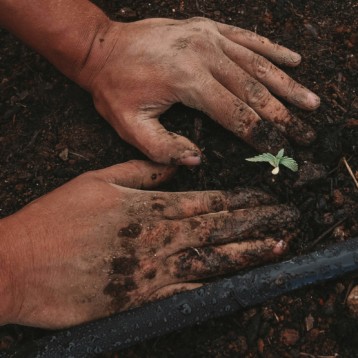
Until now, the chief objections to organic farming were low yields and lack of organically acceptable nitrogen sources. Perfecto and her team compared yields of organic and non-organic farms to look at nitrogen availability. The scientists found that nitrogen sources can be kept at sufficient levels in farm land areas, by planting so-called “green manures” in the fields in between growing seasons. Green manures are cover crops, which are plowed into the soil to provide natural soil amendments. Planting green manures between crop growing seasons enriches the soil with enough nitrogen to replace synthetic fertilizers.  

Organic food 
Organic food
Many people support organic farming because the mechanized tillage, synthetic fertilizers and biocides of conventional agriculture is are detrimental to the environment. For farmers who do not have access to the expensive fertilizers and pesticides necessary for producing high yields, such as those in developing countries, conventional agriculture is much more difficult and costly than organic farming. 

With corporate interest out of the way and influence by chemical, pesticide and fertilizer companies at bay, Perfecto hopes the new findings will put the last nail in the coffin of the idea that one cannot produce enough food through organic agriculture. Not only is organic food production efficient and possible, it’s healthier both for us and for the environment. 

More information about Perfecto and her team’s findings can be found here.

Related News Alaska Opts for Underground Energy Alaska Opts for Underground Energy Perfecting Solar Cells by Adding Imperfections Perfecting Solar Cells by Adding Imperfections

Related Pictures Honda Insight Honda Insight YoGen – Hand Powered Generator YoGen – Hand Powered Generator

Other Articles Smart-Bombing Cancer Smart-Bombing Cancer The Rise of the Phoenix The Rise of the Phoenix


No comments have been posted for this item.

Add a New Comment
Your name:   0/20
Subject:  0/30
Your Comment:  0/999
Type the following letters: Visual CAPTCHA
Please keep your comments related to the above item's topic. TFOT reserves the right to delete any unrelated comment without notice.

Picture Of The Day
Microsoft Arc Notebook Mouse

Video
Nostalgia: The Atari Wallet

Site Of The Week
Galaxy Zoo
Galaxy Zoo

Personal Column
Detroit’s Dream of Aircraft Production
Dr. Daniel Uziel
Detroit’s Dream of Aircraft Production
Terms Of Use | Privacy Policy | Contact Us | Advertise With Us | Site Profile
Copyright © 2007 The Future of Things. All rights reserved.