Your wrecked car could land at a repair shop or salvage auction long before you finish sorting out the collision, and the stored data can disappear before the insurance fight is settled. Preservation is a race. To guard any possible event data recorder data, find the car, note where it sits right now, work out who controls it, and send written instructions telling them to leave it alone. The goal is to keep retrieval possible. It is not a promise that usable data sits inside your car or that anyone can recover it.
What Crash Data May Still Be Inside Your Car
What an EDR records
Preservation starts with knowing what you’re protecting: an Event Data Recorder, or EDR, a device that stores a short record of vehicle operation around a triggering event. Most of the time that function sits inside an electronic control unit, typically the airbag control module.
It can log speed and braking. On supported vehicles, you also get throttle position or steering angle, and some fields cover seat-belt status and airbag deployment. Others store delta-V, the change in velocity. Some vehicles capture roughly five seconds before impact, and the recording window differs with every vehicle and event.
NHTSA’s 49 C.F.R. Part 563 sets out which data elements manufacturers must capture and how they can be retrieved if they equip a vehicle with an EDR. While federal law does not explicitly mandate EDR installation on every vehicle, virtually 100% of modern light-duty passenger vehicles (under 8,500 lbs GVWR) come equipped with them. For covered vehicles, manufacturers must provide standardized data elements and commercially available retrieval tools.
What triggers a recording
Sensors do the triggering: an EDR records when a collision is hard enough to cross its recording threshold. Airbag deployment isn’t required. A minor bump may not count, and one platform may treat temporary or non-deployment records very differently from another.
What the record leaves out
An EDR won’t hand you a story of the crash, let alone a legal verdict. Right-of-way and what a driver saw generally lie beyond its reach. Road conditions and phone use take other evidence to prove: photographs, phone records, that kind of thing.
How to Know Whether Your Vehicle Has Crash Data
Check the owner’s manual and manufacturer information
First, look in your owner’s manual for an EDR disclosure, then check model-specific details against manufacturer information. Check the index under “event data recorder” or “EDR,” and try “airbag control module” and “vehicle data” as well. Read the privacy section too. Still confused after reading it? Call manufacturer support and give them your vehicle identification number, or VIN.
How to locate a car’s event data recorder
Finding a car’s event data recorder is a job for a qualified technician working from manufacturer service information for your model. Usually, the recording function sits in the airbag control module, under the center console or a seat, but that placement varies by model. The diagnostic connector can give access even though it isn’t where the module physically lives. Don’t tear apart interior panels looking for it.
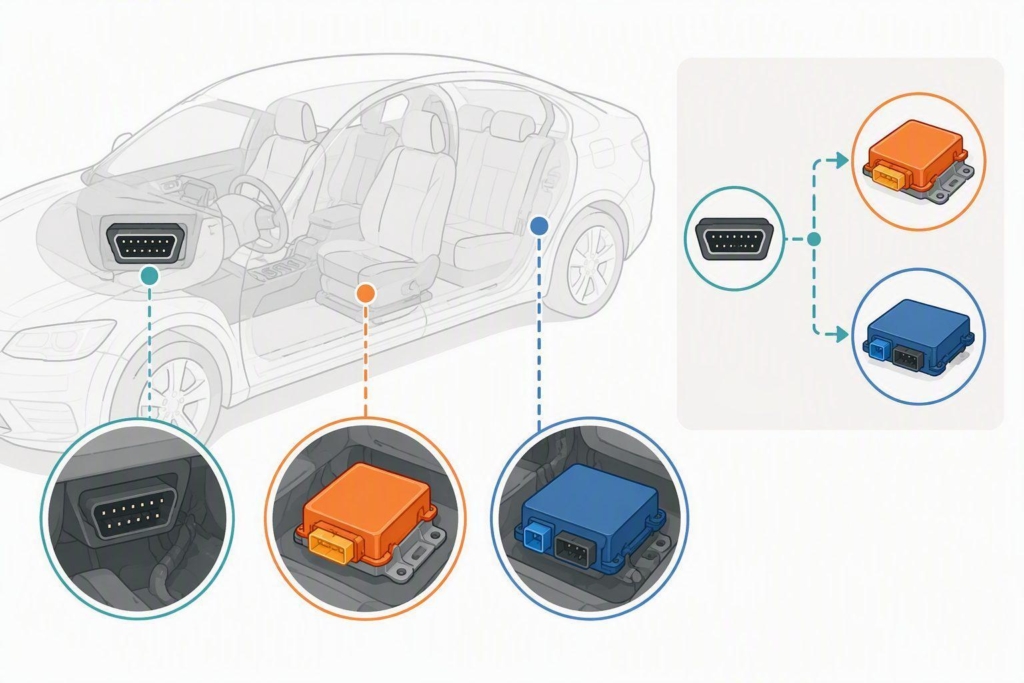
Think of the diagnostic connector as an access point, not necessarily where the data is stored. Placement differs by model.
How to Save Your Car’s Crash Data Before It Is Repaired or Scrapped
Preserving the vehicle keeps retrieval possible; it doesn’t authorize a download.
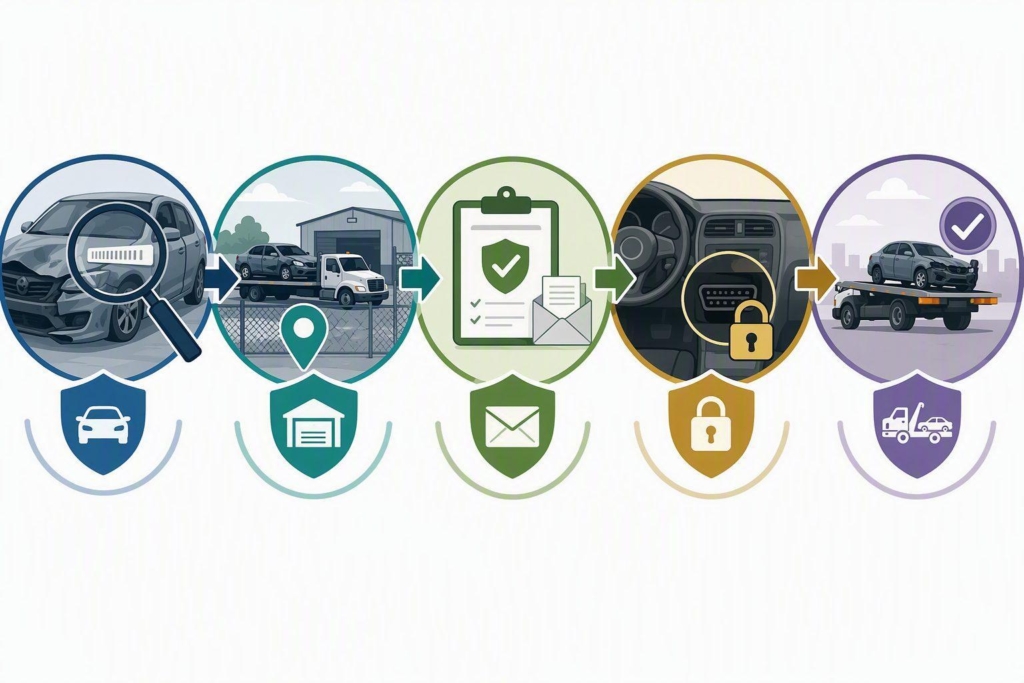
Each step protects the next one. Order matters just as much as content.
- Photograph the VIN and the whole vehicle
Address any urgent medical and safety needs first. Then photograph the VIN through the windshield, plus the driver-door certification label if you can reach it. Capture the license plate and all sides of the car, then document the interior and visible damage. Record the date and location separately. The VIN is what ties later requests to this specific car.
- Find the vehicle’s current location
Find out which tow yard or facility holds the car right now; its original destination may no longer matter. Record the facility’s legal name and street address. Record a phone number and a contact person before you hang up, and save any stock or claim number. If it moved, request transfer records from the towing company and insurer, then follow the paper trail to the lender or repair shop and any police agency involved.
- Identify who owns and controls the vehicle
Title ownership and physical custody are different. An owner or lessee may hold rights in the data; a storage facility controls the door. Ownership and applicable law shape consent; insurance arrangements and contract terms do the rest.
- Send a written preservation request immediately
Send dated written notice to every party controlling the vehicle, naming its VIN and current location. Ask them to preserve the vehicle, including the airbag module, EDR-related components, and wiring. Request that no repairs be performed, that the ignition remain off, and that diagnostic connections remain untouched. If the vehicle is sitting with active battery drain, instruct qualified personnel to disconnect the 12-volt battery negative terminal to preserve power states without key cycles. Ask that nobody move it to scrap, sell it, or strip parts before qualified retrieval is in place.
One limit deserves emphasis. Your notice doesn’t grant inspection rights, and it can’t guarantee a custodian will hold off on disposal. If access or the claim is disputed, seek qualified legal guidance promptly.
- Preserve proof that the request was received
Save every sent email and claim-portal message. Keep certified-mail records and other delivery confirmations, and note recipient names and dated calls. Ask for written confirmation of the hold and advance notice of any transfer. A delivery receipt showing date and recipient beats a verbal promise.
- Avoid actions that could alter the module
Don’t start the car. Without qualified direction, don’t clear diagnostic codes or disconnect and reconnect components. Don’t approve repairs or module replacement. Don’t allow destructive testing, and don’t attempt a DIY download. Each vehicle responds differently, so leave handling decisions to qualified personnel.
Warning: Do not remove, power, reset, repair, or scan a suspected crash-data module yourself. Incorrect handling may alter its condition or damage it, and either outcome complicates later authentication.
- Arrange lawful retrieval by a qualified technician
Have the technician check vehicle coverage and use manufacturer-compatible hardware and software. Retrieval requires appropriate owner consent or other lawful authority, separate from the preservation request. Ask the technician to document the vehicle and module condition, preserve the original output, and maintain a handling record.
Who Can Download Event Data Recorder Data, and Why a Code Reader Is Not Enough
Who can retrieve EDR information
A qualified crash-data retrieval technician or reconstruction professional can download EDR information with compatible equipment and model-specific software. The work takes training and physical access. Lawful authorization is a separate requirement, and manufacturer service information plus supported-tool documentation point to compatible retrieval methods. A dealership or mechanic may help with supported models, but standard repair credentials don’t grant download access.
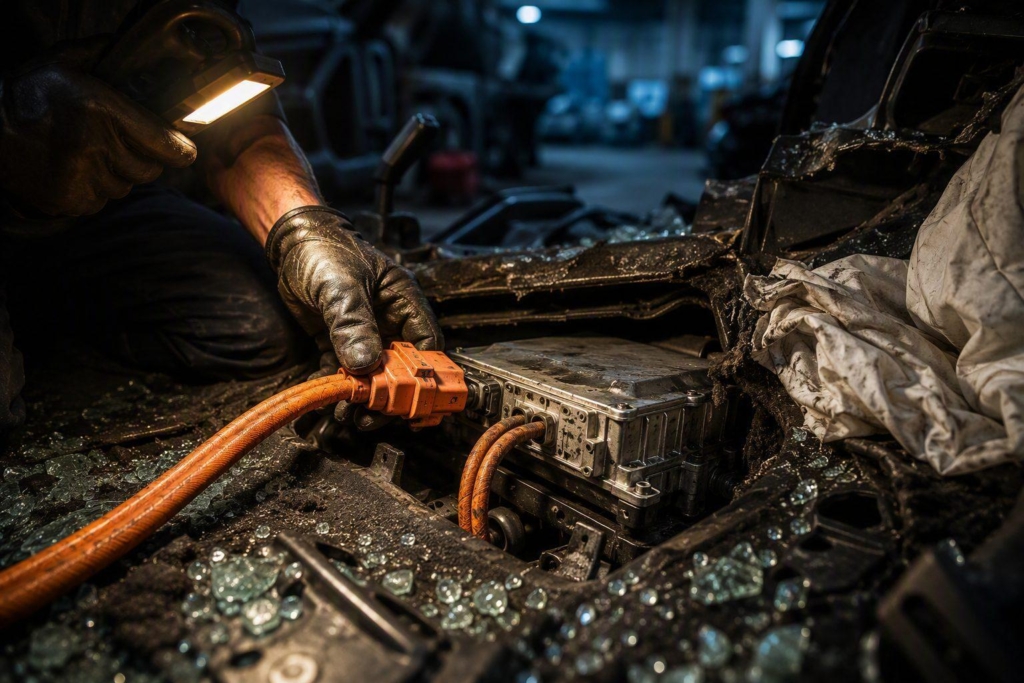
Severe damage sometimes forces professional module removal for direct access. That work should document the module’s identity and connector condition, with photographs kept beside the resulting file.
Can a standard code reader read an event data recorder?
A standard code reader generally can’t pull an event data recorder’s structured crash report. An ordinary OBD2 scanner reads emissions information and diagnostic trouble codes. Some specialist retrieval systems use the same diagnostic port, but a shared connector doesn’t make consumer gear equivalent to the manufacturer-compatible hardware and software specified in supported-tool documentation.
Why documentation matters after retrieval
Ask for the report and the untouched output, plus the software version and the technician’s identity. The record should carry the retrieval date and the VIN. Include the connection method, too. Request the module part number and photographs. A “chain of custody” log shows who handled the vehicle or module and who later accessed the files; it doesn’t guarantee a court will admit them.
Troubleshooting Access and Damage Problems
The vehicle is leased or financed
Notify the leasing company or lender, plus your insurer. The physical custodian needs notice too. A lessee may have an interest in EDR data, but title and contract terms can affect authorization. Returning the vehicle doesn’t create a preservation hold on its module.
The insurer or salvage company controls the wreckage
Send the VIN and claim number with the storage location and a written preservation request. Ask for hold confirmation and notice before any movement or auction, including planned repair or disposal.
Insurers may want EDR information in serious or disputed crashes, including technically complex claims, but they don’t download it in every case. Relevance and cost drive that decision. Vehicle support and lawful authorization then decide whether retrieval can proceed.
The vehicle or module is severely damaged
A crushed cabin or a dead battery doesn’t doom the record. If the diagnostic port is unreachable, a technician can use a supported direct-to-module method after professional removal. Don’t pry open or clean a damaged module, and don’t try to dry it out or power it up.
The vehicle has already been moved or dismantled
Trace transfers through tow and claim records, then repair orders and title-transfer paperwork. Auction records and salvage documents may name the next custodian. If the module was removed, request its location and part number. Ask where it has been stored and who has handled it. Seek prompt legal help if access remains disputed.
Privacy and Connected-Car Questions
Can you remove an EDR from your car?
Removing or disabling an airbag-related control module can impair safety systems and cause diagnostic faults, as the owner’s manual and manufacturer service information may explain. It can violate lease or warranty terms and leave the vehicle unsafe to drive. Don’t remove it to stop recording, and don’t remove it ahead of an inspection. Preserving evidence after a collision is a different act from modifying a working vehicle.
How do you stop a car from transmitting data?
Start in the vehicle’s privacy settings and your connected-services account. The owner’s manual and the manufacturer’s privacy notice list the remaining transmission controls. An EDR stores crash information locally; telematics systems can send location or diagnostic data over cellular connections. Check the manufacturer’s app for settings affecting emergency calls and other services. Don’t disconnect safety hardware or the 12-volt battery for privacy.
What Retrieved Crash Data Can and Cannot Show
A supported report may help reconstruct vehicle inputs and crash forces. Compare it against physical damage and roadway evidence. Photographs and witness accounts fill in the rest. The fields specified under that federal rule describe vehicle operation and restraint-system activity, not legal responsibility. EDR information can help or hurt your position, but it won’t determine fault on its own.
Frequently Asked Questions
Q: How quickly should possible crash data be preserved?
A: As quickly as possible. Federal regulations (49 C.F.R. § 563.9) require data to survive for at least 10 days after laboratory crash testing, but in the real world, memory retention is not the time-sensitive bottleneck—vehicle transfer, battery depletion, repairs, or scrap disposal are. Send written preservation requests immediately before custody of the vehicle changes.
Q: Does every modern car contain retrievable crash information?
A: No. While virtually all modern light-duty vehicles carry an EDR, non-covered heavy vehicles may not, and a minor collision may not cross the deceleration threshold required to trigger a permanent record. Have a qualified retrieval professional verify system coverage and recording status using your VIN.
Q: Is sending a preservation letter the same as getting access?
A: No. A preservation request asks the custodian not to alter or transfer the vehicle or dispose of it. It does not itself provide owner consent or a court order, two of the specified grounds for retrieving EDR data. Ask a lawyer in your jurisdiction about access if ownership or control is disputed.
Q: Will an EDR report prove who caused the crash?
A: Not by itself. The report documents what the car did, as covered above. Determining who caused the crash requires scene records and other independent evidence.
Preserve the Vehicle Before the Opportunity Disappears
You don’t need to know how to download crash data to protect the chance for someone qualified to try. Name the vehicle and find its current custodian, then send written preservation requests to everyone controlling its movement or condition. Keep proof of receipt while you sort out authorization and line up a trained technician. Stay away from the module yourself, and follow up before any planned transfer or repair. A clear VIN photograph, a confirmed preservation notice, and an untouched vehicle give that technician a practical starting point.