What is this silent force that moves us? Music beats against our ears, our feet tap out a rhythm and our hearts quicken. The ocean’s surf crashes against the shore. Pulsamento – that is its name.
Still a foreign word in our language, but full of possible interpretations whatever the level or meaning we want to assign to it – from the most banal to the most important – and above all it talks about vital and fundamental elements of human existence: from our time to our connection with the world, from our energy to our human and social relationships. Try to represent it: it is present everywhere.
Time for a deeper look at Pulsamento! What does it really mean, and why is it so important? How does it affect the timing and rhythm of things – from music and emotions to the flow of everyday life.
What Is Pulsamento?
As nouns the difference between pulsamento and rhythm is that pulsamento is while rhythm is the recurring pattern of strong and weak elements in music, language, and some other forms of expressive sound. At its core level, Pulsamento is the rhythmic pulse or movement which creates a continuity or sequence of movements by organizing time and space into rhythmic cycles of stress and rest.
Think of it like this:
- The heartbeat in your chest
- The tempo of a song
- The rise and fall of your breath
All of these are expressions of pulsamento.
Whereas beat refers to a single pulse and a moment to a single instant in time, pulsamento is a process of continuous rhythm.
And that’s what makes it so cool. It’s not about the sound or the motion, really. It’s about the connection between them all.
The Origin of the Word
Pulsamento Pulsamento is a word derived from Latin where “pulsare” means “to beat or strike repeatedly”.
Over time, this idea evolved into something broader:
- In Italian and Spanish, it relates to rhythmic beating
- In music, it refers to the pulse beneath sound
- In life, it becomes a metaphor for continuous energy
Information is one of those words that feels like it has been around for millennia, and yet, at the same time, feels fantastically contemporary. What, after all, is information except a concept that was created to describe the root of the simplest possible word in the language?
Pulsamento in Music: The Heartbeat of Sound
If there’s one place where pulsamento is easiest to understand, it’s music.
Every song you’ve ever loved has a pulse. That steady, underlying beat—the one you tap your foot to without thinking—that’s pulsamento.
Why It Matters in Music
- It keeps musicians in sync
- It defines tempo and timing
- It shapes emotional impact
Without pulsamento, music would feel chaotic and disconnected.
A fast pulsamento creates a sense of dynamism and energy in a composition or track. It can create a feeling of rush or urgency in the listener. A slow pulsamento in a composition or track can evoke feelings ranging from calmness, melancholy, to contemplation.
And, as I’ve come to learn, pulsamento isn’t always easy to spot. Sometimes it feels more muted – even almost imperceptible – but our bodies still register it.
Much like how evolving digital spaces such as Yonosamachar com: What It Is, What It Covers, and Who It Is For reflect the pulse of modern information flow, pulsamento captures the deeper rhythm underlying our inner and outer experiences.
Pulsamento in the Human Body
Now shift your focus inward.
Your body is full of pulsamento.
The Most Obvious Example: Your Heart
Your heartbeat is the purest form of pulsamento – the rhythm that governs life itself. With each beat and with each release, your heart generates pulses that resonate throughout your body.
But it doesn’t stop there.
Other Hidden Rhythms
- Breathing patterns
- Brain waves
- Sleep cycles
- Hormonal rhythms
Your body is not static; it is in a perpetual state of motion as each of its systems is made up of waves of alternating frequency, existing in harmony with one another in the form of layers of pulses.
And when those rhythms go off beat we feel it as stress, fatigue, disharmony.
That’s why meditation, exercise, or music has such a profound effect on us. They synchronize our pulsamento with the outside world so that everything is working in harmony.
Pulsamento in Movement and Dance
Watch someone dancing—not just casually, but fully immersed.
Their bodies do not twitch aimlessly. Their movements must conform to some underlying rhythm or cadence.
That’s pulsamento in motion.
Why Dancers Rely on It
- It guides timing and coordination
- It connects movement with music
- It creates emotional storytelling
Dance is physical manifestation of pulsamento. What we hear as rhythm can be seen as dance.
And even outside formal dance, it shows up:
- The way you walk when you’re confident
- The way you sway when you’re relaxed
- The rhythm of your daily routines
Your life has choreography—you just don’t always notice it.
Pulsamento in Nature
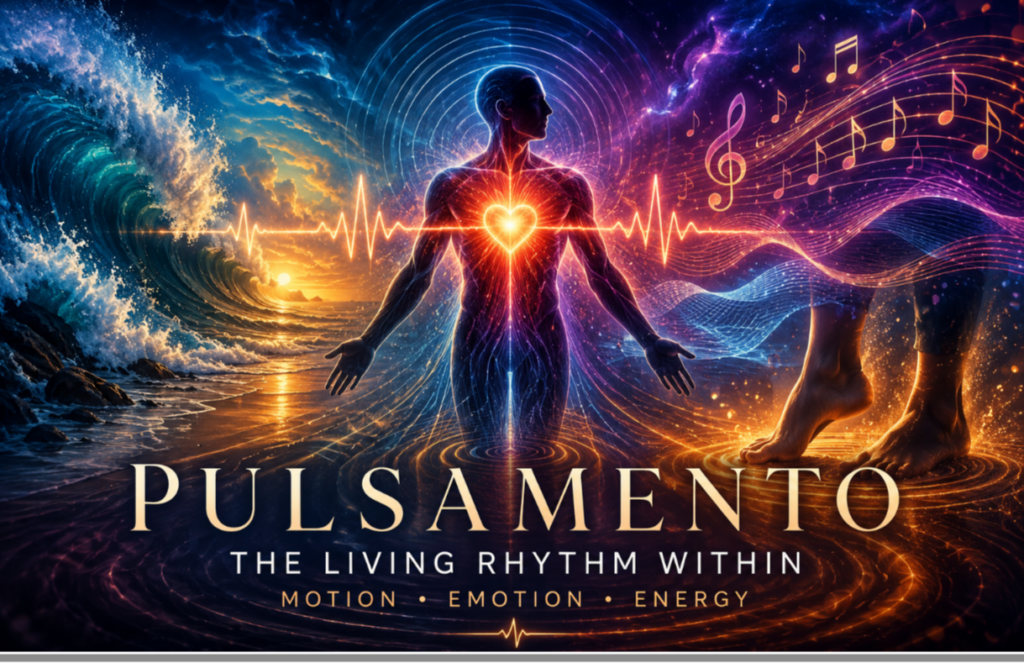
Step outside, and you’ll find pulsamento everywhere.
Natural Examples
- Ocean waves rising and falling
- Day turning into night
- Seasons cycling through the year
- Wind moving through trees
Nature doesn’t operate in chaos—it moves in patterns. Repeated, rhythmic patterns.
That’s pulsamento at a universal scale.
But even phenomena such as sound waves and light consist of oscillations, yet another kind of rhythmic motion.
In a way, the universe itself breathes.
Much like the subtle shifts explored in Pulsamento, even digital spaces pulse with their own rhythms—something examined in MagVistaNow.com 2026 Review: Is It Legit or Just Hype?, where perception, trust, and energy intersect in unexpected ways.
The Emotional Side of Pulsamento
Here’s where things get more interesting.
Pulsamento isn’t just physical—it’s emotional.
Think about:
- The rhythm of your thoughts
- The highs and lows of your mood
- The cycles of motivation and burnout
Emotions don’t stay constant. They move. They fluctuate.
They have a pulse.
Why This Matters
Understanding your emotional pulsamento can help you:
- Recognize patterns in your behavior
- Manage stress more effectively
- Improve focus and creativity
When we’re in a flow state, we’re simply aligned — our internal pulsamento is aligned with the activity we’re engaged in.
Pulsamento in Creativity and Flow
Artists, writers, musicians—they all rely on rhythm, whether they realize it or not.
Creativity isn’t random bursts of inspiration. It has its own pulsamento.
The Creative Rhythm
Idea → Exploration → Execution → Rest → Repeat
When you fight this rhythm, you feel stuck.
When you follow it, things flow.
Even writing (like this article) has a rhythm:
- Short sentences
- Long sentences
- Pauses
- Emphasis
That variation—that pulse—is what makes something feel human rather than robotic.
Pulsamento in the Digital World
Even technology runs on pulsamento.
Where You See It
- Data signals traveling in waves
- Animation loops in apps
- Music production software using beats and loops
- Social media engagement patterns
Everything digital relies on repetition and timing.
Even your scrolling habits?
Yes—those too have a rhythm.
Why Pulsamento Matters More Than You Think
At first glance, pulsamento might seem like just another abstract concept.
But it’s actually something deeply practical.
It Helps You:
- Understand how systems (body, mind, music) stay organized
- Recognize patterns in your daily life
- Improve focus, productivity, and creativity
- Feel more connected to your surroundings
- Because once you see the rhythm, you start to understand the system.
And once you learn the system you can work with it rather than against it.
The Bigger Picture: Life as Pulsamento
Here’s the simplest way to think about it:
Life isn’t static.
It’s not linear.
It’s rhythmic.
You wake up, you sleep.
You feel motivated, then tired.
You grow, pause, and grow again.
That’s pulsamento.
Not just in music. Not just in science.
But in everything.
Much like emerging digital ecosystems such as Dhilisatta.com, which reflect both innovation and underlying risks in modern platforms, pulsamento reveals how dynamic systems carry both harmony and tension within their flow.
Final Thoughts
Pulsamento is one of those concepts that can be seen as beautiful and, at the same time, very functional.
This I remind myself that no matter how confusing, overwhelming or even just plain weird life can get, the fact remains:
Everything moves in rhythm.
From the rhythm of your heartbeat to the cadence of your daily routines, the drumbeat of life can be heard and felt in almost everything, from the melodies that uplift us to the turmoil that we struggle with. There’s always a pulse guiding the flow.
And maybe the goal isn’t to control it. Maybe it’s just to notice it…
and move with it.