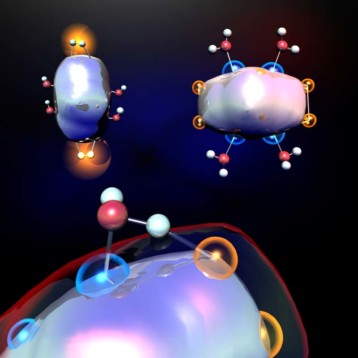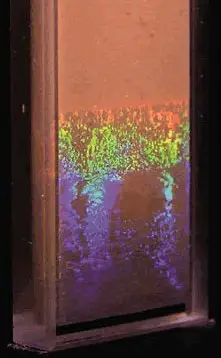

The study of modern surface chemistry started in the early 1960’s, after the development of new tools, which were able to detect and focus on surface atoms, such as electron-based spectroscopies. Today, thanks to devices that capable of performing three-dimensional mapping of atoms’ positions on surfaces, scientists and engineers can watch the chemical changes of surfaces under specific conditions and conduct experiments at the atomic and molecular levels.
Gerhard Ertl was one of the first scientists to understand the potential of vacuum technologies and other techniques and processes developed in the semiconductor industry in the 1960’s. He laid the foundation of modern surface chemistry and demonstrated how surface reactions can be studied thorugh different experimental procedures. Acquiring a complete picture of a chemical surface reaction can be extremely complex. The aim is to observe how individual layers of atoms and molecules behave on pure surfaces – even the slightest defect or contamination can jeopardize all measurements. Ertl’s insights in this field have provided the scientific basis of modern surface chemistry, and his methodology is used both in the academic world and in industrial development.
Ertl thoroughly studied the Haber-Bosch process, which is used to capture nitrogen from the air – a basic step in the production of artificial fertilizer, which can significantly increase crop yields. In 1918, Fritz Haber was awarded the Nobel Prize in Chemistry for the invention of this process. Ertl succeeded in providing more detailed knowledge about the phenomena, which has enormous economic importance. Ertl’s considerable contribution to the understanding of the Haber-Bosch process is regarded as a result of the systematic methodology he applied to surface chemistry, and part of his experimental school of thought for the entire discipline.
Gerhard Ertl turned 71 today and in response to the Royal Swedish Academy’s announcement said: “This is the best birthday present you can give to somebody. This is the greatest honor you can think of in the life of a scientist.”
You can find more information about this year’s Nobel Prize in Chemistry at the Official Website of the Nobel Foundation.
For further discussion of the 2007 Nobel Prize in chemistry see the TFOT forums.