Feedback Form
   
Add to Google
Cars that Talk Cars that Talk
Tuesday, August 12, 2008 - Ehud Rattner
Home >> News >> Transportation
  Peralink
The European Commission has recently decided to reserve, across Europe, part of the radio spectrum for smart vehicle communications systems. The decision is part of the commission’s overall fight against road accidents and traffic jams, and the hope is that vehicles’ developers will create wireless communication technology that will allow cars to “talk” to other cars and to the road infrastructure providers.

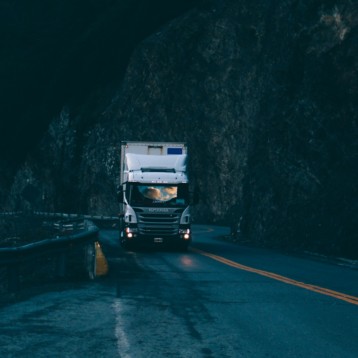
Wireless communication in cars could reduce car accidents 
Wireless communication
in cars could reduce car accidents
Using wireless communication cars could, for example, warn other drivers of slippery roads or of a crash which just happened. Smart vehicle communication systems have the potential to make the lives of Europe's drivers safer and easier; according to the European Commission, in 2006 more than 42,000 people died in road accidents in the European Union and more than 1.6 million were injured. One of the steps towards reducing the number of accident victims is this latest decision, which intends to foster investment in smart vehicle communication systems by the automotive industry. Furthermore, the commission hopes to spur public funding in essential roadside infrastructure. 

The decision made is to provide a single EU-wide frequency band that can be used for immediate and reliable communication between cars and between cars and theroadside infrastructure. It is 30 MHz of spectrum in the 5.9 Gigahertz (GHz) band which will be allocated within the next six months by national authorities across Europe, improving road safety applications without barring other services already in place (such as amateur radio services). 

Numerous examples show why drivers could benefit from the new frequency. For instance, information about a sudden road closure could be transmitted to drivers in the area, so they could change their course via a detour. Furthermore, information about maintenance works, malfunctioned traffic lights, and other traffic-changing events could be sent as well. 

 “This Commission decision is a decisive step towards meeting the European goal of reducing road accidents. Getting critical messages through quickly and accurately is a must for road safety,” said Viviane Reding, EU Telecoms Commissioner. “We should also keep in mind that with 24% of Europeans' driving time spent in traffic jams the costs caused by congestion could reach €80 billion by 2010. So clearly saving time through smart vehicles communications systems means saving money." 

TFOT has also covered Ford’s new blind spot mirror, which has an integrated convex spotter mirror aimed directly at the vehicle’s blind spot, meant to protect drivers and prevent accidents, and the Smart Mover, which is one of the most realistic racing simulators in the world. 

For more information about the EU Commission’s decision, see its press release.

Related News Students Design Sleek Cars of the Future Students Design Sleek Cars of the Future Non-Stopping Train Non-Stopping Train

Related Pictures SkySails – Towing Kites For Ships SkySails – Towing Kites For Ships Brudeli 654L - The New Leanster Brudeli 654L - The New Leanster

Other Articles Shedding Light on Blindness Shedding Light on Blindness Cybook Gen3 e-Book Review Cybook Gen3 e-Book Review


Comments & Replies (2)
Want!   (08/13/08 - 9:07 - by Ohmaar)
I can't tell you how many time's I have dreamed of truly "intelligent"
traffic signals. Cars with GPS communicate bi-directionally with
traffic signals. The traffic signals would know how many cars are
currently queued at their intersection as well as how many cars are
approaching the intersection, so they can adjust red light timing
based on real-time traffic flow. The traffic signal communicates to
approaching traffic so your car could accelerate or decelerate to
catch the current/next green light. Implemented correctly, a wave of
cars a mile down the road would automatically decelerate slightly,
opening up a gap in traffic. Their light turns red to allow cross
traffic flow. By the time the wave of traffic gets to the signal, it
turns green.

The system would dramatically increase fuel economy by eliminating
idling at intersections and subsequent acceleration from the stot
to Ohmaar   (08/14/08 - 2:04 - by E.)
By the way, many traffic lights today have movement-sensitive cameras,
that allow them to dynamically re-program the lights according to the
traffic. Although it is used mainly by night, it helps managing
traffic better. The disadvantage, as far as I know, is that some
motorcycles aren't captured, therefore standing at 0200AM in a vacant
crossroads...

Add a New Comment
Your name:   0/20
Subject:  0/30
Your Comment:  0/999
Type the following letters: Visual CAPTCHA
Please keep your comments related to the above item's topic. TFOT reserves the right to delete any unrelated comment without notice.

Picture Of The Day
Floating Jelly Hat
Floating Jelly Hat

Video
Paralysed Rats Sprint

Site Of The Week
Galaxy Zoo
Galaxy Zoo

Personal Column
Detroit’s Dream of Aircraft Production
Dr. Daniel Uziel
Detroit’s Dream of Aircraft Production
Terms Of Use | Privacy Policy | Contact Us | Advertise With Us | Site Profile
Copyright © 2007 The Future of Things. All rights reserved.