
The Australian teenager Demi-Lee Brennan has become the first known transplant patient to switch blood groups – at estimated odds of one in six billion. Her blood type spontaneously changed from O-negative to O-positive following a liver transplant, after her ...
Gene Therapy Improves Parkinson’s Symptoms
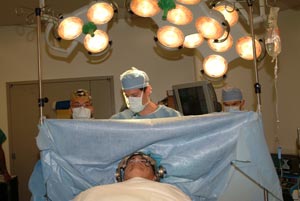
American scientists may have achieved a breakthrough in the treatment of Parkinson’s disease. The team utilized a gene-therapy technique to deliver a gene encoding the inhibitory GABA molecule to the overactive brain area (subthalamic nucleus) of a dozen of Parkinson’s ...
Shelf Life Booster – 4 Months Old Fresh Tomato

The Israeli company “Hefestus” has developed a unique packaging system, which significantly prolongs the “shelf life” of various products. The company’s sealing machines can pack different kinds of foods, as well as cosmetic and pharmaceutical products, in a way that ...
Some People Never Learn
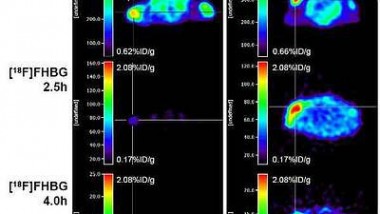
Researchers at the Max Planck Institute for Human Cognitive and Brain Sciences in Leipzig, Germany have found a genetic factor that affects our ability to learn from our errors. The scientists demonstrated that men carrying the A1 mutation, which reduces ...
StimuHeal to Heal Your Body

The Israeli company “StimuHeal” has introduced a series of products developed to assist the human body’s mechanisms in healing damaged tissues. These devices, each of which was designed to focus on a specific problem, are based on different patterns of ...
Cancer Resistant Mouse Created
Researchers from the University of Kentucky recently managed to genetically engineer a cancer resistant mouse. The team, headed by Professor Vivek Rangnekar, engineered the mouse so that a certain part of the Par-4 gene would be expressed in its cells, ...
A Natural Protein Heals Heart Cells
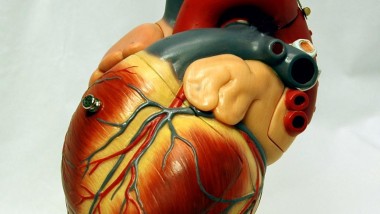
A research group from Bristol has found that a naturally occurring protein, known as nerve growth factor, can dramatically improve the survival of heart cells and reduce heart cell damage following a heart attack in mice. The researchers hope that ...
When Softness isn’t a Virtue
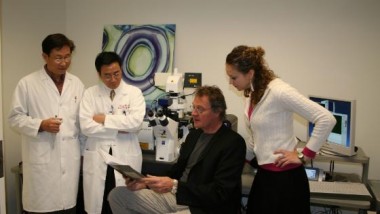
A team of researchers from the University of California in Los Angeles (UCLA) has developed a method to distinguish between metastatic cancer cells and normal cells. The method utilizes an atomic force microscope (AFM) to measure the softness of a ...
Stems of Hope for Treating Incurable Diseases
Two Professors at the Hadassah University Hospital in Jerusalem have succeeded in improving the condition of MS and ALS patients by using stem cells transplants. The researchers extracted stem cells from each patient’s bone marrow, cultured them, and then injected ...
Directed Radiotherapy Using Carbon Nanotubes
A new method for specifically targeting cancer cells with radio-frequency waves was developed by researchers at University of Texas M. D. Anderson Cancer Center in Houston. The method uses carbon based nanotubes to enter the cancerous cells and vibrate at ...