Add to Google
Titanium-Based Metallic-Glass Titanium-Based Metallic-Glass
Friday, February 13, 2009 - Sarah Gingichashvili
Home >> Picture Of The Day >> General Science
  Peralink
Titanium-Based Metallic-Glass
Related Pictures
Pearl River Necklace Bridge
2007 Nobel Prize in Chemistry
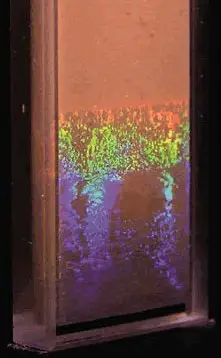
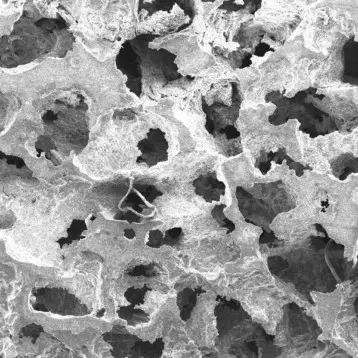
Scientists from the California Institute of Technology (Caltech) have developed new kind of alloys – lighter and less expensive than any the group had previously created. The novel range of structural metallic-glass composites is based in titanium and according to the researchers, is tough and ductile enough to be used in aerospace applications – capable of enduring strong deformations without breaking.

The scientists outlined their breakthrough in the Proceedings of the National Academy of Sciences (PNAS), which has already been published online. Earlier this year, the same team has published a paper in the journal Nature, which described new strategies for creating the liquid-metal composites. However, the alloys that were presented there were less than perfect – since the scientists intend to apply these materials specifically to aerospace applications, the composites are required to have very low densities, ideally in or around those of crystalline titanium alloys, which fall between 4.5 and 5 grams per cubic centimeter (g/cc). The original alloys, however, which were made predominantly out of zirconium, fell between 5.6 and 6.4 g/cc, making them practically unusable for any aerospace application.

Just like window glass, metallic glass has no crystalline structure and is usually made with combinations of zirconium, titanium, copper, nickel, platinum, or other metals. The resulting material, while turning out to be exceptionally strong, is also unusually brittle, which makes it impossible for engineers to use it in practice. While most other metals deform plastically, meaning that heavy loads cause them permanent deformations, metallic glass behaves like an elastic band, regaining its original shape when released but snapping when stretched past a certain point. This characteristic causes any piece of metallic glass with substantial thickness to shatter easily when sbent – “You couldn't build a bridge out of it. It breaks with no visual precursor,” said Douglas Hoffman, visiting scientist at Caltech and lead author on the PNAS paper.

The researchers have eventually discovered that ductility is linked to the formation of branching; crystalline structures called dendrites within the metallic glass. By experimenting first with the size of the dendrites, Hofmann and his colleagues noted that when metallic glasses were bent, 10-nanometer-wide features called shear bands rip right through glass that is thicker than one millimeter, but are stabilized in thin glass. "The bending experiments told us that the size of the particles we need to add is proportional to the length scale of the shear bands before they become catastrophic," Hofmann describes.

The initial research led to the development of alloys with “unrivaled strength and toughness” according to Hoffman, who added that the new composites are “among the toughest engineering materials that currently exist.” Driven by the promising results, Hoffman and his colleagues - including William Johnson, Caltech's Ruben F., and Donna Mettler, Professor of Engineering and Applied Science and a pioneer in the creation of metallic glass – set out to improve the alloys, and after tweaking the components in the composites came up with a titanium-rich composition that satisfactorily maintained the properties of previously created zirconium alloys.         

"Despite being based in titanium," Hofmann notes, "these alloys exhibit the same impressive properties as the zirconium alloys. They are still tough - in other words, they resist cracking - and they are still ductile. In fact, they are even more ductile than the alloys we'd created in the past." Hoffman also adds that it is the decrease in density that allowed a significant cost reduction - lower density means both fuel and weight savings in the aerospace industry and therefore naturally, zirconium is a more expensive metal than titanium.

The work detailed in the paper "Development of Tough, Low-Density Titanium-Based Bulk Metallic Glass Matrix Composites with Tensile Ductility," was supported by the U.S. Office of Naval Research. Hofmann was supported by the U.S. Department of Defense through the National Defense Science and Engineering Graduate Fellowship program.

TFOT has previously covered a number of innovations in the field of material engineering, such as a plastic and metal composite conductive material recently developed by researchers at the Fraunhofer Institute for Manufacturing Technology and Applied Materials Research in Bremen, Germany. Be sure to also check out our coverage of nickel-manganese-gallium alloy foam, which changes shape when exposed to a magnetic field.


More information the titanium-based metallic-glass can be found here and here.


Related Articles 2007 In Science, Medicine and Space 2007 In Science, Medicine and Space 2008 in Science, Medicine and Space 2008 in Science, Medicine and Space

Related News Explaining Hole-Punch Clouds Explaining Hole-Punch Clouds Video Games Sharpen the Mind Video Games Sharpen the Mind

Other Columns The Orbital Menace - Space Garbage The Orbital Menace - Space Garbage Detroit’s Dream of Aircraft Production Detroit’s Dream of Aircraft Production


Comments & Replies (2)
typo   (04/28/09 - 12:37 - by Jake)
search for \"sbent\"
old titanium glass   (08/16/11 - 10:49 - by tim bishop)
i have a piece of titanium glass that could date back as far as
1400,so its not a new invention.it happens when titanium rich ore gets
smelted with iron ore.its a common occurance in the old iron smelting
works in sweden[tjb93@hotmail.co.uk]


Picture Of The Day
Robotic Space Travel with Spidernaut

Video
Pix4D-Turns 2D Photos into 3D Images

Site Of The Week
Galaxy Zoo
Galaxy Zoo

Personal Column
Detroit’s Dream of Aircraft Production
Dr. Daniel Uziel
Detroit’s Dream of Aircraft Production
Terms Of Use | Privacy Policy | Contact Us | Advertise With Us | Site Profile
Copyright © 2011 The Future of Things. All rights reserved.
Feedback Form