|

The process begins when a piece of acrylic is inserted into the device, where heat and pressure are applied to soften the round dish. The heater is pressed against the acrylic and when temperatures reach 150-degrees Celsius, the plastic is passed on to the next station. At the “stamping” station, a motor driven stamp clamps the plastic, and forms it to a variable depth of up to 12.7 centimeters. The recycling process takes place at the same station where the dishes were formed. The plates are reheated and crushed by heavy weights, which return them to their original, perfectly flat shape of acrylic material.
The “Dishmaker” is a prototype machine, developed to make relatively small products, made out of palm-sized acrylic disks. The elastic substance used is non-toxic, and its shape memory properties allow it to be easily modified and recycled up to 100 times, without degrading the material.
Bonanni hopes that this new kind of kitchen appliance will not only provide comfort and an easy way for families to save money to, but also raise our energy conservation systems to a new level. “When designing the ‘Dishmaker’, I considered all of the possible products that a family would need and tried to create a machine that could make them all, but at the same time recycle them, so that they don’t take any extra room. With the ‘Dishmaker’ you don’t have to store all the dishes you might need for any conceivable circumstance (guests etc.), just the material to make enough for a given day” – he said.
|

The “Dishmaker” demonstrates a new tendency in interior design, as more and more designers are focusing not only on the final product, but on entire product life cycles. Bonanni says this single appliance can be operated for many years, using a minimal amount of material. In the future, he says, just like we have printers in our homes, we’ll have printers for materials, “printing” designs we’ll download from the web or create ourselves. And once there is no longer a need for the products, we’ll just insert them into the printers, which will melt them back to their original shapes.
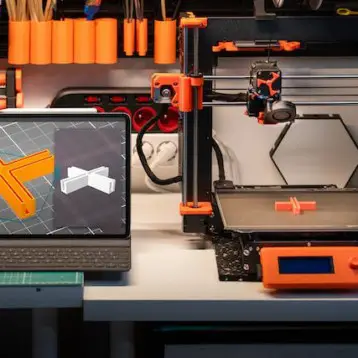
Bonanni’s device is an example of products made using rapid prototyping – a technique used to construct physical objects from virtual designs. This technology takes models from computer aided design (CAD) or animation modeling software, and transforms them into almost identical physical objects. 3D printing, a category of rapid prototyping technology, creates three dimensional objects by “printing” successive layers on top of the previous ones.
You can watch Bonanni demonstrating his Dishmaker here.