Construction of the first underwater neutrino telescope, Antares, has recently been completed. Since early June its last two detection lines of have been probing the bottom of the Mediterranean for neutrinos of cosmic origin. Currently 12 detection lines are aimed ...
Mars’ soil is like Antarctica’s
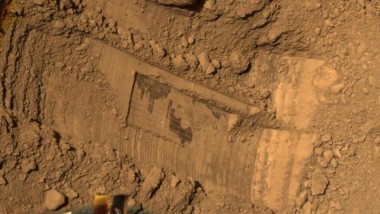
NASA’s Phoenix Mars Lander scraped the icy soil of the “Wonderland” area on June 26, confirming that subsurface soil and icy soil can be sampled at a single trench. Now, Phoenix scientists are assured they have a completed the soil-layer ...
Huge Lenses to Observe Dark Energy
UK astronomers, as a part of the Dark Energy Survey collaboration, have reached a milestone in the construction of one of the largest ever cameras to detect dark energy by completing the shipment of the glass required for the five ...
First Flight for the Google Lunar X PRIZE
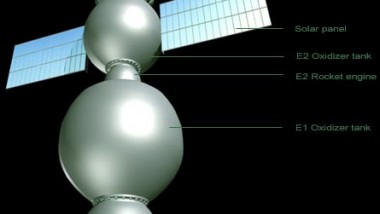
The Aeronautics and Cosmonautics Romanian Association is the first team to submit a due date for sending a robot to the moon in the Google Lunar X competition. The flight will be launched within three months and if the team ...
New Quasiparticles Found
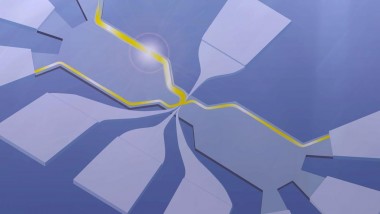
Scientists from the Weizmann Institute of Science in Israel have demonstrated, for the first time, the existence of quasiparticles with one quarter the charge of an electron. Quasiparticles are formed from the interactions of multi-particle systems, and act effectively as ...
Electron Traps that Compute
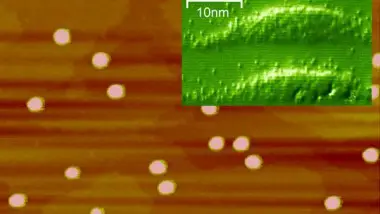
The “Quantum Photonics Group” researchers at ETH Zurich, Switzerland have created superimposed quantum dots, which are able to ‘trap’ single electrons. Created using a semiconductor material, energy in these dots can be influenced by lasers. The researchers were successful in ...
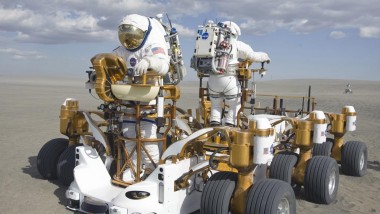
NASA Crew Mobility Chassis
NASA has recently experimented with a new concept for a lunar truck, called the Crew Mobility Chassis. The main feature of the new vehicle is its high mobility resulting from the use of six sets of dual wheels. This arrangement ...
Pipsqueak Star Unleashes Monster Flare
On April 25th, 2008, NASA’s Swift satellite picked up the brightest flare ever seen from a normal star other than our Sun. The flare, an explosive release of energy, packed the power of thousands of solar flares theoretically, was visible ...
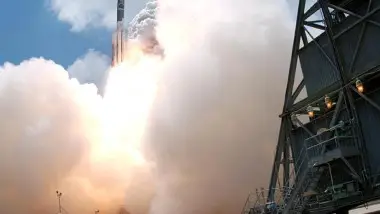
GLAST – Exploring the Extreme Universe
NASA has developed a new observatory telescope that could help scientists understand some of our universe’s best-kept secrets. The Gamma-ray Large Area Space Telescope (GLAST) was successfully launched by NASA aboard a Delta II rocket from Cape Canaveral Air Force ...
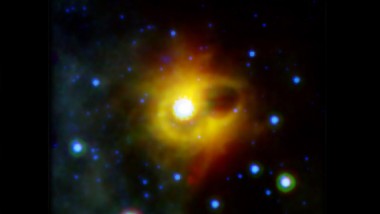
Strange Ring Found Circling a Dead Star
NASA’s Spitzer Space Telescope has detected an unusual ring of material surrounding the magnetic remains of a blasted star. The stellar ‘corpse’, called SGR 1900+14, belongs to a class of objects known as magnetars, which are the cores of massive ...