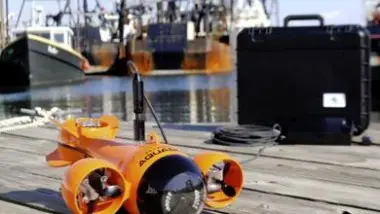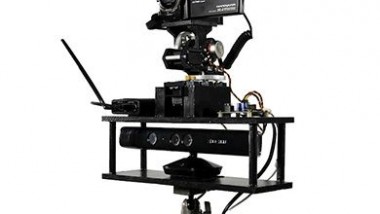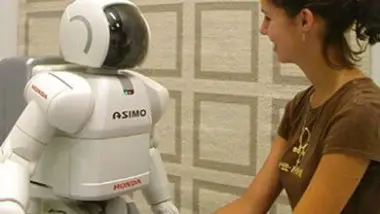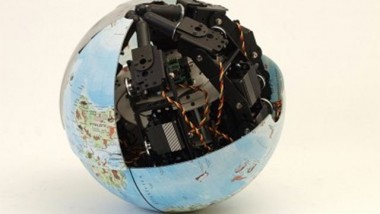
Researchers in the Massachusetts Institute of Technology (MIT) Department of Mechanical Engineering are developing the biomimetic RoboClam smart anchor. The RoboClam is a lightweight anchor that can be clamped, unclamped, and moved easily even in reverse (which can be quite ...
Micro-Flying Robot
Seiko Epson Corporation has developed a “microrobot” named FR-II. The robot is the successor to the original FR, which used to be the world’s smallest and lightest micro-flying robot; the newer version includes Bluetooth wireless control and independent flight capability. ...
IBM ‘Cat Brain’ Project
Scientists from IBM and five university partners will head a US government-funded collaboration to create electronic circuits that mimic brains. Their ultimate goal will be to understand the complex wiring system of the brain and to build a computer that ...
I-SWARM Robotic Ants to Explore Mars
A team of European researchers lead by scientists at the Institute of Process Control and Robotics in Karlsruhe, Germary are developing automated ant-like robots capable of collectively acting in a large group to accomplish tasks beyond the capability of a ...
Robotic Fish Cages
Ocean Farm Technologies, Inc. of Searsmont, Maine, has developed self-propelled spherical aquaculture cages suitable for use in rough, open ocean conditions and designed to support a wide variety of aquatic species. The cages operate when both fully or partially submerged, ...
Grasshopper-Inspired Jumping Robot
Rhodri Armour, a Ph. D. student at the University of Bath, has created a new robot capable of both rolling and jumping, which allows for greater mobility over the widest variety of terrain types. Inspired by the way grasshoppers store ...
HAL Robot Suit
Yoshiyuki Sankai, a professor at Tsukuba University, Tokyo, has recently introduced a new robot suit, called the “Hybrid Assistive Limb.” The suit was designed for paralyzed people in order to help them walk again by detecting their next move and ...
Multi-Agent Autonomous Rotorcraft
Researchers at the Hybrid Systems Laboratory at Stanford University have developed an autonomous multiple vehicle “testbed” designed to demonstrate new methods of multi-agent control systems. The Stanford Testbed of Autonomous Rotorcraft for Multi-Agent Control (STARMAC) consists of six quad rotor ...
Self Learning Helicopters
Researchers at Stanford University in Palo Alto, California have developed an artificial intelligence system that enables helicopters to learn aerial tricks by watching other helicopters perform the stunts first. Their helicopters were able to replicate complex five minute routines as ...
Baseball Playing Robots?
Michael McBeath, a psychology professor specializing in perception at Arizona State University (ASU), collaborated with Thomas Sugar, an engineering professor and robotics researcher at ASU’s Polytechnic campus, in developing a ground-ball-fielding robot named “Catchbot.” In order to create this robot, ...