Popup dock designs have quietly solved a problem most boaters simply learned to tolerate: the last few feet between the boat and the water are usually the most awkward part of the day. An inflatable platform that deploys in minutes and rolls into a bag has changed the math for anyone who swims off the transom, loads gear, or brings guests aboard.
What Is a Popup Dock, and Why Are Boaters Adopting Them?
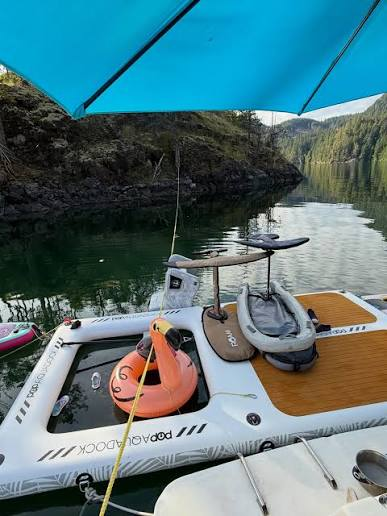
Think of it as a rigid deck that arrives deflated. Drop stitch construction, the same method behind stand-up paddleboards, uses thousands of internal threads to hold two layers of marine-grade fabric a fixed distance apart. Pumped to full pressure, the panel stops behaving like a raft and starts behaving like a floating floor. A seven-by-seven-foot model around eight inches thick commonly carries close to 1,500 pounds and inflates in five to ten minutes with an electric pump. Deflated, it fits in a dock box or the bed of a truck.
The Access Gap Permanent Structures Leave Behind
Registration figures published in 2025 counted roughly 11.8 million registered and documented boats in the United States, part of a total fleet closer to 15.4 million once unregistered craft are added. Very few of those boats have private waterfront waiting for them.
Building a dock is a project rather than a purchase. Cost guides for 2026 place new construction at roughly $15 to $60 per square foot installed, or $3,000 to $30,000 overall, and even a simple build runs four to six weeks once permitting and shoreline approvals are accounted for. Add fluctuating water levels, seasonal ice, and the rules attached to rented or shared shoreline, and a fixed structure is off the table for a large share of boat owners.
Also Read: What is the Best Country to Register Your Yacht or Boat Offshore
Four Moments Where Portable Access Changes the Day
The shift is easiest to see in the small frustrations that repeat every outing.
Anchoring off an open shoreline
Sandbars, coves, and swim beaches rarely come with anywhere to tie up. A deployed platform creates a dry staging area beside the hull, so coolers, towels, and phones stop making the trip to shore in someone’s arms.
Boarding and stepping off
Climbing from water level over a gunwale is where most bruises happen. Owners increasingly park an inflatable popup dock alongside the boat as an intermediate step, which turns a scramble into two easy movements and makes a real difference for older guests.
Swimming without waiting for the ladder
One boarding ladder for eight people creates a queue. A stable platform beside the swim step gives everyone somewhere to sit, rest, and re-enter the water on their own schedule.
Kids, dogs, and everything you carry
Parents like having a defined edge to watch. Dogs get a surface with traction instead of a slick fiberglass step, and gear gets a place to sit that is not the cockpit floor.
Portable Platform vs Permanent Dock
| Factor | Inflatable platform | Permanent dock |
|---|---|---|
| Time to use | 5 to 10 minutes | 4 to 6 weeks or more |
| Typical cost | A few hundred dollars | $3,000 to $30,000 |
| Permits | Rarely required | Local, state, or federal |
| Location | Anywhere you anchor | One fixed spot |
| Off season | Rolls into a bag | Stays in the water |
| Changing water levels | Floats with them | Needs adjustment |
What Experienced Buyers Check First
Thickness matters more than surface area, because a six-inch panel flexes underfoot in ways an eight-inch panel does not. Look at stated weight capacity honestly against how many people actually swim off your boat at once. Seam construction is the quiet failure point, so double-layer sidewalls and wide seam tape are worth the premium. Finally, check the deck surface and hardware: textured EVA traction keeps wet feet planted, and stainless D rings on both faces allow tie-off to cleats above and anchor lines below.
Also Read: How GPS Technology is Improving Boat Security
Frequently Asked Questions
How long does one last?
Marine-grade fabric and properly taped seams routinely give many seasons of use when the platform is rinsed and dried before storage.
Can it stay inflated overnight?
Yes, though pressure drops as temperatures fall, so a short top-up in the morning is normal.
Will it drift away?
Not if it is tied off. Most designs include multiple attachment points for both boat cleats and a small anchor.
Access Is No Longer Tied to Where You Dock
Put the pieces together, and the shift makes sense. The same platform that clears the ladder queue, gives kids and dogs a stable edge, and turns an awkward climb into two easy steps also skips the permits, the four- to six-week build, and the five-figure invoice a fixed structure demands. That is the real change: access is moving away from owning shoreline and toward gear that travels with the boat. If you are weighing thickness, capacity, and footprint for your own crew, compare the current dock and platform range at furthercustoms.com and pick the size that matches how you actually spend a day on the water. Your next anchorage does not need a dock waiting for you.