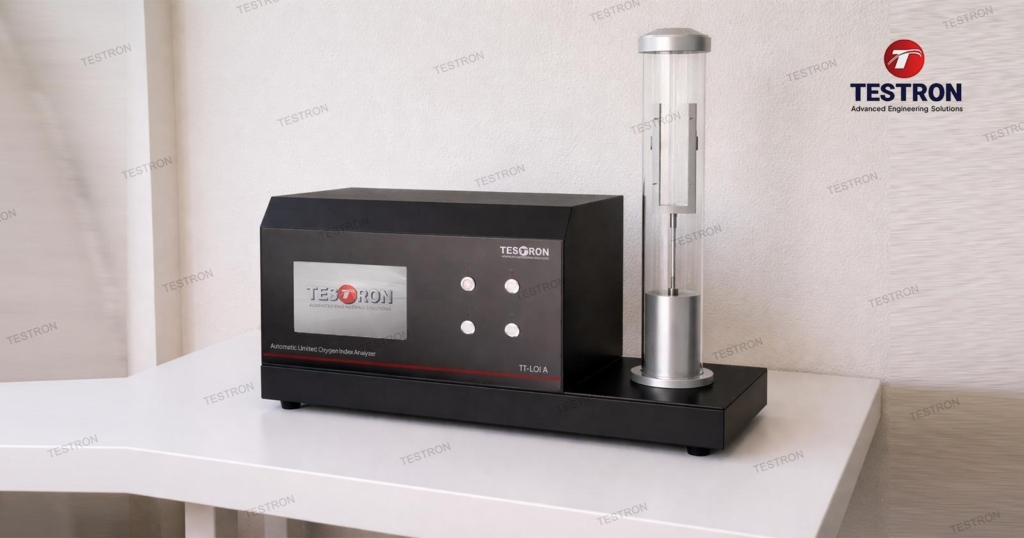
When you work with plastics, polymers or rubber materials, fire behavior is not something you can afford to guess. Today, buyers, regulators and certification bodies expect proof, not assumptions. That is exactly where an Oxygen Index tester becomes a must-have tool in your lab setup.
If you handle material development, product validation or compliance testing, you already understand that flame resistance data directly affects approvals and market access. Therefore, understanding where and how this test procedure is used can help you make cleverer testing decisions. Let’s walk through the real, practical applications that matter to your industry.
What an Oxygen Index Tester Actually Measures And Why You Should Care
Before we talk about applications, let’s keep it simple. An Oxygen Index tester measures the minimum oxygen concentration needed to support the combustion of a material sample. This value is called the Limiting Oxygen Index (LOI). The higher the LOI, the better the flame resistance.
You’ll often see this system referred to as an Oxygen Index Analyzer, a Limiting Oxygen Index Tester, or an oxygen index test apparatus. The purpose remains the same: you get clear, repeatable flame-behavior data under controlled lab situations.
Moreover, this test procedure is part of nationally recognized standards, such as ASTM D2863, which defines how to measure the oxygen index of plastics under supervised laboratory conditions for quality check programs. You can check the detailed test criteria directly on the official U.S. federal government standards resource for material fire testing and safety.
Top Applications of the Oxygen Index Tester in the Plastics Industry
In the plastics industry, flame behavior testing is no longer optional; it’s part of the basic qualification. You use an Oxygen Index tester to compare how different plastic formulations react to flame exposure.
For example, you may test:
- Electrical enclosures
- Wire and cable insulation
- Consumer product housings
- Construction plastic components
- Packaging materials
Thus, when you adjust additives or flame-retardant blends, LOI testing shows you whether the change actually improved performance. It also helps you keep your quality control equipment workflow data-driven instead of assumption-based. If you export plastic products, LOI values often support your certification files and buyer audits.
Key Uses of the Oxygen Index Tester in Polymer Material Testing
Engineering polymers are used where performance matters, such as in automotive parts, aerospace interiors and high-heat components. Here, small formulation differences can lead to major safety gaps. That’s why you rely on an Oxygen Index tester during R&D and validation stages.
You can use it to:
- Compare polymer grades
- Validate flame-retardant additives
- Benchmark new formulations
- Support certification testing
However, consistency is everything. When your lab uses the Best oxygen index tester with stable gas control and precise measurement, your comparison data becomes far more trustworthy. That means fewer retests and faster approvals.
Major Rubber Industry Applications of the Oxygen Index Tester
Rubber materials are used in many fire-risk environments, which raises the bar for testing. A properly configured Oxygen Index tester helps you verify flame resistance in rubber compounds before they reach real-world use.
Typical rubber testing applications include:
- Cable insulation rubber
- Conveyor belt materials
- Sealing systems
- Industrial gaskets
- Transport rubber components
Therefore, if your rubber products operate near heat sources or electrical systems, LOI testing becomes part of your safety validation strategy. It provides documented proof rather than estimated performance.
How Oxygen Index Tester Supports Compliance and Quality Programs
If you manage lab compliance or QA programs, you know documentation matters just as much as results. An Oxygen Index tester supports standards-based testing protocols that align with ASTM and ISO flammability methods.
You can use LOI data to:
- Support certification reports
- Pass third-party audits
- Strengthen technical datasheets
- Validate supplier material claims
Moreover, working with an experienced Oxygen Index tester manufacturer or Oxygen Index tester supplier ensures your system stays calibrated and audit-ready. That support layer is usually ignored, but it saves you time during checks.
How Modern Testing Solutions Match Your Industry Needs
Leading material testing equipment providers, such as Testron Group, design fire and flammability testing systems specifically for plastics, polymers and rubber laboratories. Their solutions are typically built for compliance with standards, repeatability and long test life.
If your lab handles multi-material testing, it helps to work with suppliers that also offer broader quality control equipment, calibration support and technical guidance. That way, your testing setup grows with your workload instead of limiting it.
Buying Considerations Before You Select an Oxygen Index Tester
Not all systems deliver the same stability or control. Before you finalize a purchase, you should review your real testing needs, not only brochures.
Focus on:
- Gas flow precision
- Chamber visibility and safety design
- Automated measurement options
- Software reporting features
- Calibration and service support
You should also review the Oxygen Index tester price in terms of long-term value, not only upfront cost. A cheaper unit with unstable control can increase retesting and waste lab hours. A stable, well-supported system usually pays back faster through loyal data.
Conclusion
If you operate with plastics, polymers or rubber, flame behavior data is no longer a nice-to-have; it’s a requirement. A properly selected Oxygen Index tester helps you validate material safety, complete compliance targets and strengthen your product credibility across international markets.
When you invest in a good testing system, you reduce uncertainty, speed up approvals and improve trust in your material performance data. If you are planning to promote your flammability testing capability, now is the right time to request a demo and evaluate a system that matches your exact lab requirements.