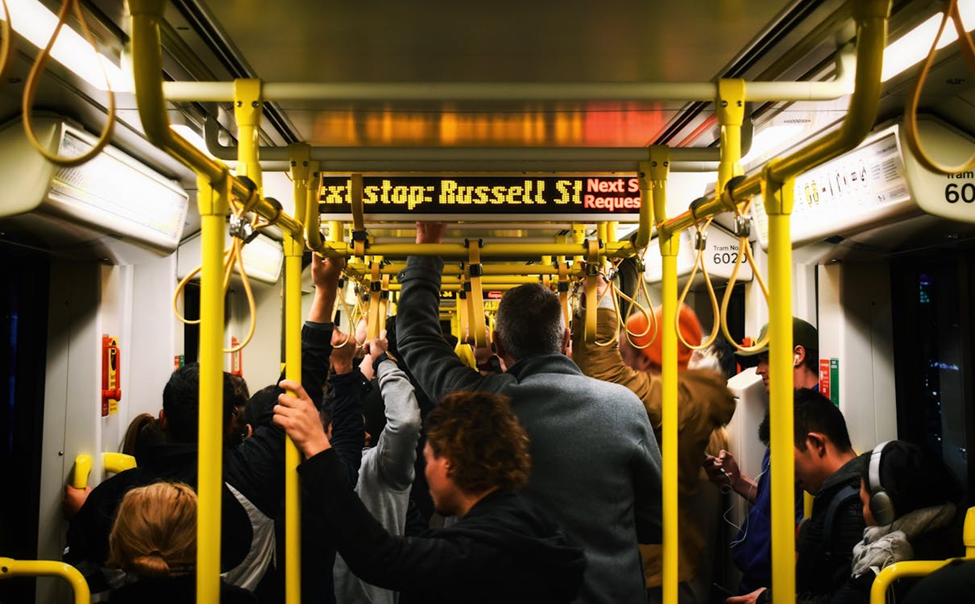
Commuting is exhausting in a way that’s almost comical, well, sorta. There’s the rushing, the waiting, the standing around, the trying to wake up, the pretending to be productive on the way home, even though the brain checked out hours ago. It’s a whole circus that repeats day after day. Basically, it’s monotonous, it’s a tad soul-crushing, especially when, during COVID, everyone got to work from home.
And because of that repetition, commuting shapes how people live more than they realise. It’s routine in the rawest form. It sounds super weird, but it’s those same routes, same platforms, same faces, same sighing at delays. It’s basically a loop. And anything that shows up consistently in that loop becomes familiar. Something the brain starts recognising without any effort. Now, if you’ve seen on a bus, tub, train, or whatever during rush hour, you know that people are buried into their phones, their brains are numb, they’re on their phone, that’s where their attention is.
But at the same time, here, that attention is slipping. People scroll so fast they forget what they just saw. Phones are overstimulating them into numbness. While it’s true that advertising is struggling due to a digitized world, the other issue is that every ad, well, everything online is competing with everything else that’s online, too. So yeah, clearly, online ads are more invisible than visible nowadays.
So, why not take advantage of this all?
Commuting Makes People Predictable
Well, in the best way, of course, but it’s true. So, there’s something oddly comforting about routine. Well, it’s comforting, but can be a tad soul-crushing (but that’s a conversation for another day, though). So, humans absolutely love knowing what’s next, even if they complain about it constantly. If someone takes the same train every morning, they’re basically a guaranteed pair of eyes passing through the exact same places. The predictability is almost too good to ignore.
Online, marketers are fighting algorithms that change moods like the weather. Some posts get love, most disappear into the abyss. Offline, people physically show up. They travel the same spaces. And when a brand shows up there too, again and again, the brain starts filing that brand under “yeah, I know them.” If you really think about it here, there’s no pushiness. There’s no flashing screens. And of course, there’s no desperate “click here.” Just easy, natural recognition. It’s how it used to be before online ads got big.
Offline Advertising is Starting to Get Harder to Ignore
There’s nothing even new about offline advertising; it’s been around since advertising was a thing, whenever that was. But for years, well, for nearly two decades (roughly), there was the push for more and more online ads. But especially the last decade, it’s been rampant with “Don’t waste your money with offline ads when everyone is online nowadays”. But nowadays, well, more people are getting off their phones (so many reasons like AI slop, lack of authenticity, doom scrolling, mental health-related, etc.).
Plus, when it comes to some commutes, like the train or even being in the Tube, it’s not like internet connection is good all the time either. Sometimes signals drop, streaming might buffer, eyes might wander, the brain might wander, people might be shoulder to shoulder with other strangers, and so on. Now, there’s always going to be a chance a phone dies, people don’t want to be on their phones, or read a book, or chat, or whatever.
So you could take advantage of tube advertising, billboards, bus shelter ads, or ads wherever else for commuters to see. Sure, doing ads online is fine too, but it helps to just diversify, that’s the message here. To a degree, digital ads are becoming white noise, and so real-life advertising is becoming more noticeable.
The Brain Loves Seeing What it Already Recognises
Now this is a pretty major one here; familiarity is such a sneaky psychological trick. So, when someone keeps seeing the same message in the same place, their brain starts warming up to it. Even if they’ve never interacted with the brand. Even if they’ve never bought anything from it. It’s kinda weird how the brain works, right? But yeah, that’s why the route matters. Those repetitive movements create perfect consistency. The brand sort of moves in and becomes part of the person’s mental map of the city.
When they eventually need something that brand offers, the decision feels easy. It feels natural. It feels like “I already know them.” Even though they might not have ever used your service, your product, or really ever interacted with your brand at all, there’s this weird trust because of the amount that they’ve been exposed to. But it’s not like there’s any sort of fun coincidence here, because there honestly isn’t, it’s just memory doing what it does best, that’s all.
Life Just isn’t Lived on Screens
Just keep in mind here that marketing gets lost online because attention is scattered everywhere. Even though everyone might seem to be glued to their screen, and everyone is recording something, life doesn’t happen on a screen.
You don’t live life on a screen either. Well, not fully are you living life on a screen. Instead, you’re living life through those everyday transitions. You’re living life by going to work, coming home, trying to get through the week, hoping for a seat, and maybe one day a pay rise. Yeah, that’s how you’re living it.
Okay, but what about the brands here? Well, brands that show up in that space become real to people. It sounds weird, but it’s just how the brain is weird. Your brand isn’t some digital file, it’s not a bunch of pixels online with a name, or a word that is coming out of an influencer’s mouth on TikTok, it’s not clickable content. Instead, it’s a real brand, it’s real life; therefore, it doesn’t feel all that transactional.
Commuters Do Pay Attention
Sure, maybe not all the time, but if everything is constantly the same, when something isn’t the same, they’re going to notice, well, in real life, at least they’ll notice. The commuters here are the afueince that sees, they don’t scroll past. They might walk by, walk past without a glance (sometimes a small, quick glance), but they see, or, well, eventually they will see.