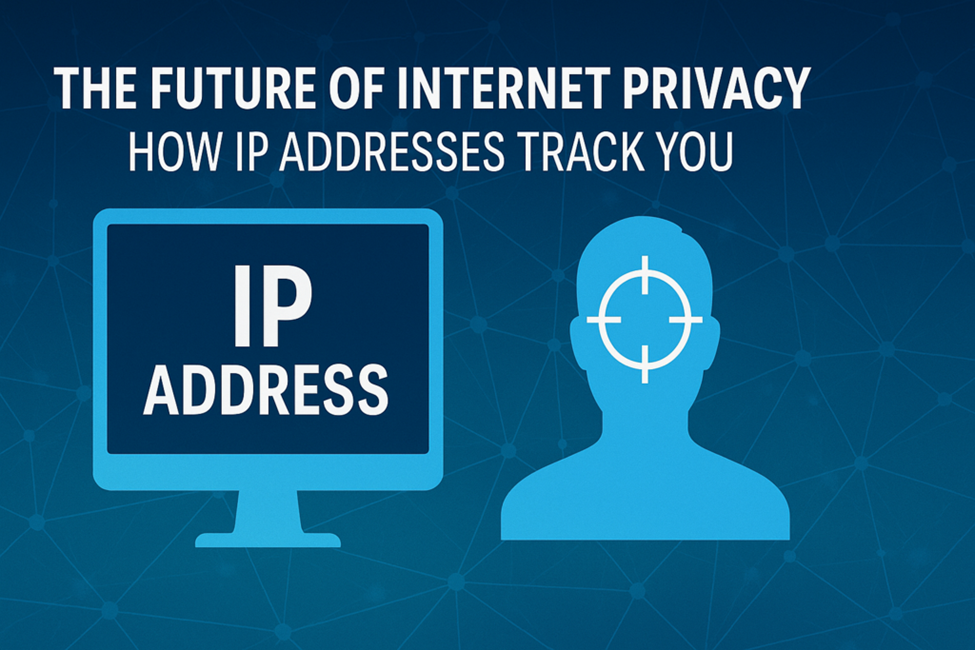
Every time you connect to the internet, your device broadcasts a unique identifier: your IP address.
While often overlooked, this string of numbers is one of the most powerful tools used to track your online behavior. It reveals your location, your internet service provider, and often your identity — whether you’re shopping, streaming, or just scrolling. As technologies like IPv6 and the Internet of Things expand, IP addresses are becoming even more precise and permanent.
In this article, we’ll explore how IP addresses play a central role in online tracking, what that means for your privacy in 2025 and beyond, and what steps you can take to regain control over your digital identity.
What Is an IP Address and Why It Matters
Let’s start with the basics. An IP (Internet Protocol) address is like the return address on an envelope — it tells other devices on the internet where to send the information you’ve requested. It’s how data travels back and forth between your device and the web.
When you open a website, stream a video, or send a message, your IP address identifies your connection to the internet. It’s assigned by your internet service provider (ISP), and depending on your setup, it can change frequently — or never at all.
IP Address 101: A Simple Explanation
Think of an IP address as your device’s “home address” on the internet. Without it, the internet wouldn’t know where to send the webpage you requested or the video you’re trying to watch.
There are two types of IP addresses currently in use: IPv4, which most of us still use today, and IPv6, the newer version designed to handle billions more devices (we’ll get to that later).
Static vs. Dynamic IPs: What’s the Difference?
If you have a static IP address, it doesn’t change — your device keeps the same IP every time it connects. This makes it easy to identify you online, since your address stays constant.
A dynamic IP, on the other hand, is assigned from a pool and can change periodically. While this adds a small layer of unpredictability, it doesn’t make you anonymous. Your ISP still knows which address was assigned to you at any given moment.
That said, changing your IP address — either by resetting your connection, switching networks, or using a VPN — can be a useful privacy tactic. It won’t erase your digital footprint, but it can make tracking you slightly more difficult, especially across short sessions.
Public vs. Private IP: What’s Visible to the World?
You actually have two IP addresses — one private (used inside your local network) and one public (used on the internet). It’s the public IP address that matters for privacy, because that’s the one visible to every website you visit, app you use, or service you connect to.
And yes, it’s being logged — often automatically.
The Role of IP Addresses in Online Tracking
IP addresses weren’t designed with privacy in mind. In fact, quite the opposite — they’re designed for traceability and delivery. Over time, marketers, governments, and even cybercriminals have found ways to exploit this traceability.
How Websites Use IPs to Identify You
When you visit a website, that site can see your IP address. This tells them your general location, device type, and sometimes even which company provides your internet.
They can use this information to customize content (like showing you local weather), but more often, they use it to build a profile of your behavior. Visit three different news sites in one evening? All three may be sharing your IP data with the same advertising network.
IP Tracking vs. Cookies: What’s the Real Threat?
Cookies often get all the blame when we talk about digital surveillance — but IP tracking is just as powerful, and it can’t be cleared with a browser reset.
While cookies are stored locally and can be deleted or blocked, IP addresses operate at a network level, making them harder to control. Worse, many trackers combine your IP with other techniques — like fingerprinting or third-party scripts — to build a full behavioral picture.
In many ways, your IP address is the anchor for all other forms of online tracking.
Advertisers, Governments, and Hackers: Who Uses IP Data?
Advertisers use IPs to deliver hyper-targeted ads. Governments can request logs from ISPs to track individuals. And hackers? They can use your IP to launch DDoS attacks, scan for open ports, or probe for vulnerabilities.
But there’s another growing use case: IP bans. Many websites and services monitor for suspicious activity — like scraping, spamming, or repeated failed logins — and respond by banning the offending IP address entirely. Sometimes this ban is temporary; other times, it’s permanent.
While it’s meant to protect platforms from abuse, IP bans can unintentionally block innocent users — especially those sharing an IP within a public network or using dynamic addressing. It’s a stark reminder that your IP isn’t just a passive identifier — it can become a point of restriction if it’s ever flagged, rightly or wrongly.
You don’t need to be a high-profile target to be visible. Just being online is enough.
How IPv6 Changes the Privacy Game
Let’s talk about the future — and why IPv6 is a privacy double-edged sword.
Why IPv6 Was Introduced
The internet was running out of addresses. IPv4 supports around 4.3 billion addresses, and with every phone, smart fridge, and smartwatch needing one, that’s not nearly enough.
IPv6, introduced to fix this, offers 340 undecillion unique addresses — enough for every grain of sand on Earth to have its own. That’s great for connectivity.
But it’s a potential nightmare for privacy.
More Devices, More IPs: The Good and Bad
With IPv6, every device gets its own permanent address. This means better performance, easier connections — and constant visibility.
If your phone, TV, and laptop all have static IPv6 addresses, a tracker can monitor each one independently. Over time, this builds a granular map of your household’s habits — when you wake up, what you watch, what you buy.
IPv6 and the Death of Anonymity?
While IPv6 includes some privacy enhancements (like temporary address rotation), adoption of these features is inconsistent. Most users have no idea what settings are enabled by default.
And because IPv6 addresses are so specific, anonymizing them — especially without a VPN — is much harder.
In short: IPv6 solves the internet’s scaling problem, but introduces new threats to personal privacy.
The Rise of Personalized Profiling via IP
Your IP address isn’t just a number. It’s a fingerprint — one that advertisers, data brokers, and even AI systems use to piece together your digital identity.
How Your IP Builds Your “Digital Identity”
When companies track your IP across apps and sites, they start linking it to behaviors. That includes what you search for, what you click, how long you stay, even which Wi-Fi networks you use.
Over time, this builds a persistent identity profile — one tied not just to your habits, but to your actual location and devices.
Geo-Targeting and Behavioral Prediction
Ever wondered why ads seem to know where you live? That’s IP geo-targeting at work.
Your IP can pinpoint your general location — sometimes down to your neighborhood. Combine that with behavioral data, and platforms like Facebook or Google can predict what you’ll click next before you even do it.
It’s not just personalization — it’s prediction.
Cross-Device Tracking Using IP Address
IP tracking doesn’t stop at one device. If multiple devices connect through the same router, advertisers can link them together. This is how they figure out that your partner searched for a new backpack — and now you’re seeing ads for it on your phone.
How to Protect Your IP (and Your Identity)
Now that we know how powerful IP tracking is — what can you actually do about it?
Using VPNs, Proxies, and Encrypted DNS
The most effective strategy is masking your IP using tools like:
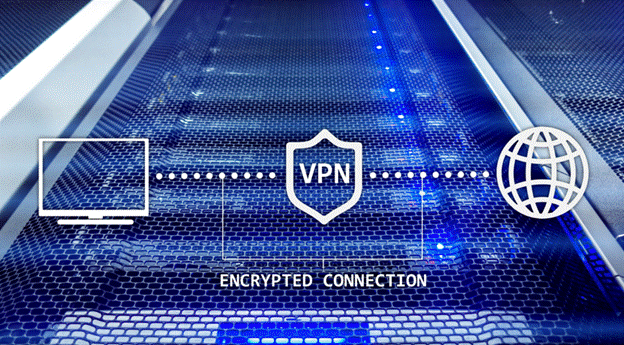
- VPNs (Virtual Private Networks), which route your traffic through encrypted tunnels and assign a different IP
- Proxies, which act as intermediaries between your device and the internet
- Encrypted DNS services, which hide your browsing queries from ISPs
Used correctly, these tools drastically reduce your visibility online.
Dynamic IP Switching: Does It Help?
Some ISPs assign new IPs regularly. Others allow users to force a change by resetting their router.
While this can throw off casual trackers, it doesn’t guarantee anonymity — especially if you’re logged into services like Google or Facebook that track you beyond your IP.
Still, rotating your IP periodically can reduce persistent profiling.
IP Leak Protection: What to Watch Out For
A common problem with VPNs is IP leaks — moments when your real IP gets exposed, often due to misconfiguration or WebRTC in your browser.
Always test your connection using tools like ipleak.net. And if privacy is critical, disable WebRTC and use a VPN with built-in leak protection.
The Future of IP Privacy: What’s Next?
As the internet becomes more complex, so do the tactics to preserve — and attack — your privacy.
IP Obfuscation in Next-Gen Protocols
Emerging protocols like MASQUE (Multiplexed Application Substrate over QUIC Encryption) and Oblivious HTTP aim to obscure IP addresses by routing traffic through multiple relays.
These are still early-stage, but they represent a shift toward built-in privacy at the network level.
Legal and Ethical Battles Around IP Tracking
Laws like GDPR and California’s CCPA treat IP addresses as personal data — but enforcement is spotty. Many companies continue to log and share IPs without clear consent.
Expect more legal clashes in the next few years as lawmakers try to keep up with increasingly sophisticated surveillance.
Will Privacy Become a Premium Service?
Here’s a question worth asking: Will real privacy always require paid tools?
If VPNs, encrypted networks, and private browsing remain behind paywalls, we risk building an internet where only the wealthy can afford anonymity — and that’s a future worth challenging.
Final Thoughts: Taking Control of Your Digital Identity
IP addresses may be invisible to most internet users, but their impact is very real. They shape your digital footprint, link your devices, and expose your location — all without you clicking a single button.
But with knowledge comes power. The more you understand how your IP address works — and how it’s used — the more control you gain over your digital life.
Because in the future of internet privacy, the first step to staying safe is knowing what’s tracking you.