
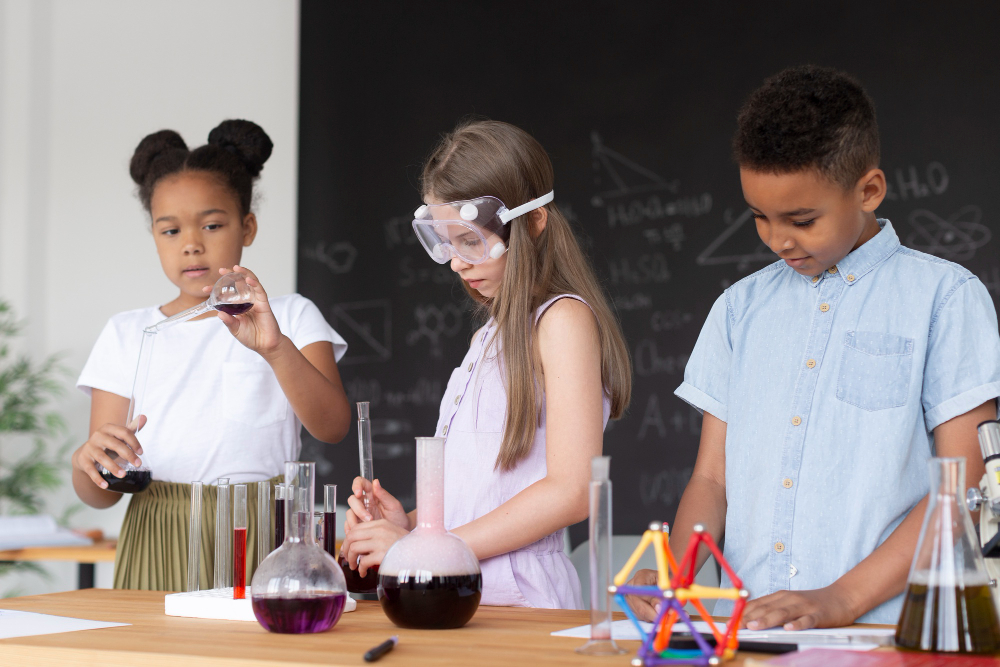
Across the country, schools are doubling down on STEM (science, technology, engineering, and math) to prepare students for tomorrow’s workforce. But even as districts invest in robotics clubs, coding bootcamps, and advanced labs, a key ingredient is still missing in many classrooms: experience.
STEM learning often remains too theoretical. Students learn the equations behind circuits but never build one, or they discuss aerodynamics without ever seeing how a wing behaves in real airflow. That is why more educators are turning toward experiential learning models, programs that invite students to design, test, and build in the real world. From solar-powered go-karts to community energy audits, these projects turn abstract lessons into tangible outcomes.
When combined with a hands-on EV education program, for example, students begin to connect mechanical engineering, electronics, and sustainability in ways that no lecture or video can match. They see how voltage translates into motion, how efficiency can be measured and improved, and how innovation feels when a project they built actually moves under its own power.
Learning That Sparks Curiosity
Experiential learning is not a new concept. It is based on the idea that students learn best when they apply knowledge through direct engagement. What has changed is how accessible technology has become. Affordable microcontrollers, 3D printers, and modular kits now allow students to prototype complex systems that once required university-level resources.
A physics teacher might assign a challenge to build a small solar-powered vehicle. Instead of memorizing formulas for energy transfer, students must think through every connection: How does solar energy become stored? How do you balance torque and weight? Why does friction matter? These are not multiple-choice questions. They are problems that demand iteration, creativity, and persistence.
That is where experiential STEM programs shine. They train students to think like engineers, not just to recall what engineers know. The classroom shifts from a place of instruction to a place of experimentation, more like a design studio than a lecture hall.
Building Real-World Confidence
One of the most powerful outcomes of hands-on STEM learning is confidence. For many students, especially those who might not see themselves as “tech” or “math” people, building something tangible bridges the gap between curiosity and capability.
When students wire a circuit, test an electric drive system, or assemble a working prototype, they experience the reward of seeing their ideas take shape. That sense of agency drives engagement and persistence, especially in fields where underrepresentation remains a challenge. Girls and minority students, for example, often report higher interest and retention in STEM when they participate in real-world projects rather than passive instruction.
These experiences also strengthen soft skills such as collaboration, communication, and problem-solving under pressure. A group tasked with designing an efficient vehicle must divide roles, debate ideas, and troubleshoot failures, all skills that transfer directly to college labs or engineering workplaces.
Connecting STEM to Sustainability
As industries move toward clean technology, sustainability has become a natural entry point for student engagement. Projects that merge engineering and environmental awareness help students understand the “why” behind the “how.”
For instance, building an electric vehicle prototype is not just an engineering exercise. It is a lesson in energy efficiency, battery management, and systems integration. When students participate in hands-on learning, they learn the mechanics of motion. They explore how innovation can solve real environmental challenges. That connection between purpose and practice is what often turns an assignment into a calling.
Preparing Students for the Future of Work
Today’s employers seek graduates who can solve problems across disciplines, people who can design systems, analyze data, and adapt quickly to new technology. Experiential STEM education cultivates precisely those abilities. By embedding hands-on projects into high school and dual-credit curricula, schools can prepare students not only for college success but also for careers in advanced manufacturing, renewable energy, and electric mobility.
Ultimately, experiential learning transforms education from “telling” to “doing.” It gives students the space to fail safely, learn deeply, and innovate boldly. Whether they are coding sensors, fabricating components, or testing an electric prototype, they are developing the mindset that drives discovery and the skills that power the future.