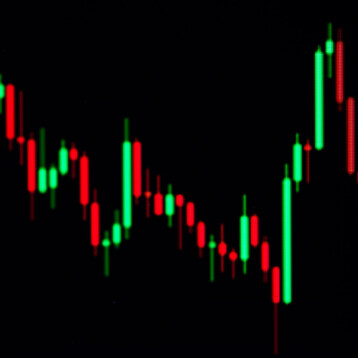
Copy trading has revolutionized retail investors’ way into financial markets, allowing them to automatically copy professional traders’ trades. Not everyone who is a professional is worth copying, however. To identify top performers, one must look beyond superficial profit numbers to understand what produces long-term achievement.

Good Risk Management
The key to a good copy trading potential is not so much that they perform well, but that they handle risk. Excellent traders exercise disciplined position sizing, never risking more than a percentage of their portfolio on one trade. They understand that it is better to preserve their capital in losing runs than to chase great profits.
Such traders achieve a maximum drawdown of 10-20% and demonstrate the ability to come back from losses in a systematic way. Their trading history recognizes logical decision-making and not gambling conduct, with clear stop-loss levels and risk-reward ratios that serve to facilitate long-term profit-taking rather than short-run thrills.
Good traders to follow are transparent regarding their method and approach. They inform followers specifically what type of trading they’re conducting (swing trading, scalping, or long-term investing), and why, so that followers have an idea what they’re imitating.
High achievers post updates to followers on a regular basis with rationales for large trades and market analysis. This transparency fosters faith and allows followers to make an informed choice about whether the trader’s approach is applicable to their own goals and risk tolerance.
Established Track Record Under Different Market Conditions
While recent record is significant, profitable traders demonstrate profitability under different market conditions. Bull markets, bear markets, and sideways trading periods each present their own set of problems, and excellent traders adapt strategies to suit.
Look for traders who have gone through a minimum of one complete major market cycle without loss of principle. How they fare through bear markets like market collapses or unforeseen events like political unrest or natural calamities indicates their true skill level and ability to protect principle during difficult times.
Key Performance Metrics to Look Out For
When judging potential traders to follow, watch for these key indicators:
- Sharpe ratio – computes risk-adjusted returns, where higher ratios indicate better performance per unit of risk taken
- Maximum drawdown – shows the most extreme peak-to-trough drop, showing the amount of money at risk during worst-case scenarios
- Win rate – proportion of profitable trades, though this must be taken in relation to average win vs. loss size
- Average holding period – the frequency of trading and strategy type, enabling you to align with your time horizon for investment
- Stability of returns – regular monthly returns usually outperform unpredictable high-return months with substantial subsequent losses
Realistic Expectations of Return
The top performers tend to make 15-40% in yearly returns as opposed to placing unrealistic expectations of 100% and above. Compound growth over time generates sustainable profits whereas risky speculation can lead to big losses.
Successful copy trading hinges upon the discovery of traders that are a mix of skill, discipline, and willingness. The finest traders to follow treat trading as a business, prioritizing capital preservation and long-term expansion over dazzling returns that barely ever last.