|

In reconstructive surgery bone, cartilage, and blood vessels often need to be recreated after damage. While minor injuries heal spontaneously with little medical aid, major bone and cartilage damage requires serious surgical intervention which often includes tissue transplants from undamaged parts of the body or external aids. In addition, risk groups such as older and chronic patients may require tissue transplants even for minor injuries as their bodies are less resilient.
One of the biggest challenges of reconstructive surgery is the creation of autologous tissue from stem cells. Autologous tissue is grown from the patient’s own cells and therefore contains the same attributes and genetic information, thus making it less likely to cause an immune reaction. However, stem cells have proven difficult to harvest, cultivate and store. In comparison, connective tissue cells from human skin are abundant and less vulnerable. A small biopsy is often enough to collect the amount of cells necessary for tissue growth. “They are the ‘weed’ cells of the body, very easy to collect and cultivate into the cell type required. They are also very suitable to use to create a personal cell bank,” explains Professor Kratz.
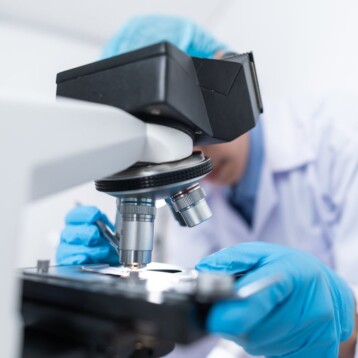
Kratz and his colleagues have recently developed a unique technique for growing bone, cartilage, and inner blood vessel cells. They applied the technique to create whole tissue held on gelatine scaffolds. In a series of studies, the research team collected connective tissue from healthy skin from breast and stomach plastic surgery procedures and used fat stem cells as a comparable control group.
During the next phase, the chosen cell cultures were cultivated in four different environments, each optimised for bone, cartilage, fat, or endothelium. Two to four weeks later the researchers found that the connective tissue cells had produced a greater bone and cartilage mass than the fat stem cells. The cultivated cells also showed certain functions normally present in the intended cell type. It was also found that the cells could be used to build three dimensional tissues and create complex structures such as capillary networks.
Currently the team is preparing to transplant these complete tissue structures into laboratory animals. With further research, scientists may be able to replace entire damaged organs by shaping up lab grown tissue into replacements. Professor Kratz states, “The dream is to be able to manipulate connective tissue cells in the human body to develop into specific cell types, for example to create bone cells for broken bones.”
Recently TFOT has covered other novel methods developed to improve our ability to heal bones. One such story is of a robot that improves partial knee replacements developed by MAKO Surgical Corporation of Fort Lauderdale, Florida. In another story we have covered a new material which could be used for the creation of bone implants, developed in Zurich, Switzerland.
For more information on the creation of bone from connective tissue, please visit the LIU news page.