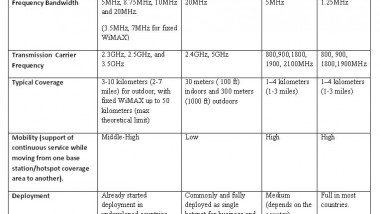
The European Commission has recently decided to reserve, across Europe, part of the radio spectrum for smart vehicle communications systems. The decision is part of the commission’s overall fight against road accidents and traffic jams, and the hope is that ...
Laser ‘Knife’
An international research team, led by Federico Capasso at Harvard University and his graduate student Nanfang Yu, recently developed a device that fits to the front of a laser source and tames it into usable beams that are able to ...
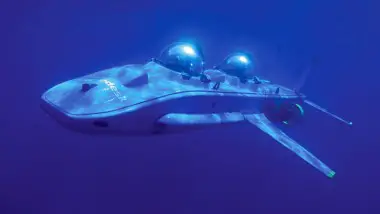
Diving to the Bottom
On July 29, 15:15 local time, Russian scientists from the P. P. Shirshov Institute of Oceanology managed to dive using a manned MIR submersible to a depth of 1,680 meters — the very bottom of the world’s deepest lake, Lake ...
Research Team Develops New Nanomotors
Researchers at ASU’s Biodesign Institute in Arizona report the development of a new generation of tiny nanomotors that are up to 10 times more powerful than existing motors. The research team, led by Joseph Wang, director of the Center for ...
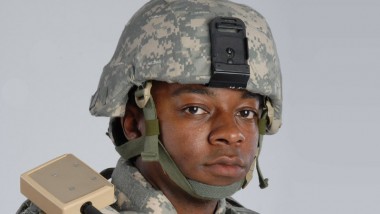
Ancient Fish Inspires Armor of the Future
A team of scientists at the Massachusetts Institute of Technology (MIT) have suggested an intriguing technique for producing an especially resistant armor for soldiers of the future. The military-funded research, which draws its inspiration from a study of a primitive ...
BRP Spyder
Bombardier Recreational Products developed the Can-Am Spyder, a three-wheeled vehicle, as a solution for those who wish to have a motorcycle but are hindered by the lack of security. Although the new vehicle isn’t exactly a trike or a three-wheeled ...
Toy Rocket Inspires Variable Speed Bullets
Lund and Company Invention, a toy design studio based near Chicago, makes toy rockets that are powered by burning hydrogen, allowing them to travel at various speeds. Now the company is being funded by the US army to adapt that ...
Yamaha’s Terrascout Autonomous Vehicle
The Terrascout project has set itself the goal of creating a high-speed autonomous vehicle capable of patrolling large areas. The team is using an all-terrain-vehicle in which various systems required for autonomous operation are installed. The final result will be ...
Fuel Cells for…Helicopters
Researchers from the Fraunhofer Institute for Reliability in Germany, along with colleagues at the Technical University of Berlin, are developing a fuel cell that weighs only 30 grams and has an output of 12 watts which could make the idea ...
Carbon Nanotubes for Chemical Detection
Researchers at Rice University and Rensselaer Polytechnic Institute have recently been able to use carbon nanotubes to make the “blackest black” — the darkest material ever created, reflecting only 0.045 percent of all light shown on it. Schematic of a ...