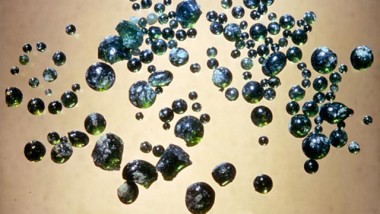
A research team from Brown University has found for the first time evidence of water deep within the moon. The researchers believe the water was contained in lunar magmas ejected more than 3 billion years ago. The new discovery strongly ...
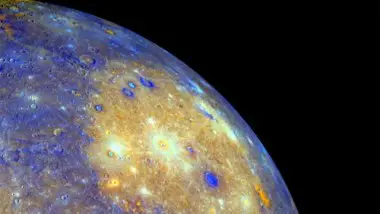
The New Face of Mercury
Recent analysis of data collected in January 2008 by NASA’s Mercury Surface, Space Environment, Geochemistry and Ranging spacecraft has shown that Mercury’s volcanoes were involved in plain formation and suggest that its magnetic field is actively produced in the planet’s ...
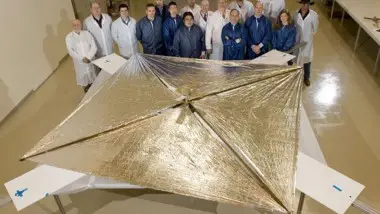
NanoSail-D – A Solar Sail in Space
NASA researchers in collaboration with a team from Ames Research Center are planning to launch a solar sail dubbed NanoSail-D from Omelek Island in the Pacific Ocean during a window extending from July 29th to August 6th. If successful, NanoSail-D ...
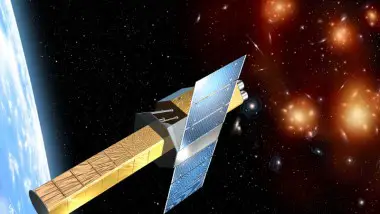
SXS – X-Ray on the Universe
NASA has recently approved the construction of the High-Resolution Soft X-Ray Spectrometer (SXS), an instrument devised to study the extreme environments of the universe. The new instrument will help researchers explore dark matter on a large scale as well as ...
Mars’ soil is like Antarctica’s
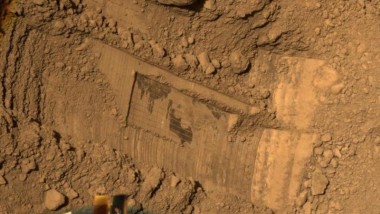
NASA’s Phoenix Mars Lander scraped the icy soil of the “Wonderland” area on June 26, confirming that subsurface soil and icy soil can be sampled at a single trench. Now, Phoenix scientists are assured they have a completed the soil-layer ...
First Flight for the Google Lunar X PRIZE
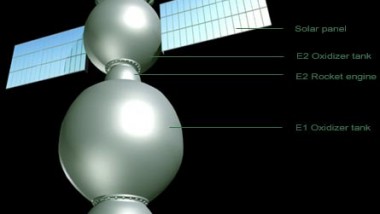
The Aeronautics and Cosmonautics Romanian Association is the first team to submit a due date for sending a robot to the moon in the Google Lunar X competition. The flight will be launched within three months and if the team ...
NASA Crew Mobility Chassis
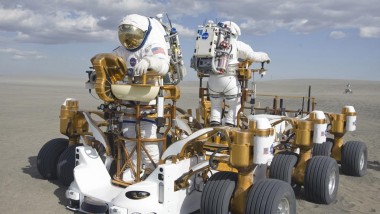
NASA has recently experimented with a new concept for a lunar truck, called the Crew Mobility Chassis. The main feature of the new vehicle is its high mobility resulting from the use of six sets of dual wheels. This arrangement ...
Pipsqueak Star Unleashes Monster Flare
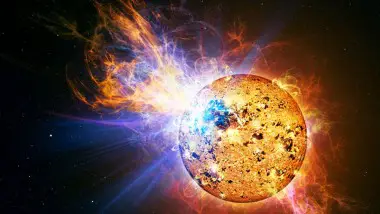
On April 25th, 2008, NASA’s Swift satellite picked up the brightest flare ever seen from a normal star other than our Sun. The flare, an explosive release of energy, packed the power of thousands of solar flares theoretically, was visible ...
GLAST – Exploring the Extreme Universe
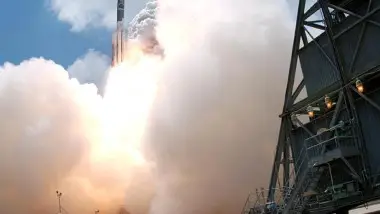
NASA has developed a new observatory telescope that could help scientists understand some of our universe’s best-kept secrets. The Gamma-ray Large Area Space Telescope (GLAST) was successfully launched by NASA aboard a Delta II rocket from Cape Canaveral Air Force ...
Strange Ring Found Circling a Dead Star
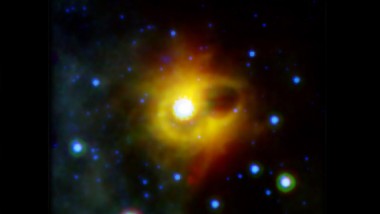
NASA’s Spitzer Space Telescope has detected an unusual ring of material surrounding the magnetic remains of a blasted star. The stellar ‘corpse’, called SGR 1900+14, belongs to a class of objects known as magnetars, which are the cores of massive ...