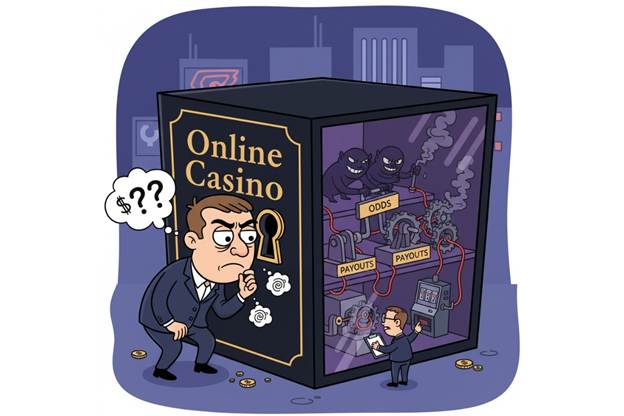
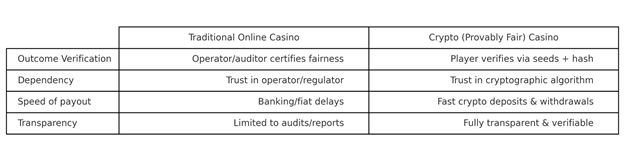
Online gambling has long been built on a fundamental trust-gap: when you place a bet, you rely entirely on the operator’s internal systems, regulators or third-party auditors to confirm that the odds are fair and the outcomes untampered.
For years, this “black box” structure has been one of the industry’s biggest criticisms. Players cannot see how results are generated, how random number generators work, or whether a platform could theoretically adjust outcomes in its favour.
Blockchain technology introduced a profound shift to this model. Instead of relying on trust, it enables verification. Cryptographic hashing, transparent algorithms and open ledgers allow players to check for themselves whether a game round was fair, whether the operator kept to its commitments and whether the randomness used in the outcome was genuinely unpredictable.
Cryptocurrency payments add another layer of innovation, reducing reliance on traditional banking rails and enabling near-instant, borderless deposits and withdrawals.
For established, trusted crypto-casino operators such as LuckyHat, the promise is simple: fairness is no longer something you take on faith. It’s something you can mathematically prove.
In this model, the player doesn’t just hope the game is fair – they can independently verify it, round by round, using provably fair mechanisms built directly into the platform.
What “Provably Fair” Means
A key innovation in crypto-casino tech is the “provably fair” system. In short, this means the game outcome (spin, roll, card draw) is generated with cryptographic inputs that both the player and the platform contribute, and the result can be independently verified.
Here’s how this typically works:
- The player supplies a client seed.
- The casino server generates a server seed and provides a hashed version of it before play begins.
- After the game round, the server seed is revealed and the player can check that the hash matches the pre-game commitment, ensuring the casino couldn’t change its seed afterwards.
- The combined seeds + nonce (round count) go into a cryptographic algorithm (for example using SHA-256) to generate the result.
Because the entire process is verifiable, neither the casino nor the player has an undue advantage. The result is mathematically transparent.
Why This Matters
In the traditional online casino world, you as a player must trust the house or regulators to ensure fairness. But provably fair systems remove that dependency and shift trust from entities to mathematics and code. This is especially appealing in the crypto-casino sector, where players often prioritise speed, privacy and anonymity.
In fact, some recent industry commentary argues that crypto casinos are no longer niche gimmicks – they’ve become a growing segment of iGaming, thanks in part to innovations like provably fair.
Beyond Fairness: Smart Contracts, Speed & Innovation
The benefits don’t stop at verifiable randomness. Blockchain also enables other innovations:
- Smart-contract-based payouts: winnings can be automated and executed without manual intervention.
- Faster deposits/withdrawals using cryptocurrency rails, reducing reliance on traditional banking infrastructure.
- Decentralised or peer-to-peer wagering models, opening up new game mechanics and formats.
Moreover, platforms are starting to integrate token-based loyalty programmes, NFT rewards and mobile/web app delivery to appeal to younger, crypto-native audiences.
A Real-World Example
For instance, a crypto casino may grant a player access through just a wallet deposit, let them verify each spin’s hash chain in real-time, and process withdrawals almost instantly in crypto.
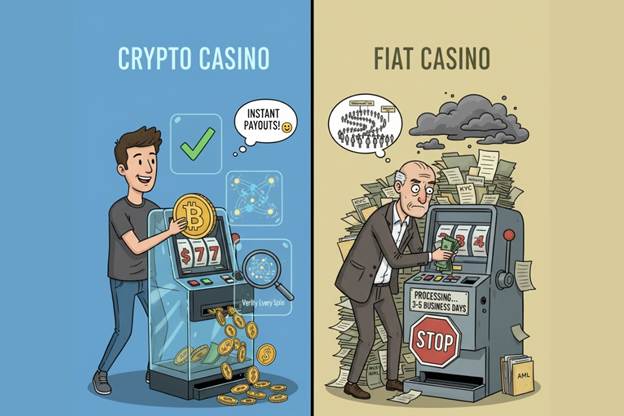
Compare that to a fiat-based site which may require full KYC/AML, slower payouts and opaque audit trails. The difference is clear.
Risks & Regulatory Considerations
Of course, this tech-driven model comes with caveats. Transparency doesn’t automatically guarantee responsible gambling practices or robust regulation. Some jurisdictions view crypto casinos with caution due to AML/KYC concerns.
Also, while provably fair systems ensure the game outcome wasn’t rigged, they don’t prevent the platform from setting unfavourable house edges or designing games with poor odds. Thus, player awareness remains vital.
Why This is a Fit for The Future
Blockchain isn’t simply adding another payment method to online gambling – it is reshaping the foundations of how trust is established in digital games of chance.
By shifting verification from closed systems to open cryptographic processes, provably fair gaming removes one of the industry’s biggest historical barriers: the need to take the operator at their word. Combined with faster crypto transactions, smart-contract automation and decentralised transparency, blockchain has created a new framework in which fairness is not claimed but demonstrated.
There are still challenges ahead, from regulatory uncertainty to ensuring responsible safeguards keep pace with innovation. But the underlying technological shift is significant.
As more industries explore decentralised verification and user-controlled data, the evolution of crypto-powered casinos offers a clear case study of how blockchain can transform long-standing digital trust models. Whether or not players choose to engage with crypto gambling directly, the technology driving this transformation is likely to influence far wider areas of online interaction in the years to come.