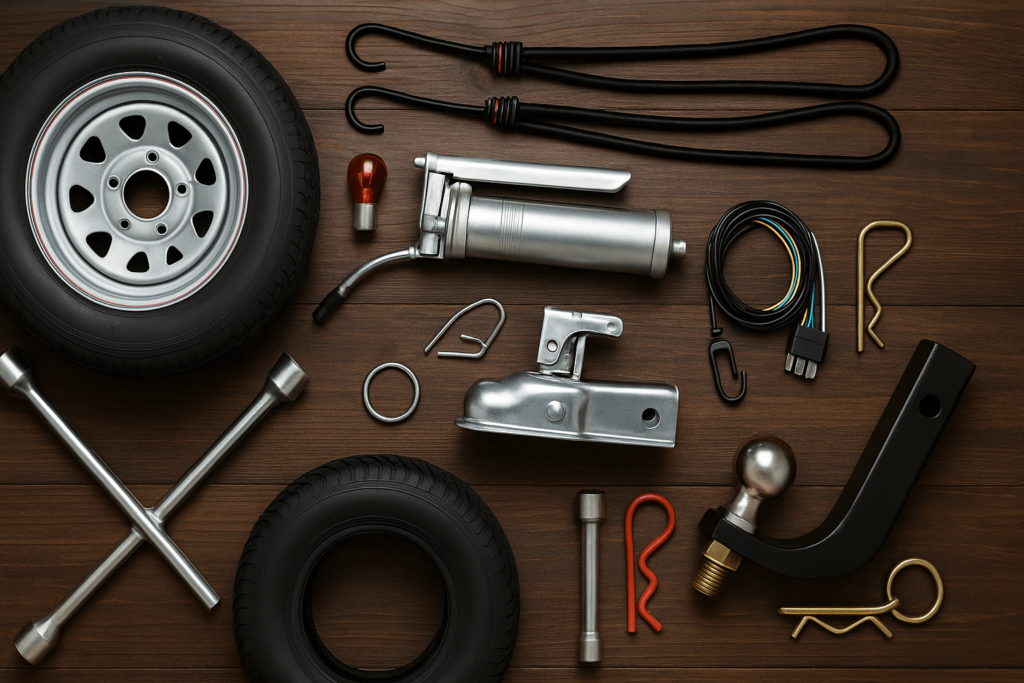
What tools are essential for maintaining a trailer? Regular maintenance of your trailer requires several key tools to keep it rolling smoothly and safely. These include spare tires and lug wrenches for quick tire changes, trailer light bulbs and wiring kits for electrical repairs, and hitch pins and clips to secure the trailer to your vehicle.
Maintaining a trailer can be challenging, but having the right tools makes the job much easier. This article will guide you through the essential equipment needed to keep your trailer in top condition.
Here’s what we’ll cover:
✔️ Safety and legal compliance tools
✔️ Equipment for enhanced efficiency
✔️ The importance of a proper trailer maitenance
Let’s explore the must-have tools that will help you maintain your trailer effectively.
Essential Tools for Routine Trailer Care
Hitch Pins and Clips
Hitch pins and clips play a vital role in securing your trailer to your towing vehicle. These small but mighty components prevent the trailer from detaching during transit, which could lead to catastrophic accidents.
Selecting the right size and type of best trailer hitch pin is crucial. Measure the diameter of the holes in your hitch receiver and trailer coupler to determine the correct pin size. For added security, opt for locking hitch pins that prevent theft.
Before each trip, inspect your hitch pins and clips for signs of wear or damage. Replace them if you notice any bending, rust, or excessive play. Remember, a secure connection between your vehicle and trailer is fundamental for safe towing.
Spare Tires and Lug Wrenches
Having spare tires and lug wrenches on hand is critical for your trailer maintenance routine. These tools allow you to quickly address flat tires or loose wheels, preventing potential roadside emergencies.
To properly store your spare tire, keep it inflated to the recommended pressure and check it regularly. Place the tire in a protective cover to shield it from sun damage and debris. For lug wrenches, store them in a dry, easily accessible location in your towing vehicle.
When using these tools, always consult your trailer’s manual for the correct tire size and lug nut specifications. Practice changing a tire in a safe environment so you’re prepared if the need arises on the road.
Trailer Light Bulbs and Wiring Kits
Functioning trailer lights are crucial for safety and legal compliance while towing. Regular checks and maintenance of your trailer’s lighting system help prevent accidents and avoid traffic violations.
To replace a burnt-out bulb, first disconnect the trailer from power. Remove the lens cover and carefully extract the old bulb. Insert the new bulb, ensuring it’s the correct type and wattage for your trailer. Reconnect the power and test all lights before hitting the road.
Wiring kits come in handy for repairing damaged connections or upgrading your lighting system. When working with wiring, use waterproof connectors and follow the color-coding to avoid short circuits. If you’re unsure about electrical work, consider consulting a professional to ensure proper installation.
Grease And Bearings
Proper lubrication of your trailer’s wheel bearings is essential for smooth operation and longevity. Regular greasing prevents friction, heat buildup, and premature wear of these critical components.
To apply grease, remove the wheel and hub assembly. Clean out old grease and inspect the bearings for signs of wear or damage. Pack new grease into the bearings, making sure it’s evenly distributed. Reassemble the hub, being careful not to overtighten the spindle nut.
Check your bearings for wear by jacking up the trailer and spinning each wheel. Listen for unusual noises and feel for any roughness or play in the wheel. If you detect any issues, replace the bearings promptly to avoid potential wheel loss while towing.
Tie-Down Straps and Bungee Cords
Securing your cargo properly is a key aspect of safe trailering. Tie-down straps and bungee cords help prevent shifting loads, which can affect your trailer’s stability and potentially create road hazards.
When selecting tie-downs, choose high-quality straps rated for the weight of your cargo. Look for UV-resistant materials that won’t degrade quickly in sunlight. For bungee cords, opt for those with durable hooks and strong elastic.
To use these tools effectively, create a crisscross pattern when securing items. This distributes the tension evenly and provides multiple anchor points. Avoid over-tightening, as this can damage your cargo or the tie-downs themselves. Regularly inspect your straps and cords for fraying or stretching, replacing them as needed to ensure continued safety on the road.
Additional Tools for Security and Reliability
Trailer Locks
Protecting your trailer and cargo from theft is crucial. Various trailer locks offer different levels of security. Hitch locks prevent unauthorized coupling, while coupler locks secure the existing connection. Wheel locks immobilize the trailer, and cable locks can secure multiple components.
When selecting a lock, consider durability, weather resistance, and ease of use. Look for hardened steel construction and pick-resistant designs. Remember, visible deterrents often discourage potential thieves.
For maximum protection, combine multiple lock types. Regular maintenance ensures your locks function properly when needed. Always remove locks before towing to avoid damage or accidents.
Trailer Couplers
Trailer couplers form the vital link between your trailer and tow vehicle. They distribute weight and allow for pivoting during turns. Regular inspection of your coupler is essential for safe towing.
Check for wear, damage, or loose components before each trip. Lubricate moving parts to prevent rust and ensure smooth operation. If you notice any issues, address them immediately to avoid road hazards.
Different coupler types suit various trailer sizes and weights. Ensure your coupler matches your trailer’s specifications and your vehicle’s hitch class. Proper installation and adjustment are key to safe towing.
Utility Trailer Jacks
Utility trailer jacks make hitching and unhitching your trailer easier and safer. They support the trailer’s weight when disconnected from the tow vehicle. Jacks come in different styles, including A-frame, swivel, and drop-leg models.
Choose a jack with an appropriate weight capacity for your trailer. Consider the terrain where you’ll use the trailer – rough surfaces may require a larger foot plate for stability.
Always use jacks on firm, level ground. Extend them fully when supporting the trailer, and retract completely before towing. Regular greasing of moving parts keeps your jack operating smoothly.
Durable Trailer Hubs
Trailer hubs are critical components that support your wheels and allow them to rotate freely. Quality hubs reduce friction, heat, and wear, leading to smoother towing and longer tire life.
Inspect your hubs regularly for signs of damage or excessive wear. Listen for unusual noises during operation, which may indicate bearing problems. Check and replace hub seals as needed to prevent water intrusion and grease loss.
Proper maintenance includes repacking bearings with fresh grease periodically. This task requires some skill, so consider professional service if you’re unsure. Investing in high-quality hubs pays off through improved reliability and reduced maintenance costs.
High-Quality Utility Trailer Parts
Using top-notch parts for your utility trailer ensures longevity and performance. Quality components often cost more upfront but save money long-term through reduced repairs and replacements.
When sourcing parts, stick to reputable manufacturers and suppliers. Avoid cheap, no-name products that may compromise safety. Online reviews and recommendations from experienced trailer owners can guide your choices.
Keep a stock of common replacement parts like lights, wiring, and fasteners. This preparation allows you to make quick repairs when needed. For complex components, consult a professional to ensure proper installation and function.
Regular inspections help identify worn parts before they fail. Create a maintenance schedule and stick to it. With proper care and quality parts, your utility trailer will serve you reliably for years to come.
A Reliable Vehicle It’s great to have a well-maintained trailer that does what you need it to do and that you take good care of, but none of that will matter if you don’t also have a well-maintained vehicle to attach the trailer to. That’s why it’s so important to make sure your maintenance extends to the vehicle and not just the trailer, and why ensuring you have the best diesel engine parts is a must for your to-do list.
Why Proper Trailer Maintenance Matters
Safety And Legal Compliance
Keeping your trailer in top shape is crucial for road safety and meeting legal requirements. Regular maintenance helps prevent accidents caused by equipment failure. For instance, worn-out brakes or faulty lights can lead to dangerous situations on the highway. By staying on top of repairs, you’ll avoid potential fines and ensure your trailer meets all necessary regulations.
Proper upkeep also protects other drivers. A well-maintained trailer is less likely to detach or lose cargo while in motion. This reduces the risk of causing harm to others on the road. Remember, your responsibility extends beyond just your own safety when towing a trailer.
Enhanced Efficiency
A well-maintained trailer operates more smoothly, improving your overall hauling experience. Regular checks and timely repairs can boost fuel efficiency by reducing drag and ensuring optimal tire pressure. This means you’ll spend less on gas during your trips.
Efficient trailers also save you time. With everything in working order, you’re less likely to face unexpected delays due to mechanical issues. This allows for more predictable travel times and helps you stick to your schedule.
Cost Savings and Longevity
Investing in regular maintenance pays off in the long run. By addressing small issues early, you prevent them from turning into major, expensive problems. This proactive approach saves you money on costly repairs down the road.
Regular care also extends your trailer’s lifespan. Well-maintained trailers last longer, providing better value for your investment. You’ll be able to use your trailer for years to come, avoiding the need for premature replacement.
Consistent Performance
A properly maintained trailer delivers reliable performance trip after trip. Regular checks ensure all components work as they should, providing a smooth and stable towing experience. This consistency is especially important for frequent users who rely on their trailers for work or leisure.
High-quality parts play a key role in maintaining this consistent performance. Using durable components means fewer replacements and more dependable operation. This reliability gives you peace of mind, knowing your trailer will perform when you need it most.
Frequently Asked Questions About Tools That Keep Trailers Rolling Smoothly
What Are the Most Important Tools to Keep in A Trailer Emergency Kit?
Your trailer emergency kit should contain essential tools for quick roadside fixes. Pack spare tires and lug wrenches to handle unexpected flats. Include a jack suitable for your trailer’s weight, allowing you to lift it safely. Don’t forget pliers, screwdrivers, and adjustable wrenches for various repairs.
A flashlight with extra batteries will help you see clearly during nighttime emergencies. Lastly, add some duct tape and zip ties for temporary fixes that can get you back on the road quickly.
Why Are Trailer Locks Necessary for Secure Hauling?
Trailer locks are crucial for protecting your valuable cargo and the trailer itself from theft. They act as a strong deterrent against unauthorized access, giving you peace of mind when you’re away from your trailer. Whether you’re parked overnight at a rest stop or leaving your trailer at a job site, locks provide an extra layer of security.
Different types of locks, such as hitch locks, coupler locks, and wheel locks, offer comprehensive protection. By using trailer locks consistently, you significantly reduce the risk of becoming a victim of theft.
How Can I Ensure My Hitch Connection Is Always Safe?
To maintain a safe hitch connection, start by inspecting it before every trip. Check that the hitch ball matches your trailer coupler size and is securely attached to your vehicle. Ensure the coupler is fully closed and locked onto the ball. Use hitch pins and clips to secure the connection further, preventing any chance of detachment.
Regularly grease moving parts to prevent wear and tear. Look for signs of damage or excessive rust, replacing components as necessary. By following these steps diligently, you’ll create a reliable connection between your vehicle and trailer, ensuring safe travels on every journey.