Organizational silos are invisible barriers that fragment communication, hinder collaboration, and slow down innovation. Whether it’s marketing teams not talking to product teams or customer success being left out by sales, these disconnected workflows can cost businesses time, money, and client satisfaction. In large enterprises, where teams span continents and multiple functions multiply, breaking down silos is not just a “nice-to-have”—it’s essential. As one of the viral project management tools, Lark helps enterprises solve this challenge by providing a centralized, all-in-one platform that fosters transparency and improves collaboration across teams.
1. Lark Base: Real-time task management and collaboration
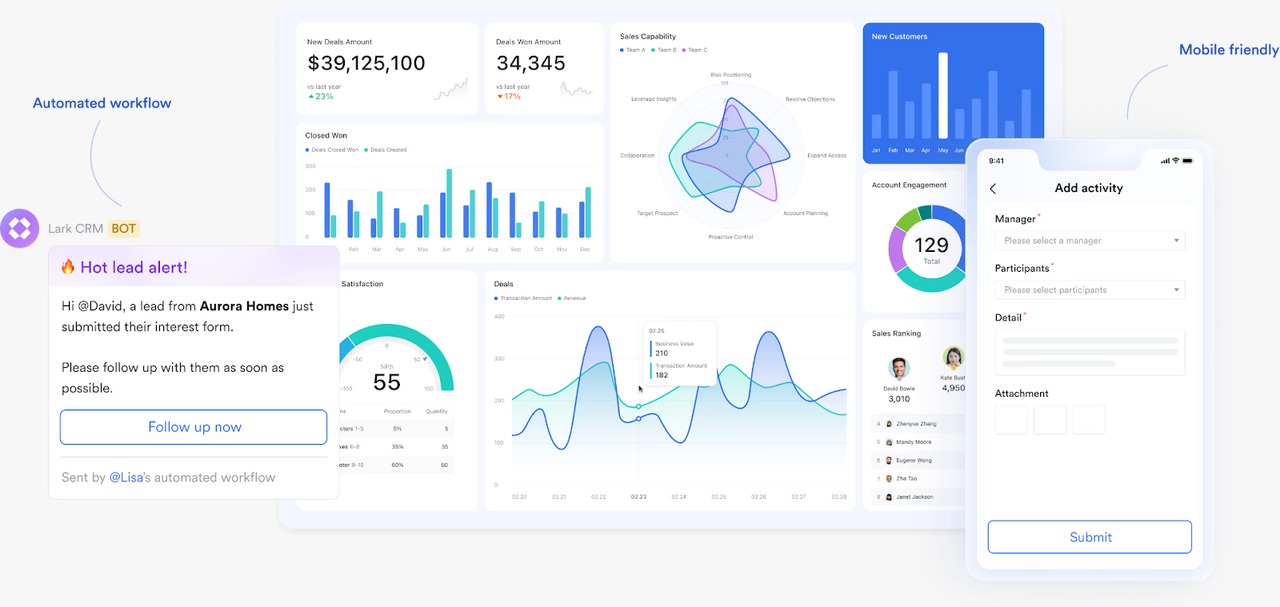
Lark Base plays a pivotal role in eliminating silos on one, comprehensive data management platform. With Lark Base, teams can easily track tasks, assign responsibilities, and prioritize work—all in real-time. Project managers can create custom dashboards that visually display workflows, making it simple to monitor progress and align goals across departments. By using Lark Base, teams can communicate, share files, and track milestones without needing to switch between multiple apps. This integration streamlines workflows, enhances visibility, and keeps everyone aligned, regardless of which department they belong to.
2. Lark Messenger: Seamless communication across teams
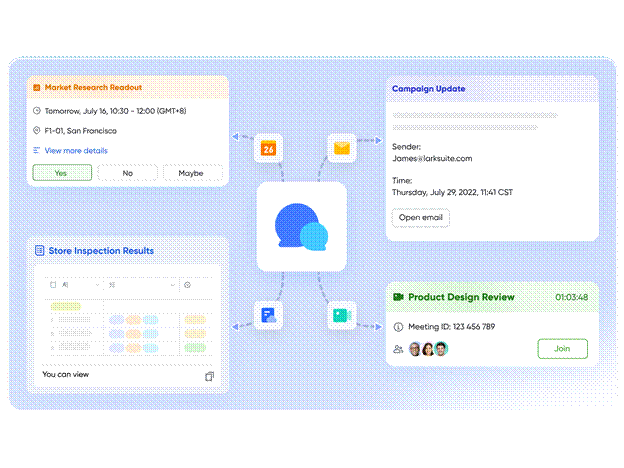
Communication is key to breaking down silos, and Lark Messenger enables teams to communicate seamlessly across departments. Whether it’s instant messaging, file sharing, or real-time video calls, Lark Messenger ensures that no conversation gets lost in the shuffle. You can create dedicated channels for each project, enabling direct communication between teams. Lark Messenger integrates with Lark Base and other tools, ensuring that every team member can access up-to-date information right within their chat. The ease of collaboration within Lark Messenger helps foster transparency and keeps everyone in sync.
3. Lark Base’s Workflow: Automating cross-team processes
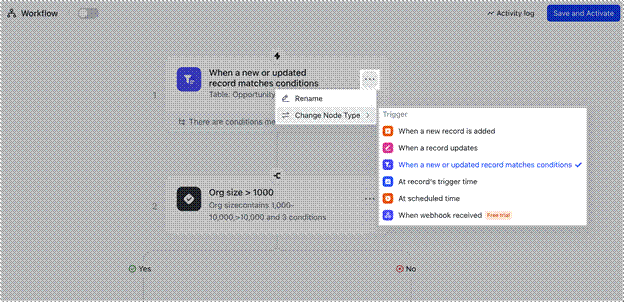
Manual handoffs between teams often cause delays and confusion. Lark Base’s Workflow feature helps eliminate this issue by automating cross-team processes. For instance, when the Sales team closes a deal, Lark can automatically notify the Implementation and Finance teams, trigger an onboarding checklist, and even send out contracts for digital signing—all without manual follow-ups.
With Lark Base’s Workflow, teams can set custom triggers, conditions, and actions, automating tasks like asset approval flows, interview evaluations, and contract expirations. This level of automated workflow reduces miscommunication and ensures that every department acts in sync with the overall company goals. As a result, projects are executed faster, with fewer dropped balls, and improved alignment across teams.
4. Enhancing collaboration with Lark Docs, Messenger, and Calendar
In addition to workflow automation, Lark makes collaboration seamless with tools like Lark Docs, Lark Messenger, and Lark Calendar. Whether it’s real-time document collaboration, instant messaging, or scheduling meetings, Lark ensures that teams stay aligned and productive. Lark Docs allows for real-time co-editing, while Lark Messenger ensures quick communication, and Lark Calendar keeps everyone on track with deadlines and appointments.
By combining automated workflows with these collaborative tools, Lark simplifies team coordination, reduces friction, and accelerates project execution.
5. Lark Tasks: Centralized task management
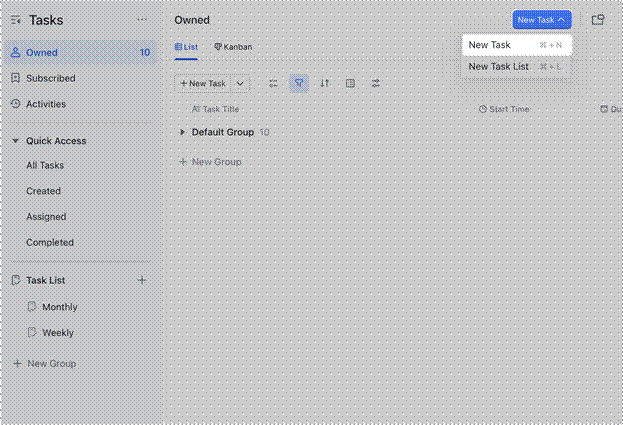
Lark Tasks is a powerful tool for task management within Lark Base, helping teams stay on track and meet deadlines. Lark Tasks allows project managers to break down large projects into smaller, manageable tasks and assign them to the appropriate team members. With real-time updates, task progress is visible to everyone involved, and due dates are easily tracked. The integration with other Lark tools such as Lark Docs and Lark Calendar ensures that tasks are aligned with documentation, meetings, and deadlines, eliminating task duplication and confusion across teams.
This feature helps businesses keep all project-related information centralized in one place and ensures accountability, which is crucial for scaling operations without losing control.
6. Lark Forms: Streamlined data collection
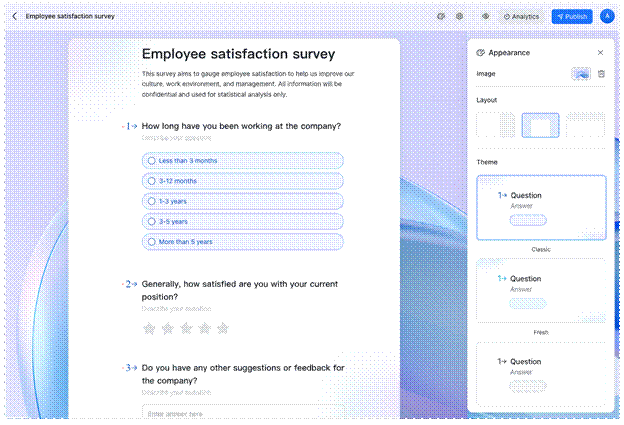
Lark Forms is a versatile tool that allows teams to create forms for everything from surveys to requests, feedback collection, and sign-ups. By using Lark Forms, businesses can quickly gather and organize data across departments. For example, HR teams can collect employee feedback or onboarding information, marketing teams can collect customer insights, and sales teams can log client requirements.
Lark Forms integrates with other Lark tools, making it easy to track form submissions and link them to tasks or documents in Lark Base. This centralized data collection process reduces confusion, ensures data consistency, and eliminates the need for manual data entry, which helps teams to act faster and with greater accuracy.
Final thoughts
Breaking down silos doesn’t require a massive overhaul or a painful reorganization. It requires business process management software tools that connect people, processes, and data in one place. Lark offers exactly that.
With powerful project management tools, intelligent automated workflows, and enterprise-grade business process management software, Lark enables companies to build connected operations that drive real outcomes—faster decisions, fewer delays, and happier clients.
For enterprises ready to break down silos and build a culture of collaboration, Lark isn’t just a tool. It’s a transformation platform.