
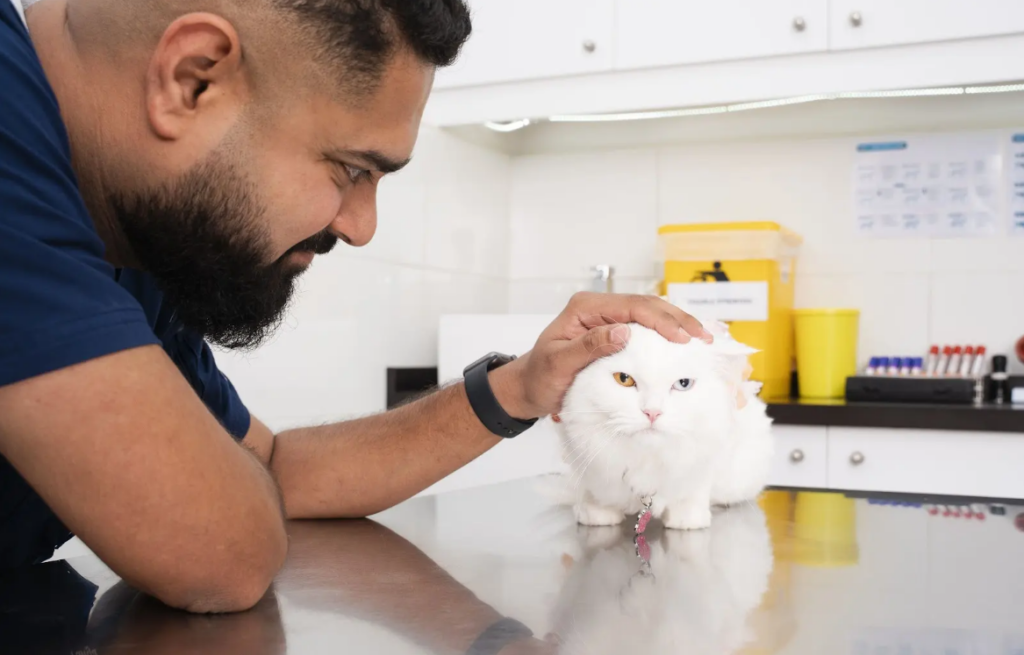
Cats are often seen as independent and low-maintenance, but that doesn’t mean they’re immune to stress. As a matter of fact, cats are delicate and sensitive, with even small things getting in the way of their happiness.
What might seem like bad behavior could be your cat’s way of coping with the stress. Scratching furniture, excessive meowing, and a reduced appetite are just some of the common signs of anxiety in cats.
Fortunately, cat anxiety can be managed. To help, the experts from Noble Vet Clinics will tell you everything you need to know about it.
Common Types of Anxiety in Cats
Cat anxiety can take different forms depending on the cause, duration, and intensity. Here are the common types:
Separation Anxiety
This happens when cats become distressed whenever they are left alone or are separated from their owners. Some cat breeds, such as Siamese and Ragdolls, tend to be common victims, mainly due to their affectionate and loving personalities.
Separation anxiety in cats is generally caused by factors such as being weaned too early, overdependence on one person, and a lack of social independence. Because of this, affected cats perceive the absence of their owners as a threat to their safety.
Common signs include:
- Excessive vocalization when left alone
- Constantly following owners
- Scratching doors and furniture
- Urinating or defecating outside the litter box
- Pacing or restlessness
Generalized Anxiety
Generalized anxiety in cats is a persistent state of unease or tension, even when there’s no apparent threat. This can be caused by changes in routine, environment, and household. Past trauma and neglect are also possible triggers.
Cats with generalized anxiety often stay in a fight-or-flight mode, leading to long-term issues. Signs include:
- Frequent hiding or unpredictable movement
- Startling at small movements or sounds
- Increased irritability or aggression
- Excessive grooming
- Decreased interest in play
Noise Anxiety
Noise sensitivity is an extreme sensitivity or fear response to loud, sudden, or unfamiliar sounds. Common triggers include car horns, fireworks, and thunderstorms.
It’s generally caused by a lack of exposure as a kitten, negative associations with the specific sound, or existing stress. Signs of noise anxiety in cats include:
- Hiding immediately after hearing a sound
- Flattened ears, dilated pupils, or tail twitching
- Refusing to leave the hiding spot
- Freezing in place or running away
- Urinating or defecating accidentally
Social Anxiety
Social anxiety occurs when cats feel overwhelmed, threatened, or uncomfortable in the presence of new people and animals. This is generally caused by a lack of socialization, especially during the cat’s early years.
Because of this, affected cats will feel that social interactions with unknown people and animals are risks. Common signs of social anxiety in cats include:
- Hiding when someone comes into the room
- Running away immediately
- Avoiding eye contact, crouching, or tail flicking
- Hissing, growling, and yowling
- Refusing to come out of hiding spot
Diagnosing Anxiety in Cats
If your cat’s behavior suddenly changes, it’s time to seek professional help. Because behavioral changes can stem from any problem, a physical examination will be done first. Medical testing, such as bloodwork and urinalysis, can be used to rule out certain health conditions that can cause stress.
A behavioral assessment will also be conducted, involving a detailed discussion about your cat’s routine, living conditions, and other factors.
How to Help Your Anxious Cat
If your cat is showing some changes in its behavior, this is when you should be alarmed. Here are some tips recommended by the experts:
1. Identify What Causes Your Cat’s Anxiety
Start by observing when your cat’s anxiety flares up. Keep a journal to track patterns, note the time, situation, and your cat’s behavior. This can be anything from car horns to unfamiliar people to you leaving for work.
2. Create a Safe Space
Once you know why your cat gets stressed, remove the trigger and provide a safe space. Fill this area with interactive toys, soft blankets, and pheromone diffusers. You can also leave the TV on when they’re left alone, as this can be comforting for some cats.
3. Keep a Consistent Routine
Cats feel safe when they know what to expect. A consistent routine on feeding, playing, and even litter box cleaning can avoid any surprises.
4. Try Anti-Anxiety Treatment Techniques for Cats
Behavioral training is one of the most effective ways to manage the signs of anxiety in cats. These include:
- Desensitization. A training technique that gradually exposes your cat to the source of their anxiety. Start by using the trigger at a level your cat can tolerate. For example, if it fears the vacuum, slowly bring it close without turning it on.
- Counter-Conditioning. This technique involves changing your cat’s emotional response to the trigger by pairing it with something positive. When the trigger appears, provide treats, positive reinforcement, or your cat’s favorite toys.
Are There Any Anti-Anxiety Medications for Cats?
If your cat has ongoing anxiety that doesn’t improve with behavior training or natural remedies, then medication can be prescribed. These drugs reduce stress, helping your cat relax. Common types include fluoxetine, paroxetine, and sertraline. The specific drug will depend on your cat’s condition.
Conclusion
While every cat is different, each one of them should be understood and supported. Cat anxiety is real, but with the right care, patience, and a little professional guidance, even the most anxious cats can feel safe, calm, and happy again.
