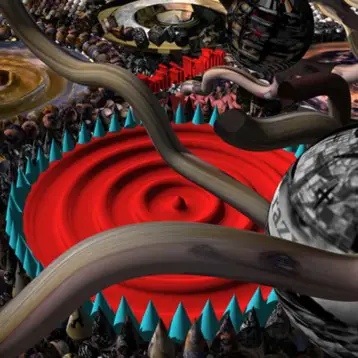
Artists work with high resolution electron microscope scans of natural micro- or nanostructures. These monochromatic electron scans are then mixed with abstract colors and digitally painted. The technique, called “Digital Faux” was developed by the founder of the NanoArt movement, artist and scientist Cris Orfescu. Faux painting is an old decorative art technique that dates back a few thousand years ago. Faux finishes use glazes instead of paint, producing art with a more 3-dimensional effect than that made with paint. Like traditional faux, the Photoshop Digital Faux is done by overlaying translucent layers of color to create perception of depth. The works are finally printed on canvas or fine art paper with long-lasting inks.
Cris Orfescu founded the NanoArt competition to promote the NanoArt concept around the world as a reflection of the technological movement. He believes the public should be aware of nanotechnology and how it will impact life in the future. “NanoArt could be for the 21st century what photography was for the 20th century. We live in a technological society, in a new renaissance period, and there is no reason for arts to stay away from technology. Scientists are exploring the nano world hoping to find a better future and there is evidence that nanotechnology might be the answer” – he says.
The winning work at the NanoArt 2006 competition was “Nebula of Man” – a painting created by Darcy Lewis. The painting, which is made of built-up sheer layers of nano and other images, shows the artist’s representation of nanoworld’s profound impact on our macro lives, our planet and universe.
Since the first contest, NanoArt works were displayed in several exhibitions – at the Espacio Kubiko Gallery in Madrid, Spain; at the Kotkan Valokuvakeskus Gallery in Kotka, Finland; and during the months of September and October you will find Orfescu’s work presented at several galleries in Paris.
TFOT covered the first NanoArt competition last year, which included 71 works by 22 scientists/artists. More detailed information about the new NanoArt contest can be found here and more information about Orfescu’s work can be found on his online portfolio.