Feedback Form
   
Add to Google
Research Team Develops New Nanomotors Research Team Develops New Nanomotors
Wednesday, August 06, 2008 - Roni Barr
Home >> News >> Nanotechnology
  Peralink
Researchers at ASU’s Biodesign Institute in Arizona report the development of a new generation of tiny nanomotors that are up to 10 times more powerful than existing motors. The research team, led by Joseph Wang, director of the Center for Biosensors and Bioelectronics, set out to improve on the design of current nanomotors. The team successfully created “catalytic nanomotors” which are made with gold and platinum nanowires and use hydrogen peroxide (bleach) as a fuel for self-propulsion. The new development could potentially lead to advanced nano powered devices both inside the living body as well as outside.

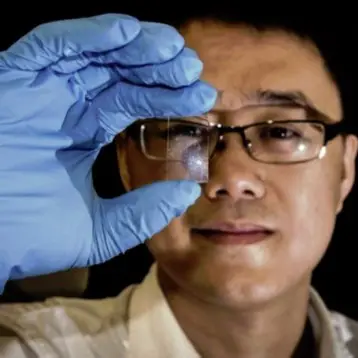
Joseph Wang (Credit: University of Arizona) 
Joseph Wang
(Credit: University of Arizona)
These motors, which are too slow and inefficient for practical use, have top speeds of about 10 micrometers per second (equivalent to a walking speed of 3.6 miles per hour). By inserting carbon nanotubes into the platinum, Wang and his colleagues supercharged their nanomotors, thus boosting average speed to 60 micrometers per second. This is the first time that carbon nanotubes only a few atoms thick have been capable of conducting electricity and heat and have been added to existing gold and platinum nanowires. 

By mixing the hydrogen peroxide fuel with hydrazine (a type of rocket fuel), researchers were able to kick up the speed to 94-200 micrometers per second (the top speed is now equal to a moped-like speed of 43.2 miles per hour). This innovation “offers great promise for self-powered nanoscale transport and delivery systems,” Wang says. 

TFOT recently reported on making nanotubes into electric circuits as well as on nanotubes which could form ultrasensitive sensors developed at the University of Warwick's Department of Chemistry. Other nanotechnology related news reported by TFOT includes nanofibers whjch could create self-cleaning windows, now under development at the Ohio State University. 

More on the new nanomotors can be found on the Biodesign Institute’s website.

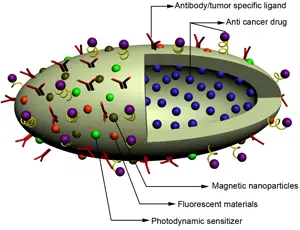
Top image - a micromotor developed at MIT (covered by TFOT in the past).

Related News Flexible, Transparent Nanotube-Based Loudspeakers Flexible, Transparent Nanotube-Based Loudspeakers Super Strong Antimicrobial Coatings Super Strong Antimicrobial Coatings

Related Pictures Nano-worms to the Rescue Nano-worms to the Rescue Tuning Graphene's Nature Tuning Graphene's Nature

Other Articles Cybook Gen3 e-Book Review Cybook Gen3 e-Book Review CES 2008 Innovations Coverage CES 2008 Innovations Coverage


No comments have been posted for this item.

Add a New Comment
Your name:   0/20
Subject:  0/30
Your Comment:  0/999
Type the following letters: Visual CAPTCHA
Please keep your comments related to the above item's topic. TFOT reserves the right to delete any unrelated comment without notice.

Picture Of The Day
Microsoft Arc Notebook Mouse

Video
Nostalgia: The Atari Wallet

Site Of The Week
Galaxy Zoo
Galaxy Zoo

Personal Column
Detroit’s Dream of Aircraft Production
Dr. Daniel Uziel
Detroit’s Dream of Aircraft Production
Terms Of Use | Privacy Policy | Contact Us | Advertise With Us | Site Profile
Copyright © 2007 The Future of Things. All rights reserved.